- Main
- News
- Infrastructure Modernization and the Aspiration to Be at the Forefront of Global Civilization
Infrastructure Modernization and the Aspiration to Be at the Forefront of Global Civilization
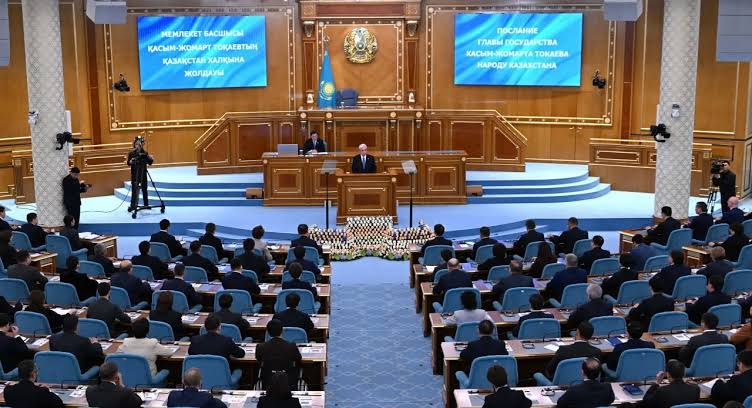
Commentary on the Address of the President of the Republic of Kazakhstan, Kassym-Jomart Tokayev, to the People of Kazakhstan
An address by a country’s head of state to its citizens, regardless of the country in question, calls for the systematic translation of its key provisions and related objectives into action at every level of society and professional activity, including the work of every university lecturer and educational staff member.
The 2026 Address highlights the significance of Kazakhstan’s 35-year history of sovereignty and the role of the new Constitution in strengthening statehood and its institutions. In assessing the country’s current situation, President Kassym-Jomart Tokayev emphasized the importance of national unity and social harmony. These priorities are particularly relevant amid serious international conflicts and growing global instability. The Address also raises the issue of the current state of the United Nations and the need for reform in an increasingly unpredictable international environment. In this context, the President called on citizens to strengthen the sovereignty of Kazakhstan.
Despite external challenges, the Address notes the growth of the national economy, budget revenues reaching approximately USD 400 billion, and the development of transport and logistics. By 2029, KZT 6.5 trillion is planned to be allocated to the development of production capacity and major transport infrastructure. As the President emphasized, passing on a strong and competitive country to future generations is a task of historic significance. Plans also include establishing a state uranium reserve and a national fund of rare-earth and non-ferrous metals.
The Address sets the goal of establishing a robust regional ecosystem built around the principle of “Education — Applied Science — Service Delivery.” During recent talks between the President of Kazakhstan and NVIDIA co-founder Jensen Huang, Kazakhstan’s potential to become a center for addressing food security challenges in Asia and worldwide, as well as a future global hub for Physical AI, was highlighted. Consequently, the country’s digital transformation agenda is taking on a new dimension.
These initiatives clearly require Kazakhstan’s higher education community to adopt the strategic foresight and proactive approach outlined by the President. In this regard, establishing a university working group to develop a strategic plan for implementing the Address of the President of the Republic of Kazakhstan, together with a specific implementation roadmap, would be a practical step forward.
This may also require modernizing the digital components of numerous academic programmes and degree specializations, as well as upgrading teaching and research laboratories, including shared research facilities. As the President emphasized, actively attracting investment will be essential to these efforts. In the context of university modernization, particular importance should be given to engaging university alumni and international partners.
Z. G. Aitasheva
Department of Molecular Biology and Genetics
Other news