- Main
- Science
- ONLINE SESSION HELD AS PART OF THE INTERNATIONAL PROJECT “BUILDING QUALITATIVE RESEARCH SKILLS IN KAZAKHSTAN (CBPR)"
ONLINE SESSION HELD AS PART OF THE INTERNATIONAL PROJECT “BUILDING QUALITATIVE RESEARCH SKILLS IN KAZAKHSTAN (CBPR)"
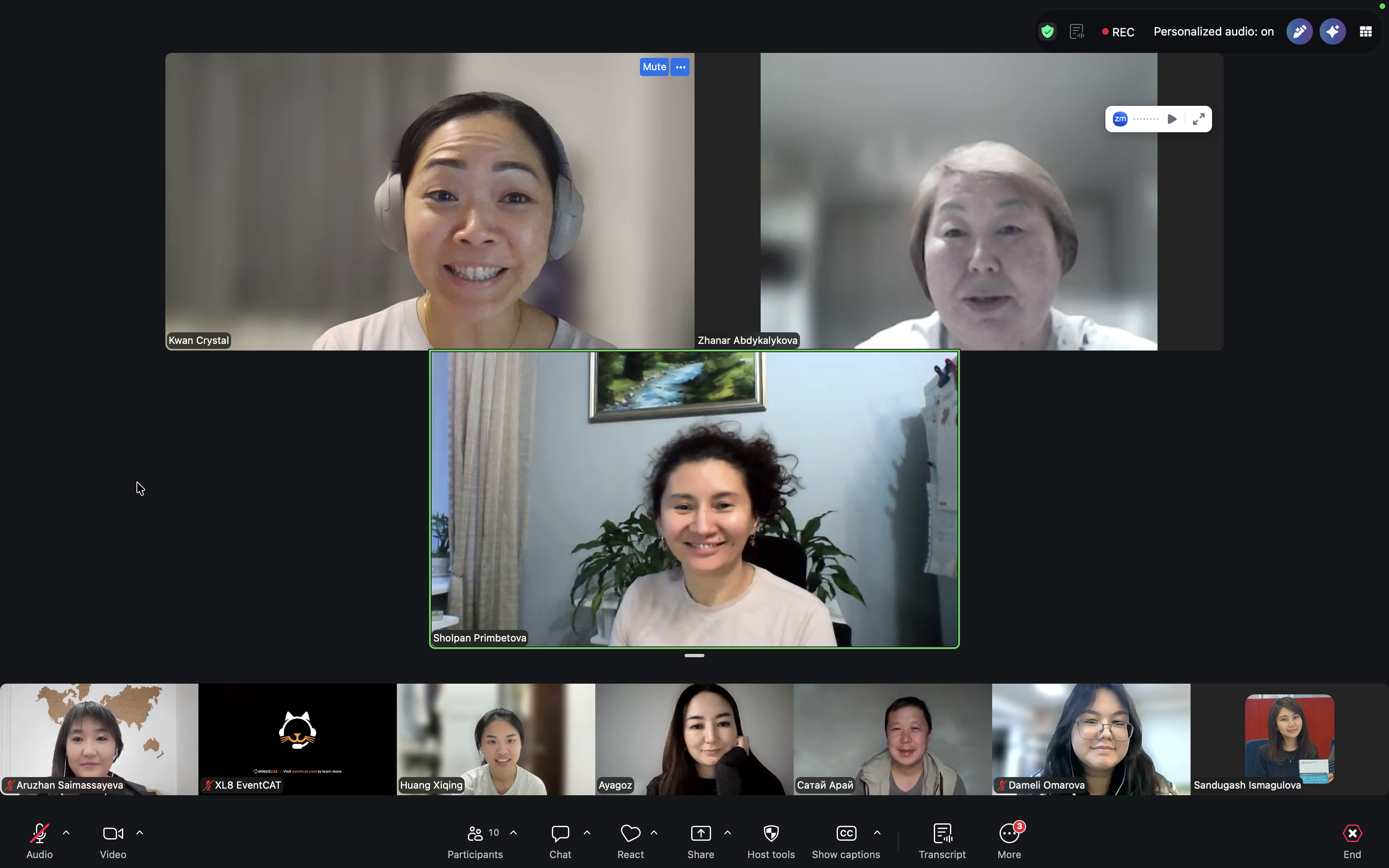
On 29 October 2026, researchers and doctoral students from Al-Farabi Kazakh National University and The Hong Kong Polytechnic University participated in the fifth interactive online team session. The meeting addressed methodological questions for a pilot project exploring the everyday lives, adaptation to a new social environment and social integration experiences of Kandas youth-young ethnic Kazakhs who have moved to Kazakhstan from abroad. Participants discussed research questions, sampling approaches, data collection methods and opportunities to involve young people in the research process.
The meeting was organised by Crystal Kwan, PhD, RSW, Thetos Foundation Young Scholar in Social Services, Associate Professor in the Department of Applied Social Sciences at The Hong Kong Polytechnic University and the project’s Principal Investigator (PI) on the PolyU side; Head of the Department of Sociology and Social Work at the Faculty of Philosophy and Political Science, Al-Farabi Kazakh National University, Doctor of Sociological Sciences, Professor Gulmira Abdiraiymova; Aruzhan Saimassayeva, PhD, Co-Principal Investigator (Co-PI), Senior Lecturer, Deputy Head for Research and International Cooperation of the Department of Sociology and Social Work at the Faculty of Philosophy and Political Science, Al-Farabi Kazakh National University.
Participants considered proposals to explore Kandas youth’s everyday lives, adaptation to their social environment, support needs, identity and expectations for the future. Small-group discussions identified a shared research direction connecting young people’s everyday experiences with adaptation and social integration. Particular attention was given to exploring young people’s capabilities, achievements and accumulated experience alongside the challenges they encounter.
Associate Professor Crystal Kwan, the project’s PI on the PolyU side, proposed including research questions about successful adaptation, significant turning points, social connections and conditions that foster a sense of belonging. This approach enables a deeper understanding of young people’s agency, potential and practices of mutual support. The meeting concluded by identifying priorities for the next stage of collaboration. An in-person meeting is planned to develop data collection protocols, semi-structured interview questions and procedures for using arts-based research methods. The online session continued the practical collaboration between Al-Farabi Kazakh National University and The Hong Kong Polytechnic University. Established in 2024, the two universities’ joint Centre for Sustainable Development in Central Asia brings together their research and educational strengths to address pressing regional issues, support early-career researchers and introduce evidence-informed approaches into professional practice.
The issues raised during the session aligned with the work of the Centre for Sustainable Development in Central Asia. Developing a research culture in social work contributes to improving professional education, strengthening support for individuals and families in vulnerable circumstances, and promoting accountability among social service organisations. In this respect, the session’s content aligned with the United Nations Sustainable Development Goals concerning quality education, reduced inequalities, effective institutions and international partnerships.
The online session helped clarify the research team’s shared methodological approach and advance preparations for the next phase of the pilot project. It connected international research collaboration with doctoral researchers’ skills development and an in-depth exploration of Kandas youth’s lived experiences. The approaches discussed aim to identify conditions that support adaptation and build an evidence base for improving social support in ways that reflect young people’s needs.
Other news