- Main
- News
- SDG 11. Sustainable Cities and Communities. Introducing Students to Kazakhstan’s Artistic Heritage at A. Kasteyev State Museum of Arts
SDG 11. Sustainable Cities and Communities. Introducing Students to Kazakhstan’s Artistic Heritage at A. Kasteyev State Museum of Arts
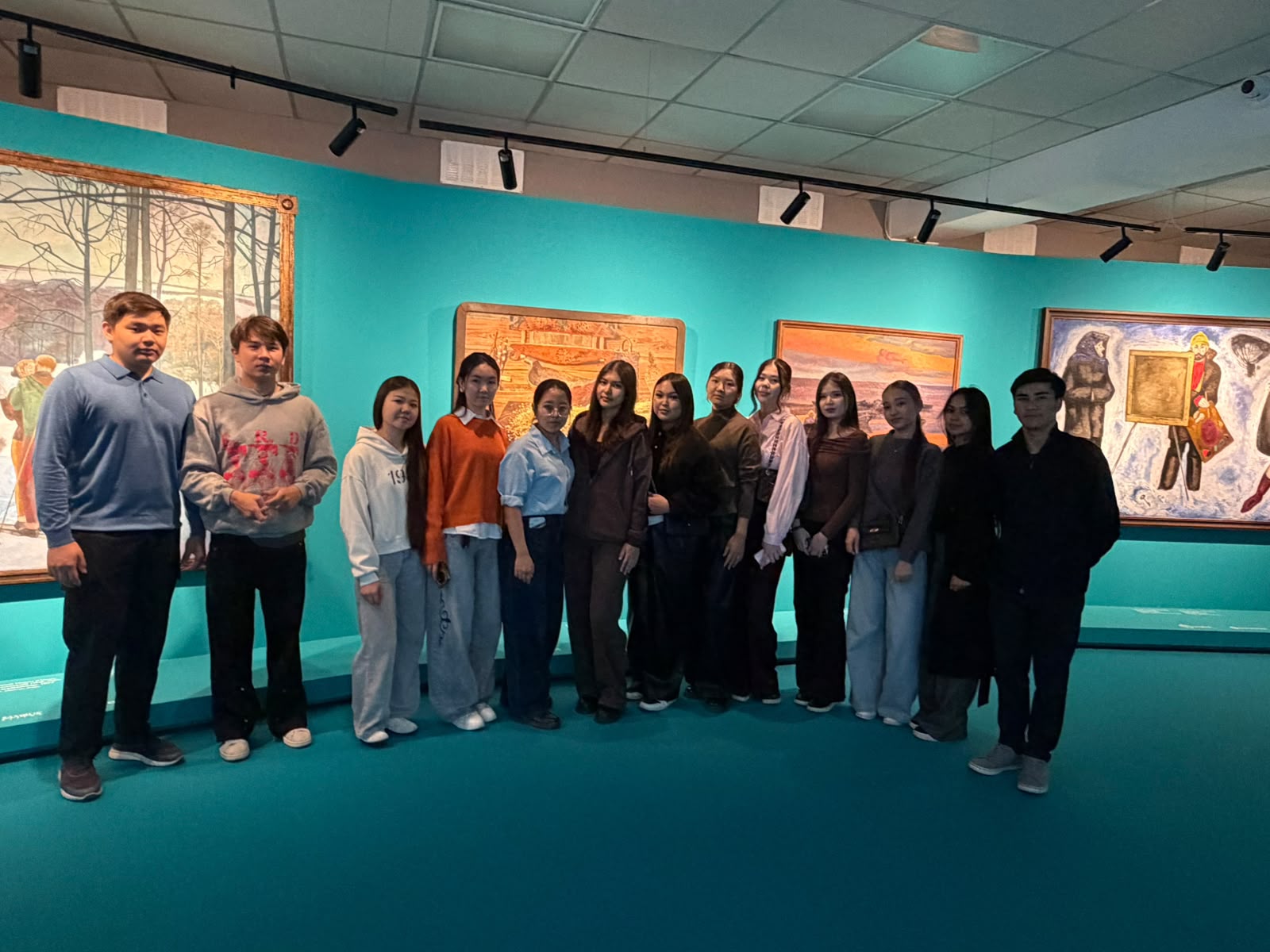
On October 24, 2026, first-year students majoring in Tourism at the Faculty of Geography and Environmental Management took part in an educational excursion to the A. Kasteyev State Museum of Arts of the Republic of Kazakhstan. The visit was accompanied by N. K. Imambek, a lecturer at the Department of Russian Philology and World Literature. The excursion aimed to broaden students’ cultural horizons, introduce them to national and international artistic heritage, and foster respect for historical and cultural values.
During the visit, students explored the museum’s collections, artworks, and exhibition projects representing different movements and periods in the development of visual art. Particular attention was given to the role of museums in preserving, studying, and promoting works of art as an essential part of society’s cultural heritage.
The temporary exhibitions presented at the museum attracted particular interest. These included “20th-Century Art from the Tretyakov Gallery Collection,” featuring works from the collection of one of Moscow’s major art galleries. Another exhibition, “The Living Body of Architecture,” marked the 50th anniversary of the museum building and presented architectural drawings, archival photographs, a three-dimensional model, and paintings by Falk and Redko, donated to the museum at its opening in 1976. Students also became acquainted with “Songs of Muzaffar,” an exhibition featuring landscape paintings by Nurshidin Baratov and reflecting the beauty of Kazakhstan’s natural environment.
Exploring these works of art enabled students to understand how artistic images reflect historical periods, cultural traditions, national perspectives, and the surrounding environment. The excursion provided an opportunity not only to acquire new knowledge but also to appreciate the role of art in preserving historical memory and cultural identity.
Direct engagement with the museum environment contributed to the development of students’ aesthetic appreciation, observation skills, and interest in cultural heritage.
The excursion supports the objectives of SDG 11, particularly the protection and preservation of cultural and natural heritage. Educational activities of this kind encourage young people to appreciate art, respect historical memory, and recognize the importance of safeguarding their country’s cultural wealth.
Other news