“Social Support Programmes and Their Effectiveness”
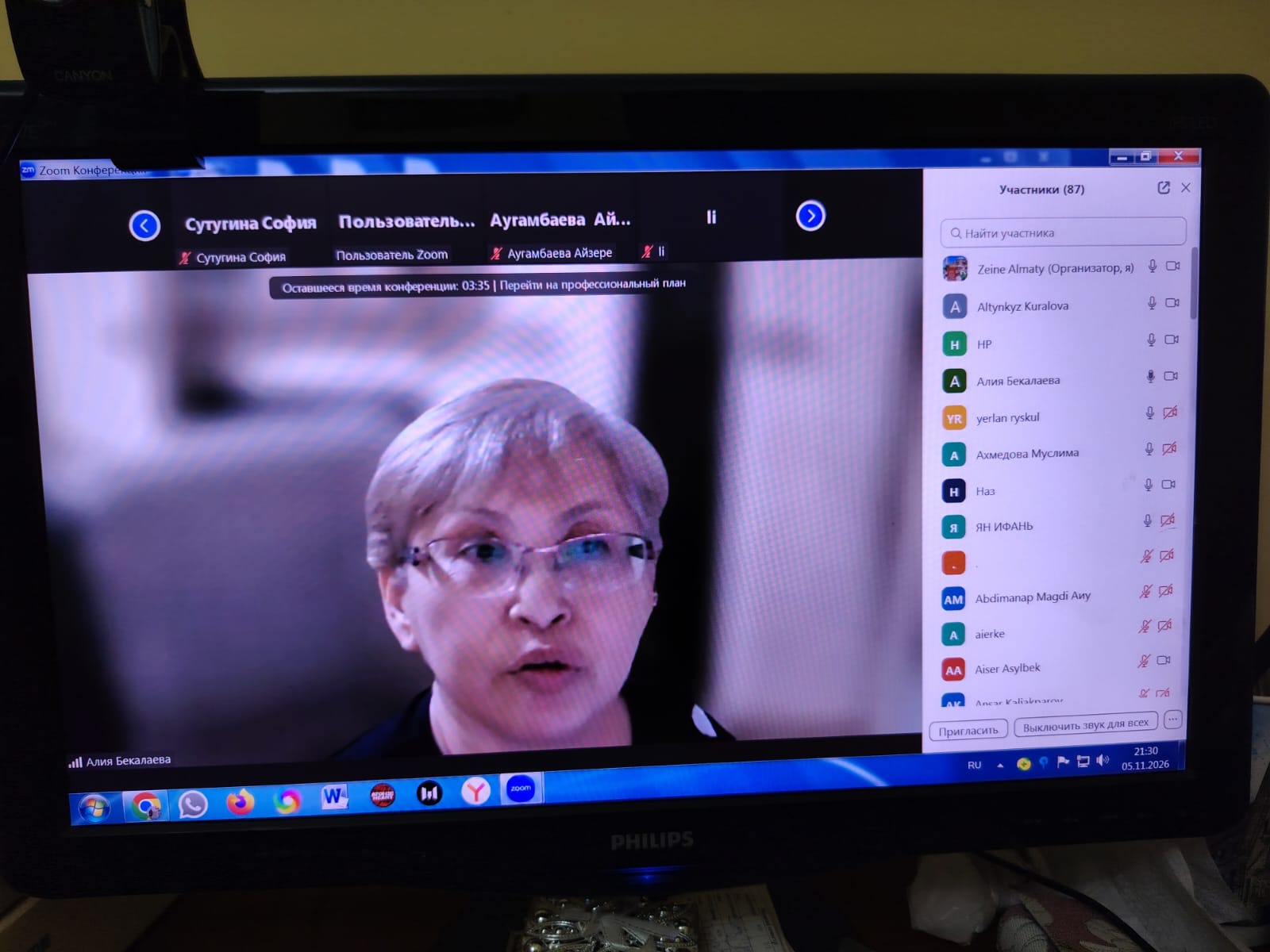
On November 6, 2026, an international online networking event entitled “Social Support Programmes and Their Effectiveness” was held within the framework of the United Nations Sustainable Development Goals (SDGs), focusing on SDG 1 — “No Poverty”.
The event brought together representatives of educational institutions from Kazakhstan, China, and Russia, providing a platform for international communication, experience sharing, and discussion of current issues related to social support and poverty reduction.
The online networking event was attended by:
- 1st year students of the Higher School of Economics and Business;
- A.K. Bakasova — English Language Teacher, Teacher-Researcher at Pavlodar Innovative University;
- G.B. Kydyrbayeva — Senior Lecturer, PhD, at Abai Kazakh National Pedagogical University;
- Students of Chongqing Southwest University (China) — Diniar Bekbolatova and Azhar Aidoskyzy;
- 10th grade students of Achair Secondary School (Omsk District, Omsk Region, Russia), under the guidance of Natalia Ivanovna Merezhko, Deputy Director for Educational Affairs;
- 1st year students of the Kazakh National Women's Teacher Training University, under the supervision of senior lecturers of the Department of Practical Foreign Languages, A.R. Khalenova and G.A. Murumbayeva.
The main objective of the event was to raise young people's awareness of the importance of social support, explore existing government assistance mechanisms, and discuss their role in reducing poverty and promoting social well-being.
During the event, participants explored the main types of social support programmes, including targeted social assistance, benefits for socially vulnerable groups, support for low-income families, employment promotion programmes, and initiatives aimed at improving the quality of life.
Particular attention was paid to the effectiveness of social programmes, their accessibility to people in need, and the importance of government and community support in ensuring equal opportunities for all members of society.
The interactive online networking format encouraged active participation, exchange of opinions, and international dialogue. Students and schoolchildren had the opportunity to share their perspectives on pressing social issues, discuss ways to improve social support mechanisms, and broaden their understanding of global sustainable development initiatives.
The international nature of the event contributed to strengthening inter-university and intercultural relations and created opportunities for exchanging educational and social experiences among representatives of different countries and educational institutions.
As a result of the event, participants expanded their knowledge of poverty-related issues, social protection mechanisms, and the importance of achieving SDG 1. The meeting also contributed to fostering social responsibility, developing communication skills and critical thinking, and strengthening young people's active civic engagement.
Event Organizers: Senior Lecturers of the Department of Foreign Languages — A.O. Bekalaeva, Z.A. Tleugabylova, A.T. Kuralova, G.D. Omarbekova, and R.N. Zharimbetova.
Other news