Books – A Source of Spiritual Development and Scientific Exploration
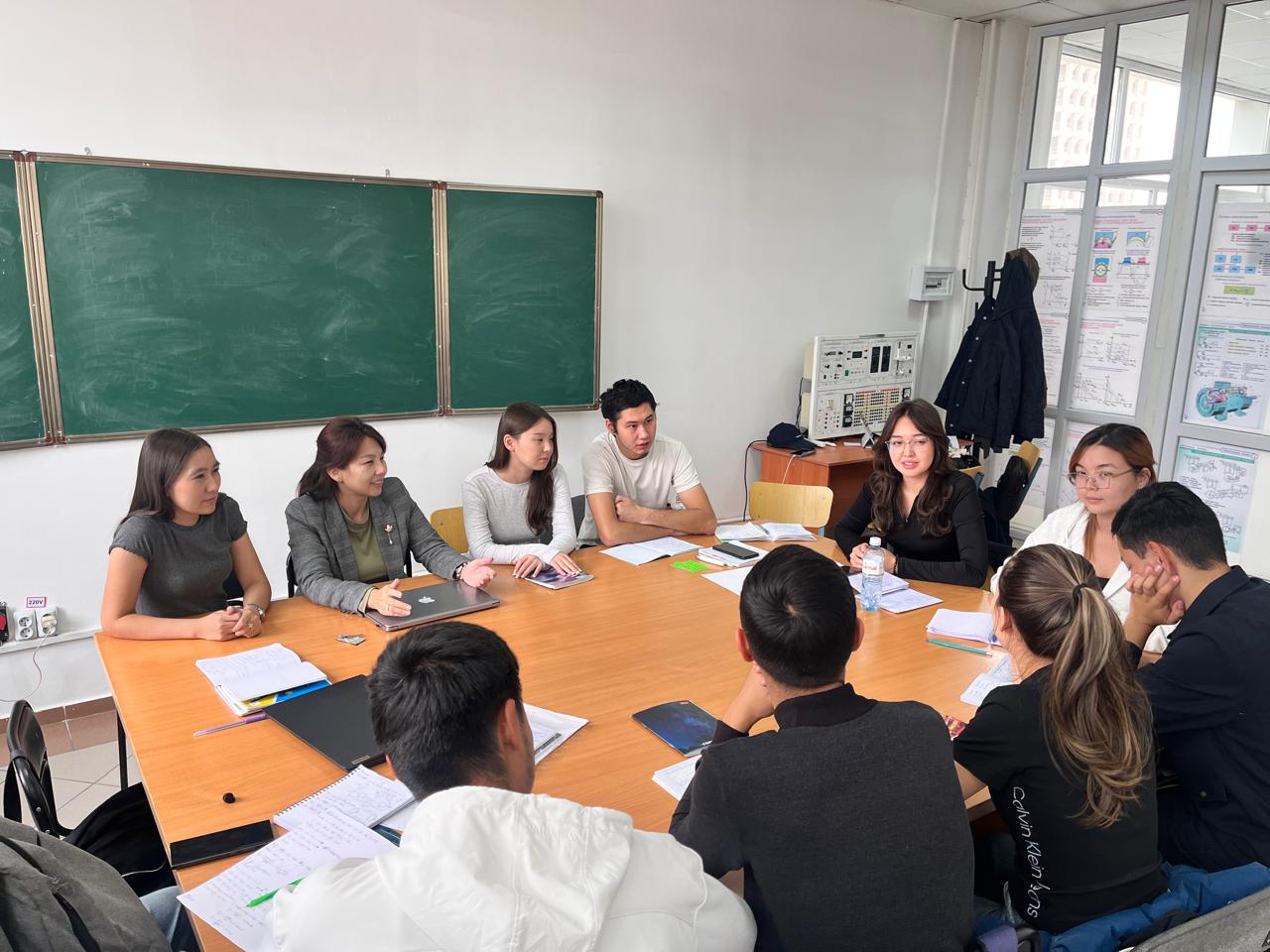
As part of the “Reading Nation” initiative, an educational discussion entitled “Books – A Source of Spiritual Development and Scientific Exploration” was organized by the academic advisor for fourth-year students.
The main purpose of the meeting was to encourage students to develop a lasting interest in reading, promote moral and spiritual values, broaden their scientific horizons, and strengthen their research skills as future professionals. During the discussion, students explored issues related to the spiritual and moral development of young people, ethical values, the pursuit of knowledge, professional growth, and engagement in scientific research. They were encouraged to read books that contribute to intellectual development, critical thinking, scientific awareness, and personal growth. Particular attention was given to the works of prominent Kazakh authors. Abai Kunanbayev’s The Book of Words encourages reflection on morality, education, knowledge, and human values. Shakarim Kudaiberdiyev’s Three Truths explores conscience, spiritual integrity, and personal responsibility. The discussion also highlighted popular science books that inspire curiosity and develop scientific thinking. Students were introduced to Six Easy Pieces by Nobel Prize-winning physicist Richard Feynman. The book presents fundamental concepts of physics, including atoms, energy, gravitation, and quantum phenomena, in an accessible and engaging way. Another recommended book was Physics of the Future by theoretical physicist Michio Kaku. It explores the future of science and technology, including artificial intelligence, energy, innovation, and emerging technological developments. The participants emphasized that reading is not merely a way of acquiring knowledge but also an important source of new scientific ideas, research interests, and creative approaches to solving problems. Students were encouraged to identify research areas that interest them, explore recent scientific publications, analyze academic sources, and connect their graduation projects with promising research topics. At the conclusion of the meeting, it was highlighted that reading, lifelong learning, and scientific exploration are essential for developing intellectually mature, ethically responsible, and competitive professionals.
Other news