- Main
- SDG 15
- “Decent Work and Economic Growth. Factors Influencing University Graduates’ Employment and Successful Career Development”
“Decent Work and Economic Growth. Factors Influencing University Graduates’ Employment and Successful Career Development”
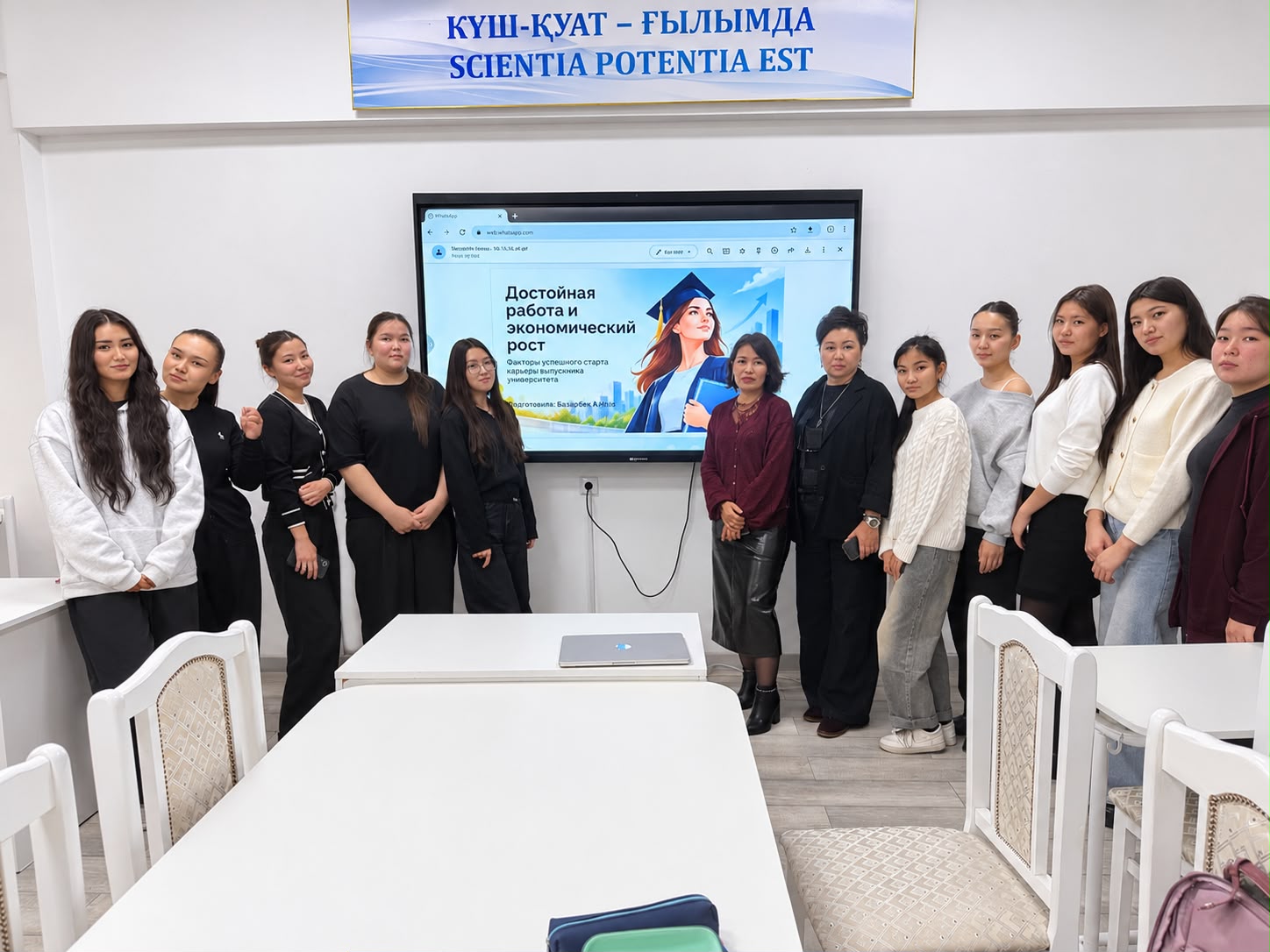
On November 12, 2026, lecturers of the Department of Russian Philology and World Literature, Nazym Baigazievna Itzhanova and Ainash Ilyasovna Akhmetzhanova, conducted a lesson entitled “Decent Work and Economic Growth. Factors Influencing University Graduates’ Employment and Successful Career Development” for first-year students majoring in “Digital Archives” and “Library Information Systems”.
The lesson was organized within the framework of the United Nations Sustainable Development Goal 8 (SDG 8) — “Decent Work and Economic Growth”.
During the lesson, students prepared reports and presentations addressing current issues related to employment and the professional development of university graduates. Their presentations covered such topics as “Graduates in the Labour Market: From a Diploma to Professional Value”, “Decent Work Begins with Opportunities”, “Decent Work and Economic Growth”, “Decent Work Begins with Readiness for Change”, and other related subjects.
Special attention was paid to the current demands of the labour market. Today, employers are interested not only in which university a graduate attended but also in the professional competencies they possess and the practical tasks they are capable of solving. For young professionals, decent work means productive employment, fair remuneration, safe working conditions, social protection, and opportunities for professional development.
During the discussion, students emphasized that successful employment involves more than simply finding any available job. It requires making a conscious choice of a professional career path that provides opportunities for growth, skills development, and the achievement of personal and professional goals.
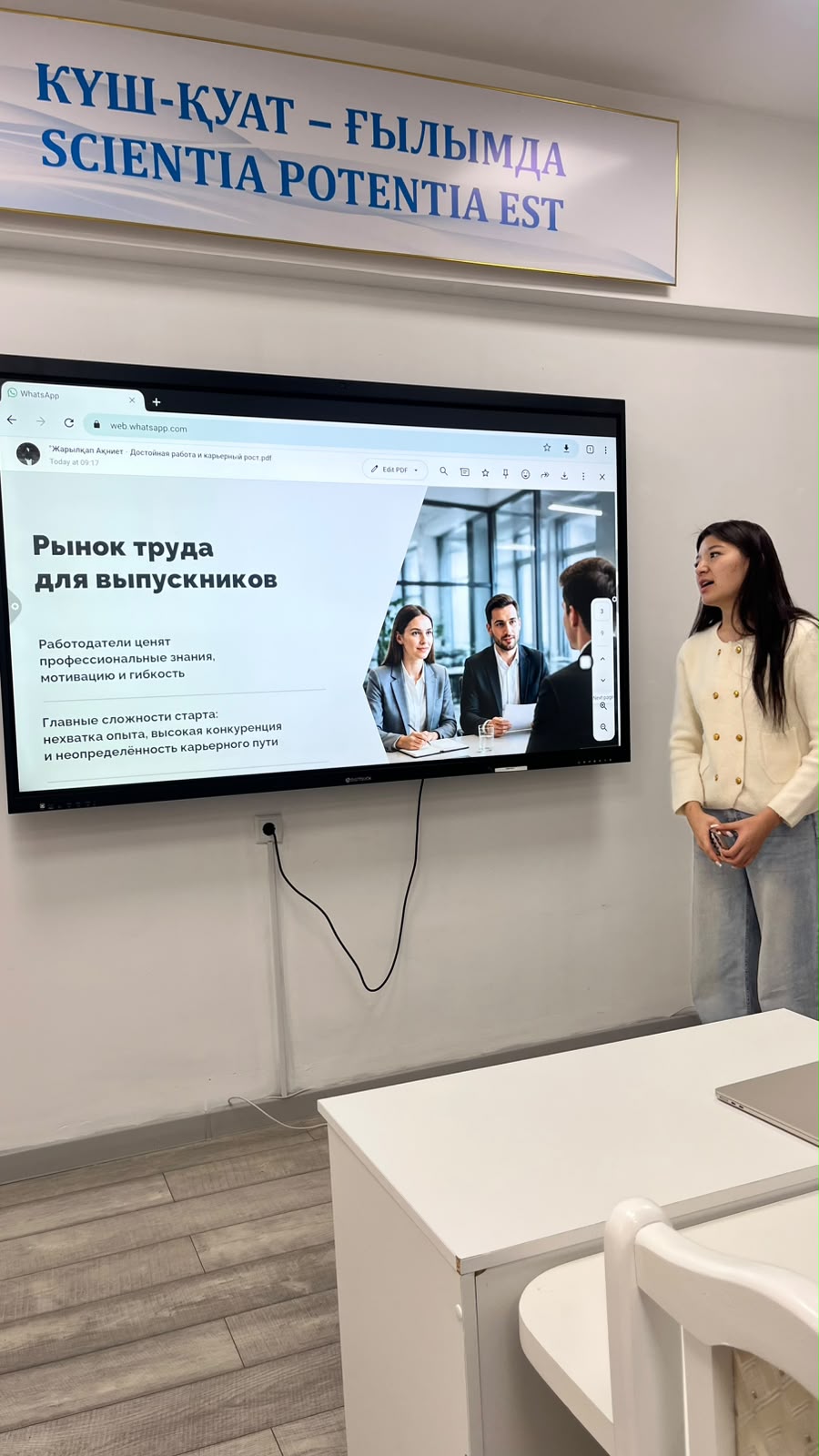
Students actively participated in the discussion, presented well-reasoned arguments in support of their viewpoints, and answered the lecturers’ questions. The discussion was engaging, informative, and educational. In conclusion, it can be noted that a successful career is not a matter of chance after graduation but rather the result of consistent, conscious, and purposeful work in one’s chosen professional field.
As a result of the lesson, students of the Faculty of History gained a more comprehensive understanding of their relatively new academic specializations and became familiar with relevant professional terminology and the current requirements of the labour market. The knowledge acquired contributed to broadening their professional outlook, shaping their career aspirations, and helping them understand future employment opportunities and prospects for professional development.
Other news