The Museum of Biology: A Treasure Trove of Nature’s Secrets
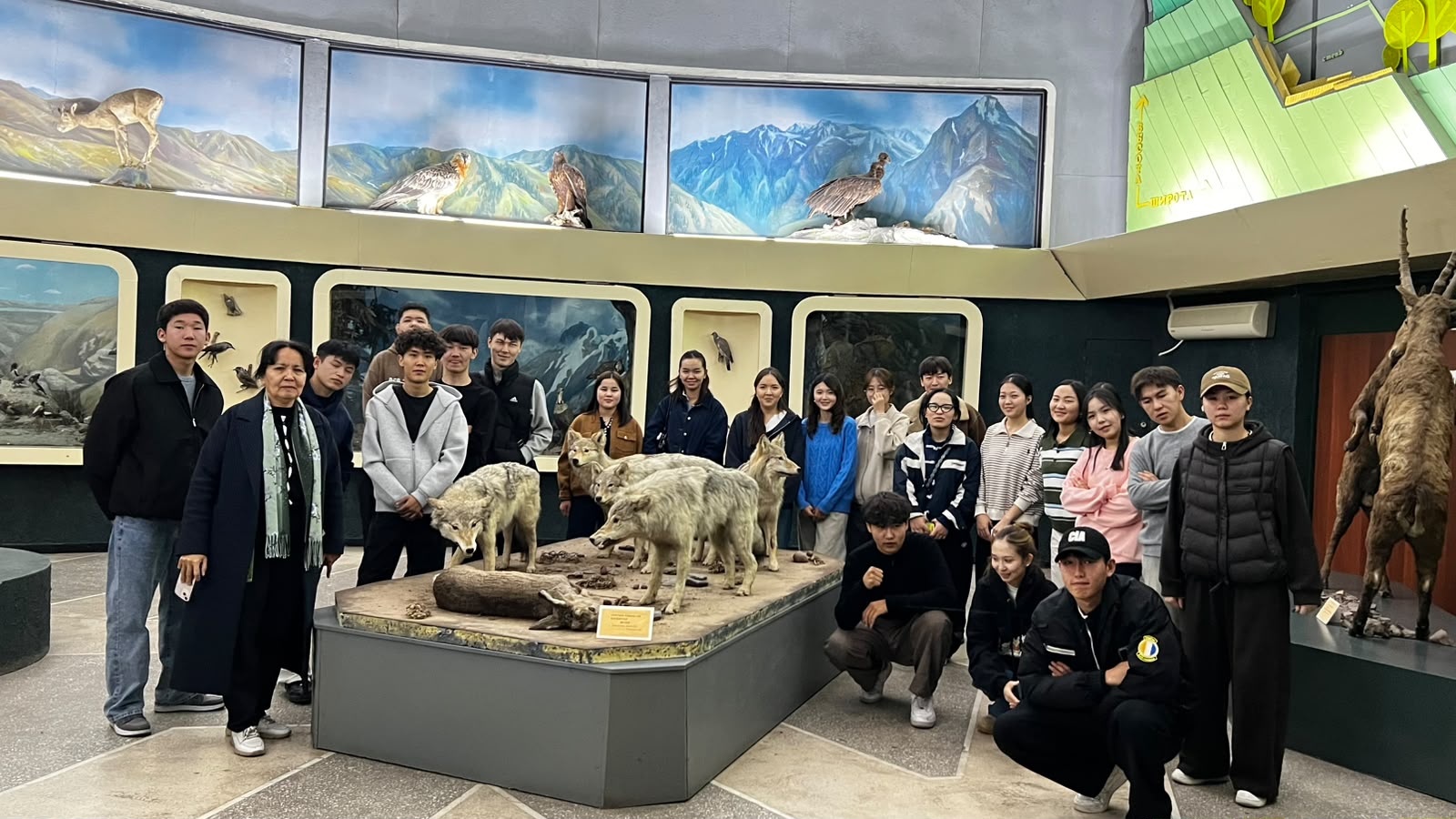
As part of the United Nations Sustainable Development Goals (SDGs), particularly Goal 4 – Quality Education and Goal 11 – Sustainable Cities and Communities, the Department of Pre-University Training of the Faculty of Pre-University Education at Al-Farabi Kazakh National University organized an educational visit to the Museum of Biology, located at the university’s Faculty of Biology and Biotechnology. The visit proved to be an engaging, inspiring and highly educational experience for the students.
Established in 1936, the Museum of Biology is one of the oldest university museums in Kazakhstan and is renowned for its rich and diverse collections. During the visit, international students explored the museum’s thematic exhibitions and had the opportunity to discover more than 5,000 zoological and botanical specimens collected not only in Kazakhstan but also from various parts of the world.
Anar Bakyтkaliyevna, a senior museum staff member, provided an informative overview of the importance of preserving biodiversity, protecting endangered species and addressing the changes taking place in Kazakhstan’s ecosystems.
The students showed particular interest in the distinctive features of Kazakhstan’s natural environment, rare species of flora and fauna, and especially the exhibitions devoted to the animal kingdom. The taxidermy specimens of birds and mammals attracted considerable attention, offering students a closer insight into the remarkable diversity of wildlife.
Students intending to pursue careers in biology and medicine actively participated in the visit, asking questions and gaining valuable new insights into the natural world.
The educational excursion not only broadened the students’ horizons and stimulated their interest in learning but also contributed to fostering a deeper appreciation of nature, environmental awareness and ecological responsibility. Undoubtedly, such educational initiatives play an important role in nurturing a generation that values natural heritage, understands the importance of biodiversity and recognizes its responsibility to protect the environment for future generations.
Other news