- Main
- News
- Students learn about the future of medicine in Kazakhstan in light of the President's Address
Students learn about the future of medicine in Kazakhstan in light of the President's Address
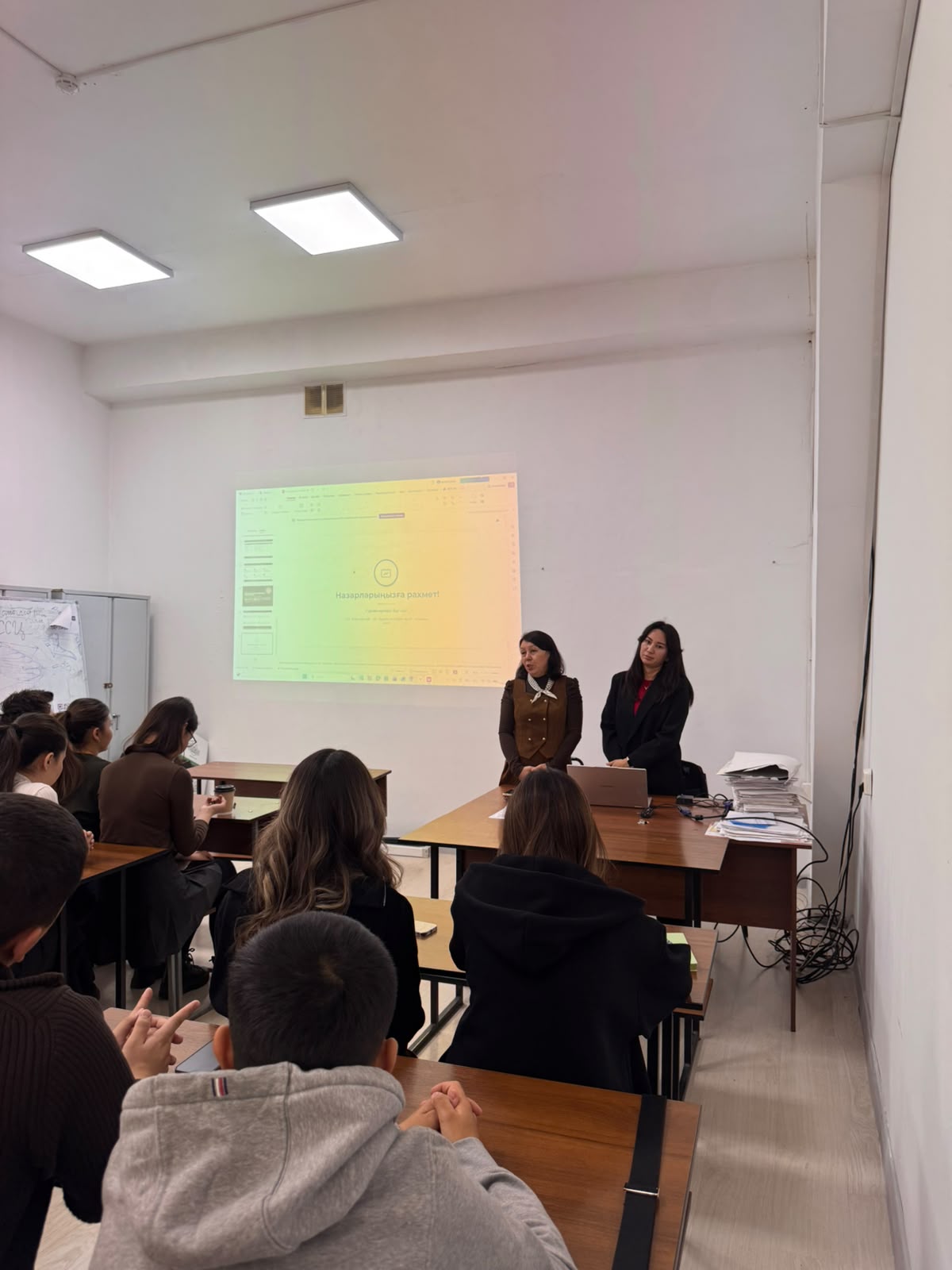
On 16 November, Zinat Abdrakhmanova, PhD, Associate Professor at the Department of Epidemiology, Biostatistics and Evidence-Based Medicine, gave a lecture for students at the Faculty of Medicine and Healthcare of Al-Farabi Kazakh National University. The lecture explained the Address of the Head of State Kassym-Jomart Tokayev to the people of Kazakhstan, “Current Tasks of Kazakhstan in a New Historical Cycle”. Its title was “The Future of Kazakhstan’s Medicine in a New Historical Period: Digitalization, Innovative Technologies and Public Health Protection”.
The lecture covered the healthcare tasks set out in the Address. These include building about 70 healthcare facilities in the regions, among them eight modern perinatal centres and seven multidisciplinary children’s hospitals, modernising primary health care, and raising the salaries of district primary care staff. The speaker also explained what the President’s call to build an AI-based digital economy means for medicine.
The speaker presented concrete results of healthcare digitalization: in 2025, 88.6% of medical services in Kazakhstan were provided electronically, and waiting times for specialist appointments fell markedly. The lecture also discussed AI-based diagnostic systems, the national medical data repository, and the risks of digital medicine: personal data protection, digital inequality and data quality. The importance of data quality was illustrated with an example from research carried out by the department’s staff.
The lecture was interactive. Students answered questions on the role of artificial intelligence in medicine, shared responsibility for public health, and what medicine in Kazakhstan might look like in 2036, and took an active part in the discussion.
In conclusion, the speaker stressed that digital literacy, data skills and research activity of future specialists are key conditions for the development of the national healthcare system.
Department of Epidemiology, Biostatistics and Evidence-Based Medicine
Other news