- Main
- News
- An open curatorial session was conducted on the topic “Police and Legal Literacy: Law and Order.” SDG 4: Quality Education
An open curatorial session was conducted on the topic “Police and Legal Literacy: Law and Order.” SDG 4: Quality Education
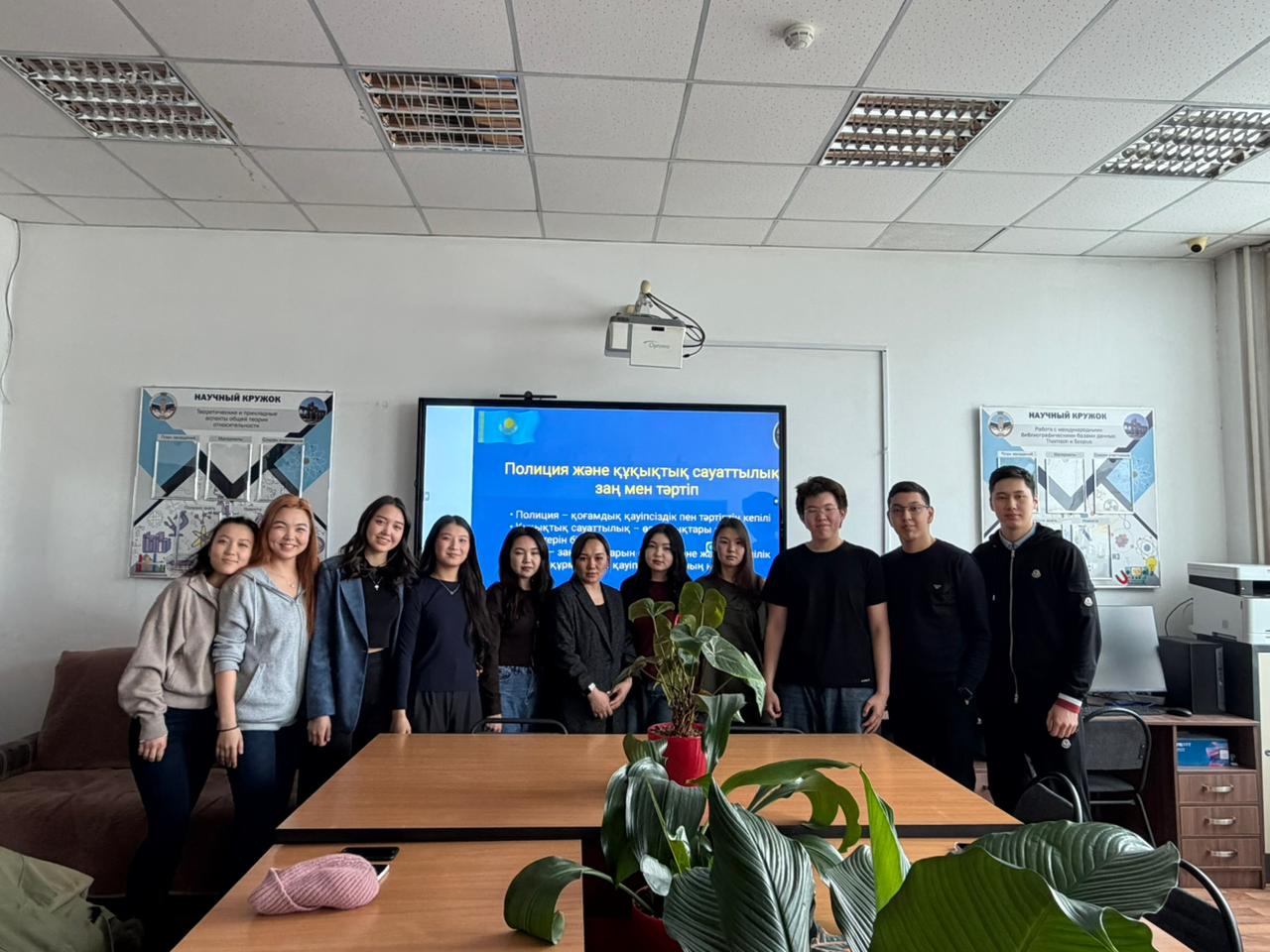
On February 23, 2026, an open curatorial session titled “Legal Literacy and Public Order” was held for third-year students of the educational program “Physics and Nanotechnology” at the Faculty of Physics and Technology of Al-Farabi Kazakh National University. The session was organized and conducted by the group curator E.B. Myrzabekova. The primary objective of the event was to enhance students’ legal literacy, foster respect for the rule of law, and develop a deeper understanding of civic responsibility among future specialists.
In modern society, knowledge of legal norms and an understanding of the principles of a law-governed state are essential components of an individual’s overall cultural and professional development. During the curatorial session, students were introduced to the significance of public order as a foundation for sustainable and secure societal development. Particular attention was given to the role of law enforcement institutions, as well as to the rights and responsibilities of citizens within the framework of the legislation of the Republic of Kazakhstan. The curator emphasized that compliance with legal norms is not only a legal obligation of every citizen but also an important factor in ensuring social stability, justice, and public trust.
The session was conducted in an interactive format that encouraged active participation from the students. Participants analyzed real-life situations related to the observance of legal norms, discussed possible solutions, and explored practical examples of how legal regulations operate in everyday and professional contexts. Special emphasis was placed on issues of legal responsibility, the importance of maintaining public order, and the role of civic engagement in strengthening a law-based society.
As part of the discussion, students examined various scenarios illustrating how legal mechanisms protect individual rights and contribute to maintaining social harmony. The conversation also addressed ethical considerations and the importance of legal awareness in professional activities. Participants concluded that legal culture is an essential component of professional competence, as modern specialists must not only possess strong expertise in their fields but also understand the functioning of legal systems and their role in society.
Students noted that legal literacy plays a crucial role not only in personal life but also in professional development. Understanding legislation, analyzing legal situations, and making well-informed decisions are important skills for active participation in social and professional life. The use of practical examples and interactive exercises provided students with valuable tools for approaching legal issues thoughtfully and responsibly.
The organization of such educational initiatives directly contributes to the implementation of the United Nations Sustainable Development Goals (SDGs). In particular, the event supports SDG 4 — Quality Education, which focuses on equipping students with comprehensive knowledge and developing responsible civic behavior. Moreover, promoting legal culture and respect for the rule of law aligns with SDG 16 — Peace, Justice and Strong Institutions, which aims to strengthen legal institutions, ensure justice, and foster peaceful and inclusive societies.
In conclusion, the open curatorial session “Legal Literacy and Public Order” served as an important educational platform for discussing issues related to civic responsibility, legal awareness, and social order. The interactive format, analysis of practical cases, and active participation of students contributed to a deeper understanding of the role of legal knowledge in both personal and professional life. Such initiatives play a significant role in shaping a generation of socially responsible specialists capable of making informed decisions and contributing to the development of a lawful and sustainable society.