QUALITY OF LIFE AND HEALTH OF CITIZENS OF KAZAKHSTAN
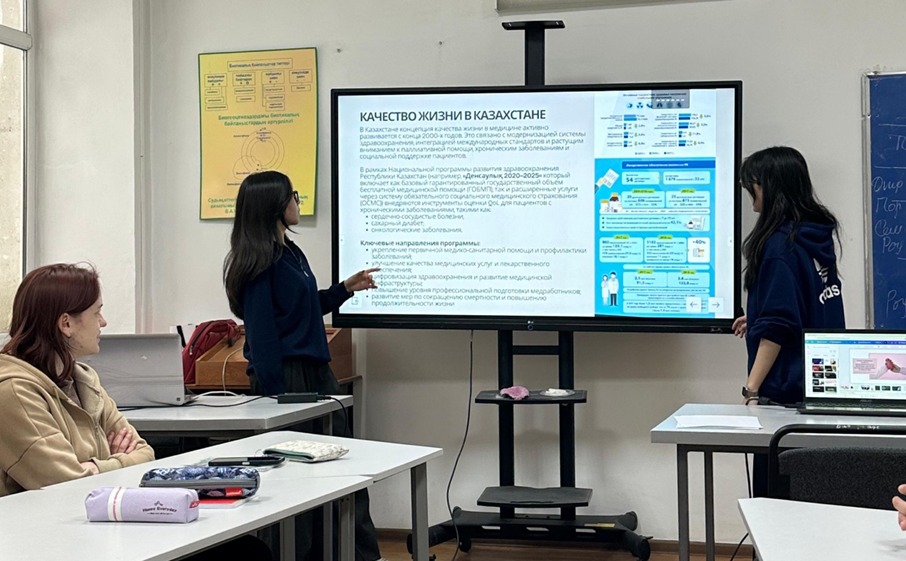
At Al-Farabi Kazakh National University, within the Faculty of Biology and Biotechnology and the Department of Botany and Agroecology, third-year students of the 6B05102 – Biology educational program (BB2317 group) conducted an educational and values-based event under the guidance of Professor S.T. Nazarbekova as part of SDG 3 – “Good Health and Well-Being.” The event aimed to discuss scientific and social mechanisms for improving the quality of life of citizens of Kazakhstan, while also highlighting the importance of bioethical decision-making in healthcare and strengthening the professional responsibility of future specialists.
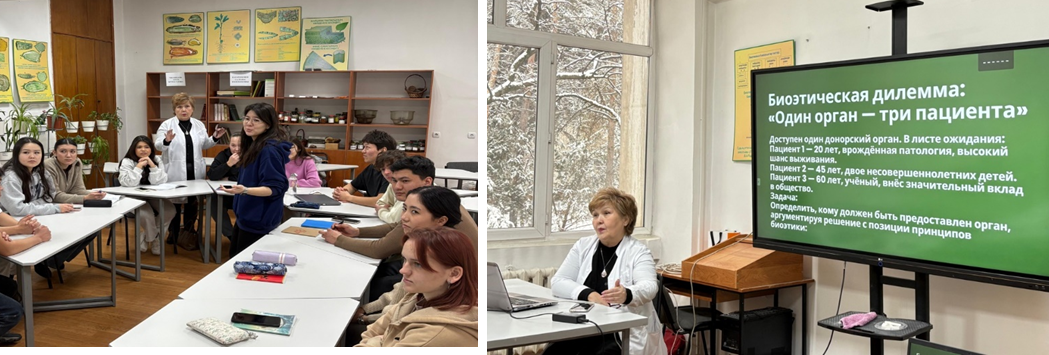
During the session, students actively addressed two key questions: “How can the quality of life and health of Kazakhstani citizens be improved?” and “What bioethical dilemmas does transplantology face in Kazakhstan?” The participants systematized major determinants of health outcomes—preventive medicine, early diagnosis, healthy lifestyles, environmental safety, mental health, and social support—and proposed practical measures for each area. In particular, they emphasized increasing physical activity among young people, promoting healthy nutrition habits, expanding evidence-based communication about vaccination, preventing harmful habits, and improving public health literacy.
A separate segment focused on the development of transplantology in the Republic of Kazakhstan and the public perception of organ donation. Students analyzed complex issues related to donor culture, informed consent, the concepts of “presumed consent” and “presumed refusal,” medical confidentiality, the principle of justice, and public trust in the healthcare system. Core principles of bioethics—autonomy, beneficence, non-maleficence, and justice—were discussed through real-life situational cases, with attention to risks and possible consequences of decisions. Participants also considered future prospects for biomedical development in this field in Kazakhstan, including the need to strengthen legal regulation, ensure adherence to professional ethical standards, promote transparent communication, and expand public education initiatives.
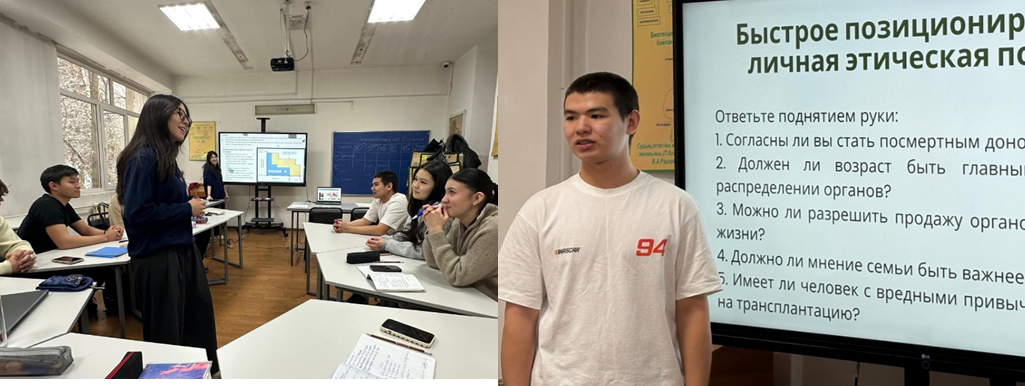
The activity was conducted in a brainstorming format: students worked in teams on situational tasks and produced evidence-based conclusions and recommendations for each case. As an educational outcome, participants demonstrated skills in reasoned argumentation, critical evaluation of scientific information, teamwork, and public presentation. They also identified their personal and professional contribution as future specialists: promoting preventive health culture, countering health-related myths, providing accurate information about organ donation, and supporting compliance with bioethical norms. Proposed initiatives included holding information sessions on donation, organizing a university-wide “Health Week,” creating a supportive space for mental health, and strengthening the role of clinical ethics committees. In the final reflection, students emphasized that achieving SDG 3 requires recognizing health as a national value. Guided by the principle “The health of the nation is the country’s greatest wealth,” they concluded that investing in the health of Kazakhstan’s citizens is a reliable foundation for sustainably improving quality of life. The outcomes of the discussion were documented and incorporated into the department’s educational work plan and students’ portfolios.
Department of Botany and Agroecology