- Main
- News
- SDG-Aligned Research: Population-Genetic Assessment of the Current Status of Trollius L. in Kazakhstan (PhD Pre-Defense)
SDG-Aligned Research: Population-Genetic Assessment of the Current Status of Trollius L. in Kazakhstan (PhD Pre-Defense)
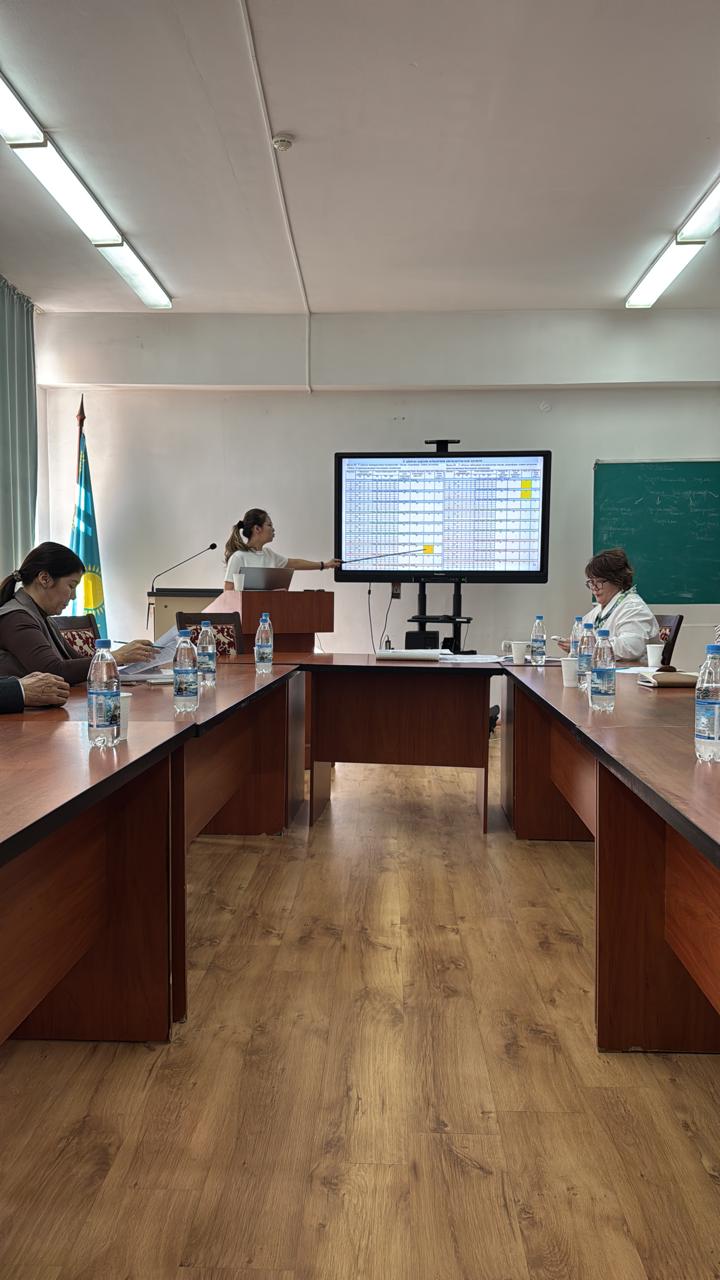
On 18 February 2026 at 11:00, an expanded departmental meeting was held at the Department of Botany and Agroecology, Faculty of Biology and Biotechnology, al-Farabi Kazakh National University. The event took place in Room 214, and the discussion was conducted in Kazakh. The meeting was chaired by the department-appointed chairperson, who introduced the agenda and clarified the procedural order for considering the main item.
The key agenda item was the pre-defense of the dissertation prepared by doctoral candidate Dina Ezimkhanovna Karabalaeva for the degree of Doctor of Philosophy (PhD) under the educational program “8D05108 – Geobotany”, entitled “A population-genetic study for assessing the current status of Trollius L. species occurring in Kazakhstan.” In her presentation, the candidate provided a comprehensive rationale for the scientific and applied relevance of the study, emphasizing its linkage to biodiversity conservation, monitoring, and the sustainable management of natural resources.
The relevance of the research was also highlighted in the context of the UN Sustainable Development Goals (SDGs). The study is directly connected to SDG 15 – Life on Land (biodiversity conservation, protection and monitoring of rare species). In addition, its outcomes align with SDG 13 – Climate Action (assessing the influence of natural factors), SDG 4 – Quality Education (PhD training), and SDG 17 – Partnerships for the Goals (international scientific collaboration), underscoring its scientific and practical value.
Turning to the core content, the candidate systematized the distribution areas of Trollius L. species in Kazakhstan and discussed the criteria used to assess the current condition of natural populations. She explained the advantages of population-genetic approaches for determining population stability, comparing levels of genetic diversity, and characterizing the effects of anthropogenic and natural factors. The presented results were interpreted within these criteria, and the candidate noted their potential use in supporting monitoring in protected areas, conserving rare and locally distributed populations, and informing decisions on the management of floristic resources..jpeg)
The candidate then introduced the supervisory team. The dissertation was carried out under the guidance of scientific consultants: the domestic supervisor, Meruert Sakenovna Kurmanbaeva, Doctor of Biological Sciences, Dean of the Faculty of Biology and Biotechnology at al-Farabi KazNU and Professor at the Department of Botany and Agroecology; and the international supervisor, Gábor Schramkó, PhD, Head of the Evolutionary Genomics Research Group of the Hungarian Academy of Sciences and affiliated with the University of Debrecen (Hungary). It was emphasized that international supervision strengthened the methodological framework of the research and expanded opportunities for comparative analysis.
Following the presentation, the discussion phase began. Reviewers Zarina Arkenzhanovna Inelova (Candidate of Biological Sciences, Research Professor at the Department of Botany and Agroecology, KazNU) and Laura Sharbatovna Shadmanova (PhD, Institute of Botany and Phytointroduction, Head of the Laboratory of Molecular Genetics and Plant Biotechnology) provided scholarly comments on the dissertation. Their recommendations focused on refining the research design, sampling logic, statistical processing, interpretation of genetic markers, and clarifying the applied significance of the conclusions. In response, the candidate provided comprehensive answers and outlined a plan to incorporate the recommendations into the final version of the dissertation.
In the concluding part of the discussion, the candidate acknowledged certain limitations of the sources and methods used and identified directions for further expansion of the analysis, including increasing the sampling area and sample size, expanding the set of genetic markers, and integrating genetic evidence with comprehensive ecological parameters. As a result, the pre-defense materials were оформалized in accordance with the department’s established procedures, and the dissertation was recommended for further improvement and submission to the next stage—formal defense.
Department of Botany and Agroecology