Mindfulness and responsibility in the student environment: no stalking
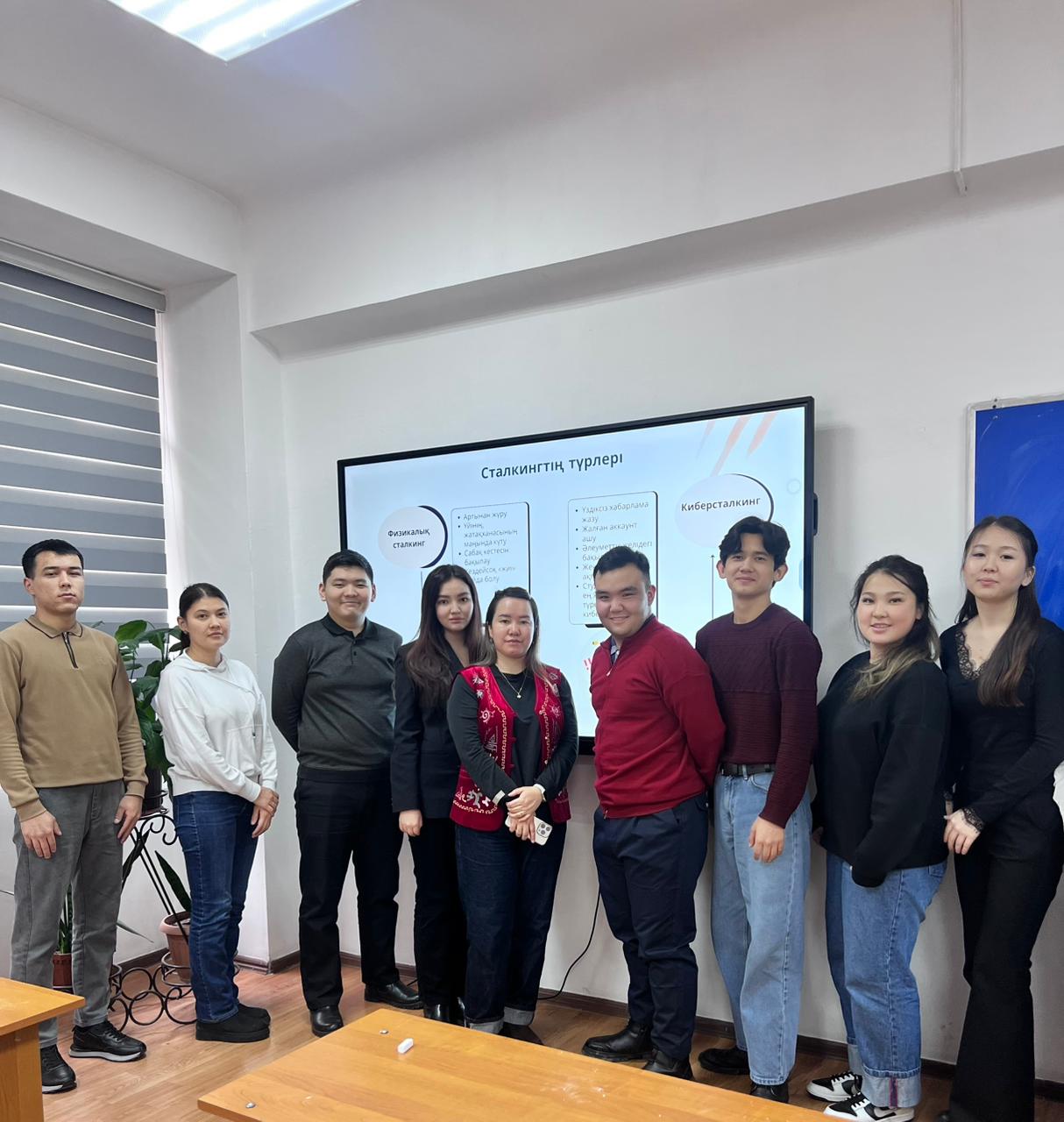
On March 4, 2026, an open advisory hour was held for students in group 24-05 of the educational program "6B05105-Genetics" on the topic "Mindfulness and Responsibility in the Student Environment: No to Stalking."
The goal of the hour was to explain stalking as a form of psychological harassment, discuss its negative consequences for the individual and society, foster a culture of mutual respect and safe interactions in the academic environment, and improve legal literacy among young people by familiarizing them with current legislation and the types of liability for such offenses.
The meeting examined the main forms and manifestations of stalking, including obsessive stalking, unwanted communications in the digital environment, pressure, and invasion of personal boundaries. Particular attention was paid to issues of digital security, responsible behavior on social media, and the ethics of interpersonal interactions within a student group. The students discussed real-life situations, possible responses, and procedures for seeking help if such problems arise.
A separate section of the lesson was devoted to the legal aspects of the issue. Participants learned about the legal provisions governing harassment, threats, and other forms of psychological pressure, as well as mechanisms for protecting individual rights. The discussion allowed the students to better understand the importance of maintaining personal boundaries, treating others with respect, and taking responsibility for their actions both offline and online.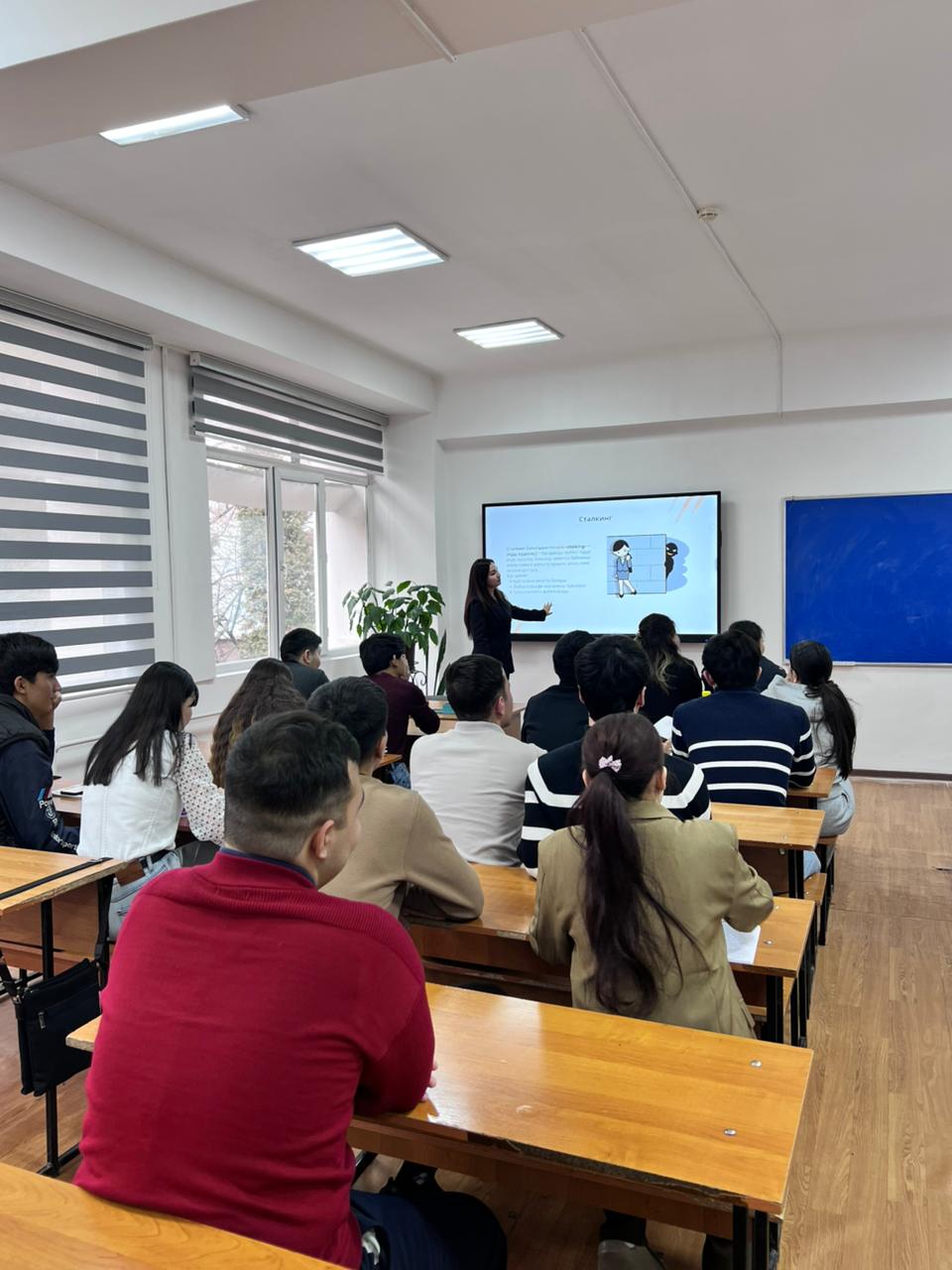
The event also aligns with the UN Sustainable Development Goals, specifically SDG 4 "Quality Education," which aims to develop students' social and civic competencies; SDG 5 "Gender Equality," which aims to combat various forms of harassment and discrimination; and SDG 16 "Peace, Justice, and Strong Institutions," which focuses on strengthening the legal culture and developing a safe and inclusive society.
The advisory hour was held in the format of an open discussion and allowed students not only to expand their knowledge of the legal and social aspects of the issue but also to develop a more responsible attitude toward issues of personal safety, respect, and ethical interactions within the student community.
Department of Molecular Biology and Genetics