- Main
- News
- KazNU Faculty Members Conduct a Practical Session on the Use of Virtual Reality Technologies at the 8th Aral Summer School
KazNU Faculty Members Conduct a Practical Session on the Use of Virtual Reality Technologies at the 8th Aral Summer School
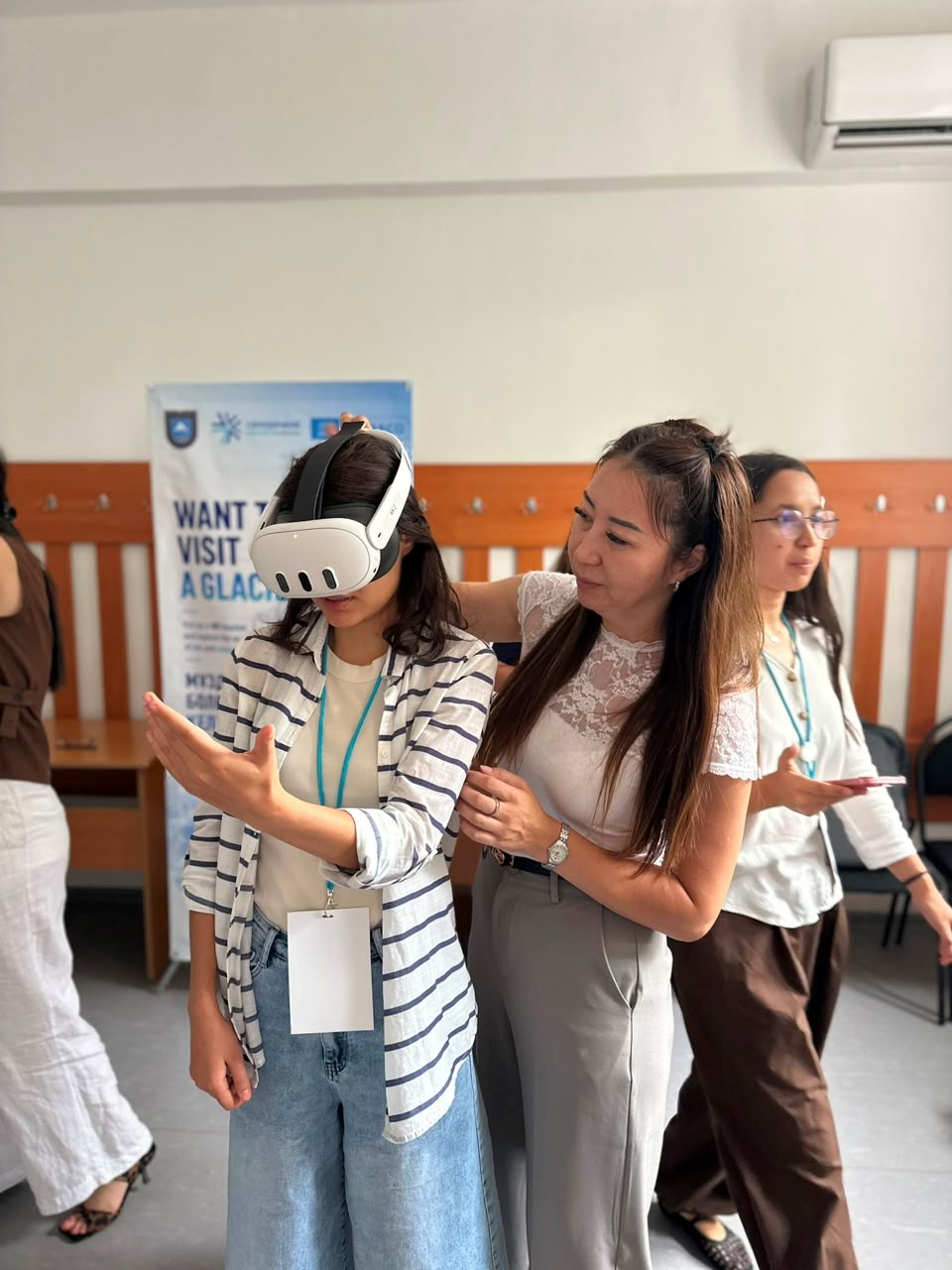
As part of the 8th Aral Summer School “Education for Sustainable Development: From Knowledge to Practical Impact,” held on 14–22 August 2026, faculty members of the Department of Meteorology and Hydrology, Faculty of Geography and Environmental Management, Al-Farabi Kazakh National University, conducted a practical session on the use of virtual reality technologies in environmental and climate education.
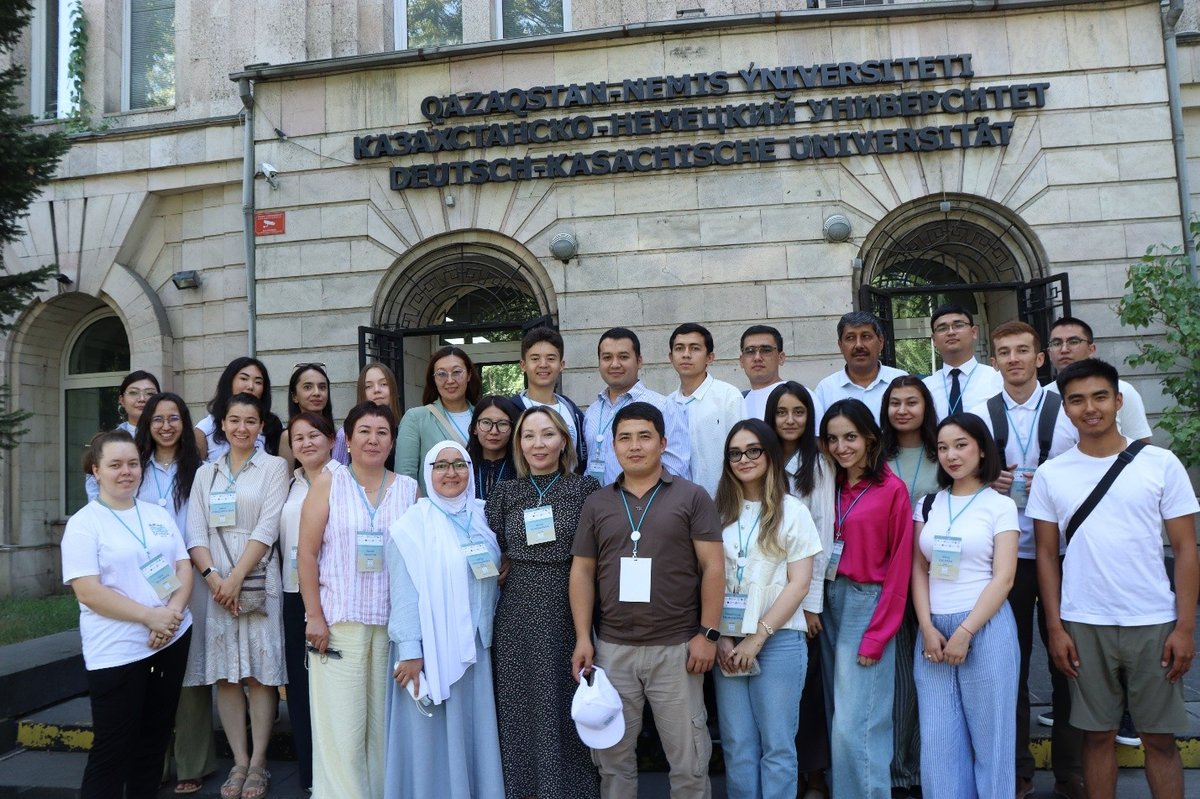
The Aral Summer School was organized by the Kazakhstan-German University (DKU) and the International Fund for Saving the Aral Sea (IFAS), with the participation of the Federal Foreign Office of Germany, the Green Central Asia initiative, the Regional Environmental Centre for Central Asia (CAREC), the IHE Delft Institute for Water Education, the German Society for International Cooperation (GIZ), and the Barsakelmes State Nature Reserve.
During the practical session, participants were introduced to the “Glacier Lifelines” virtual reality experience, developed as part of the GEF–UNDP–UNESCO project on the cryosphere of Central Asia. Participants had the opportunity to immerse themselves in a virtual environment and explore processes related to glacier change, climate change, water resources, and natural hazards.
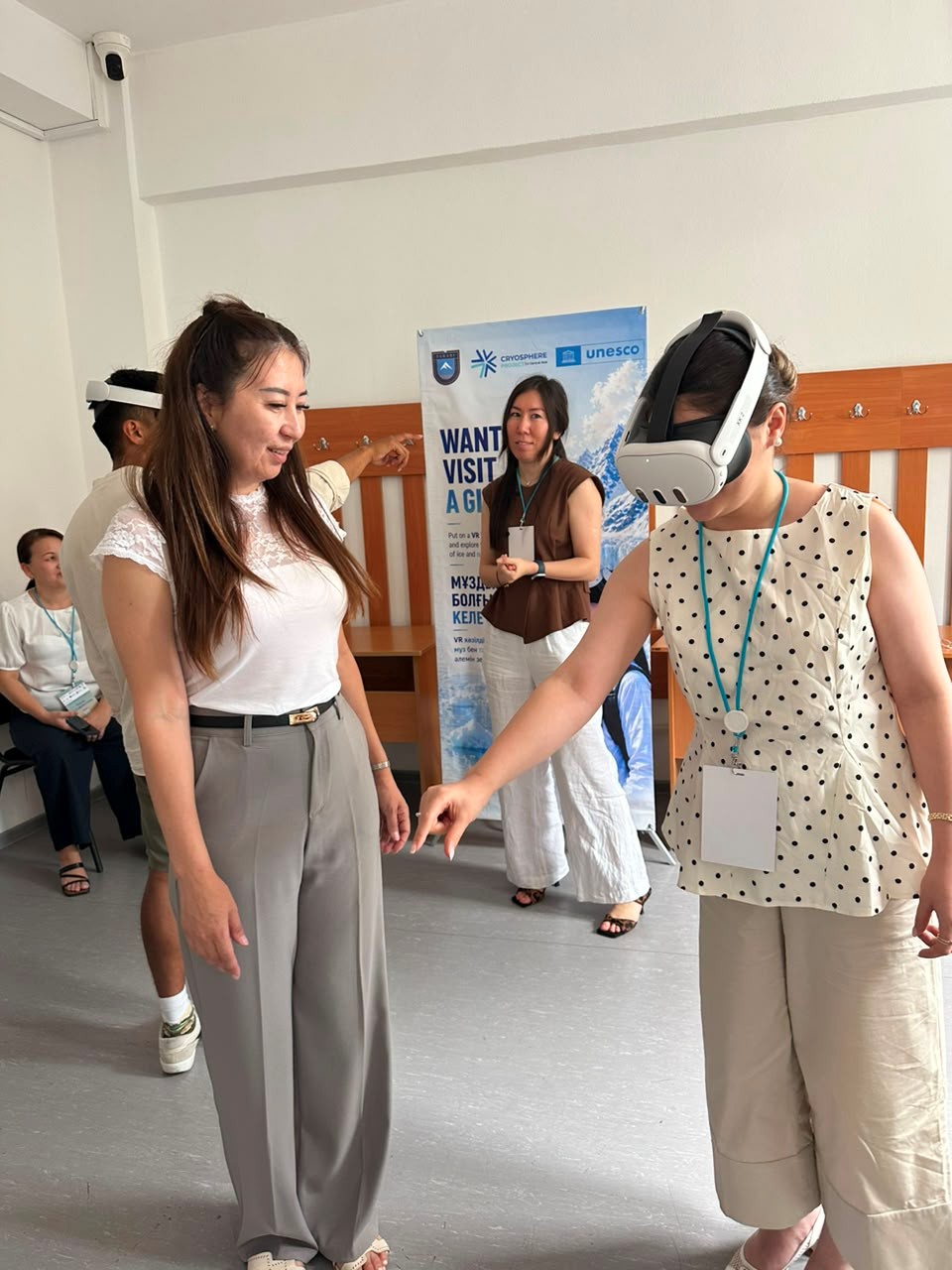
The participation of KazNU professors in the Aral Summer School contributed to the implementation of Sustainable Development Goal 13 “Climate Action” (SDG 13). The use of innovative educational technologies demonstrated practical approaches to enhancing climate literacy, understanding the impacts of climate change, and promoting environmentally responsible attitudes towards natural resources.
The practical session provided an opportunity to demonstrate the use of immersive technologies for educational purposes and highlight their potential for practice-oriented learning about climate change, the cryosphere, and water resources in Central Asia, while promoting the principles of sustainable development.
Other news