- Main
- News
- KazNU and Tashkent State Transport University Strengthen Cooperation within the International Summer School
KazNU and Tashkent State Transport University Strengthen Cooperation within the International Summer School
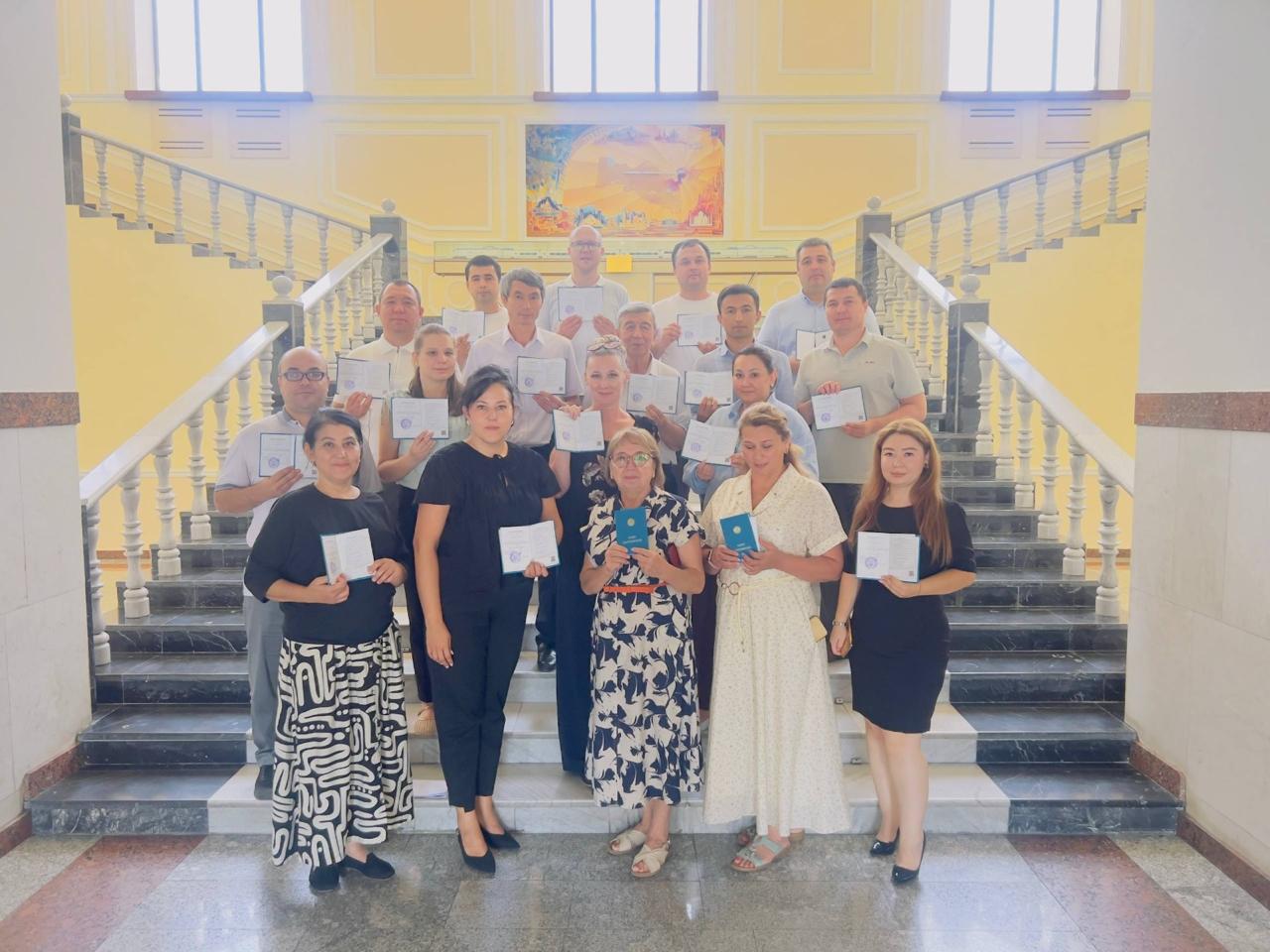
From 2 to 31 July 2026, the International Summer School for representatives of Tashkent State Transport University (Republic of Uzbekistan) was held at the Smart Marketing and Logistics Center of the Higher School of Economics and Business, Farabi University.
As part of the Summer School, a 144-academic-hour professional development course entitled “Operation of Railway Transport, Including Signalling, Centralization, Blocking and Communication Systems” was delivered. The program brought together 18 representatives of Tashkent State Transport University. The program aimed to update and systematize the professional knowledge and competencies of specialists in railway operations, train traffic management, signalling, centralization, blocking and communication systems, traffic safety, and operational risk management.
The course content was developed in line with current trends in the railway industry and covered nine thematic areas: logistics opportunities and prospects for railway transport development; regulatory and legal foundations of railway operations; train traffic management and station operations; blocking and train separation systems; operation of signalling, centralization and blocking systems and interaction between railway services; railway communication systems and telecommunication networks; operation, maintenance and development of modern railway communication systems; traffic safety and risk management; and economic aspects of railway operations.
Particular attention was paid to the reliability and safety of railway infrastructure, interaction between traffic management, signalling, centralization, blocking and communication services, personnel actions in non-standard operational situations, as well as current trends in the digitalization of railway transport.
Upon completion of the Summer School, 18 participants successfully completed the 144-academic-hour professional development program and received professional development certificates of the established format issued by Farabi University.
The International Summer School provided a practical contribution to the development of academic and professional cooperation between Kazakhstan and Uzbekistan in the field of transport education. Programs of this kind create opportunities for the exchange of professional knowledge and educational practices, the development of competencies among academic staff and specialists, and the strengthening of cooperation between universities in Central Asia.
The program contributes to the priorities of the United Nations Sustainable Development Goals (SDGs): SDG 4 “Quality Education” – the International Summer School promotes continuing professional education, professional development of specialists, and the dissemination of modern knowledge and technologies in railway transport; SDG 8 “Decent Work and Economic Growth” – the development of professional competencies among transport specialists contributes to strengthening human capital, improving labor productivity, and preparing professionals capable of working in the context of technological transformation of the transport sector; SDG 9 “Industry, Innovation and Infrastructure” – the study of modern signalling, centralization, blocking and communication systems, digital technologies, intelligent transport systems, and methods for improving railway infrastructure reliability directly contributes to the development of sustainable and innovative transport infrastructure; SDG 17 “Partnerships for the Goals” – the joint educational program involving Farabi University and representatives of Tashkent State Transport Universitycontributes to strengthening international academic cooperation, professional exchange, and partnership between Kazakhstan and Uzbekistan.
The course was developed and delivered by Nazdana Dzhems-Uatovna Adilova, PhD, Associate ResearcherProfessor at the Department of Business Technologies, Higher School of Economics and Business.
The International Summer School was organized by the Smart Marketing and Logistics Center of the Higher School of Economics and Business, Farabi University.
Other news