- Main
- News
- Constitutional Reforms and Youth Legal Security Discussed with Students of the Faculty of Physics and Technology at Al-Farabi Kazakh National University
Constitutional Reforms and Youth Legal Security Discussed with Students of the Faculty of Physics and Technology at Al-Farabi Kazakh National University
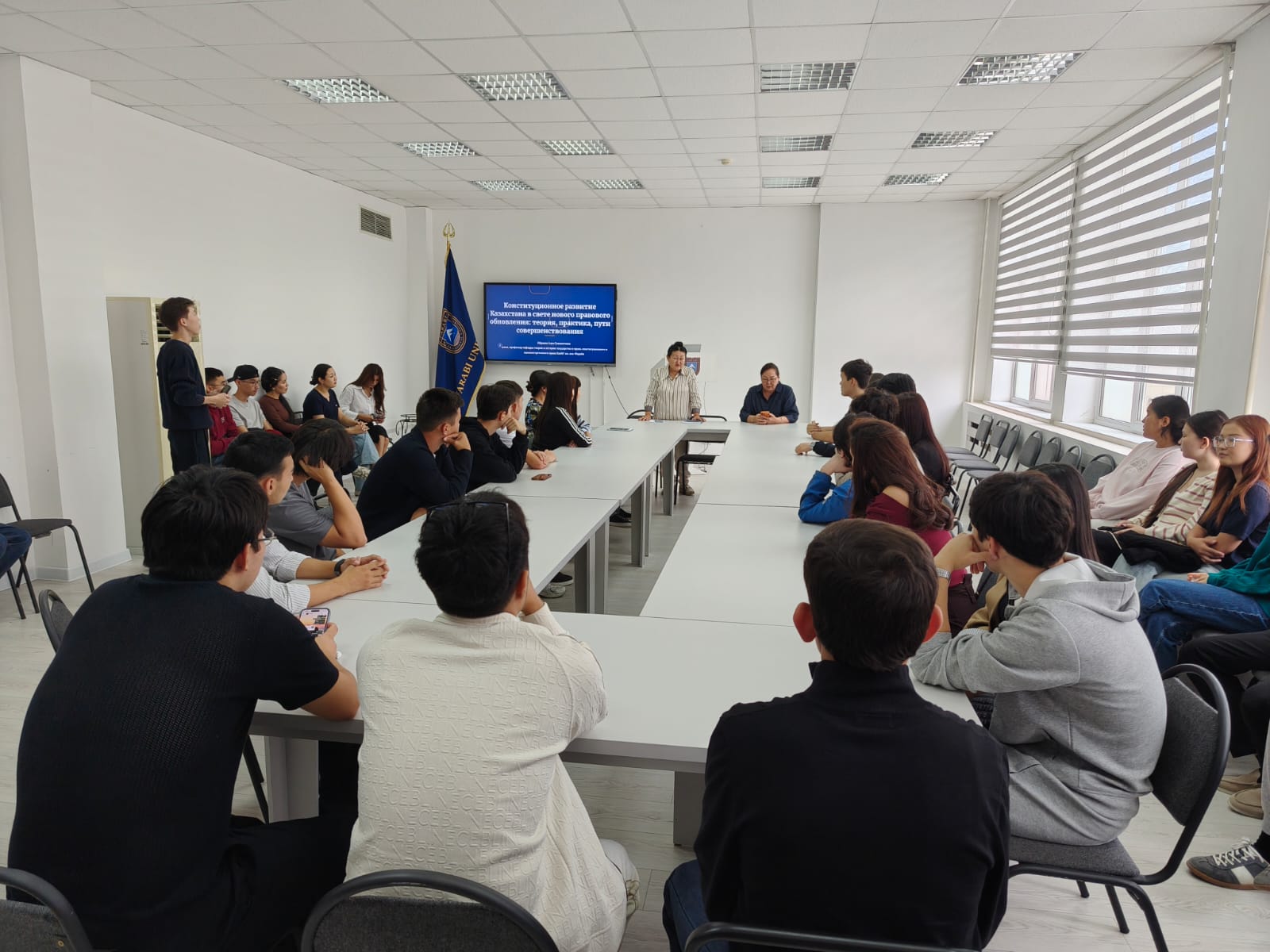
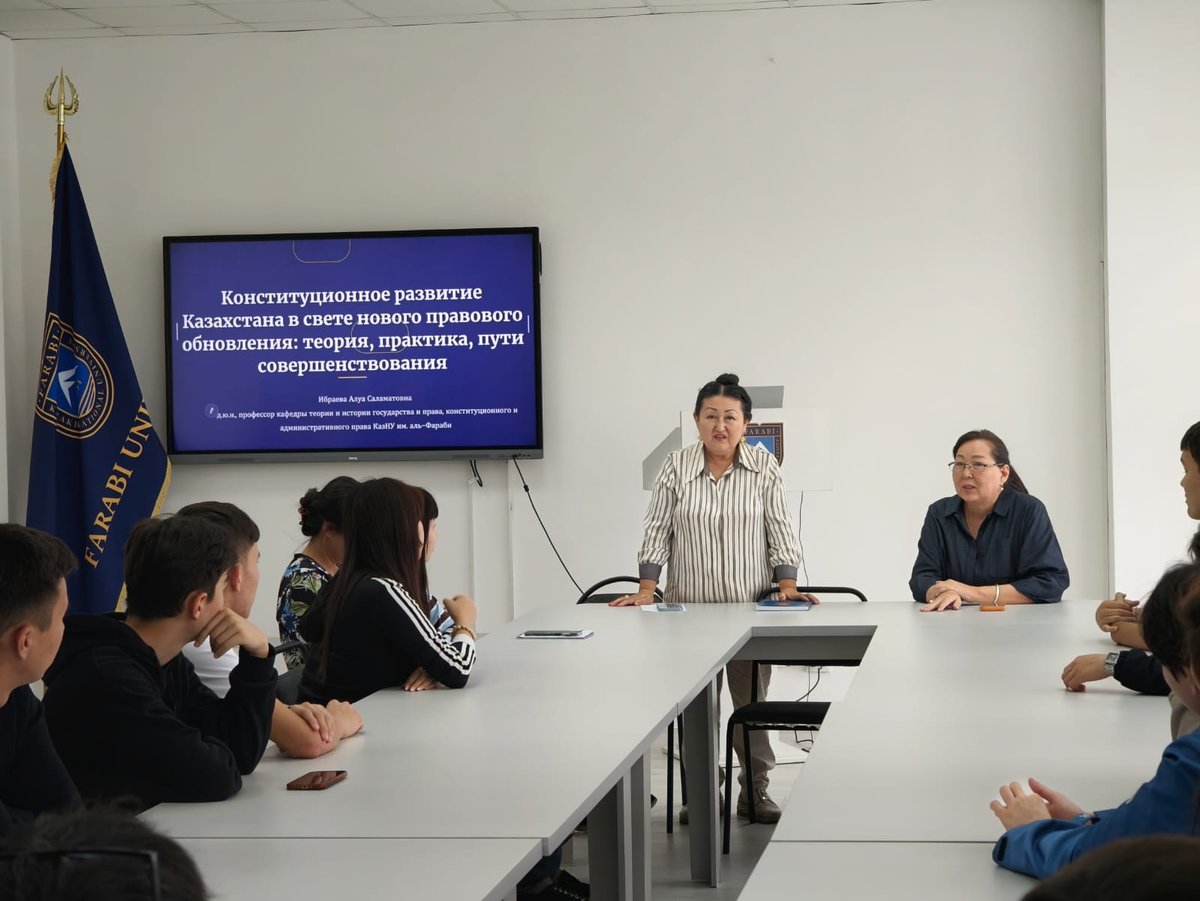
On 3 September 2026, a meeting was held in Room 330 of the Faculty of Physics and Technology at Al-Farabi Kazakh National University between students and Alua Salamatovna Ibrayeva, Doctor of Law and Research Professor. The topic of the open lecture was “Constitutional Reforms: Key Changes.”
Alua Ibrayeva is a prominent Kazakhstani legal scholar and Research Professor at the Department of Theory and History of State and Law, Constitutional and Administrative Law at Al-Farabi Kazakh National University. She graduated from KazNU in 1984 and has worked at the University ever since. In 2005, she was awarded the degree of Doctor of Law, and in 2006, she received the academic title of Professor. Her principal research interests include the theory of state and law, legal culture, legal education, and civic and legal upbringing. Under her academic supervision, 18 Candidates of Law and seven PhD graduates have been trained. She is the author of more than 200 scholarly publications, including monographs, textbooks, and teaching manuals.
The significance of the meeting was further enhanced by Professor Ibrayeva’s direct experience in addressing current issues related to the constitutional development of Kazakhstan. She was appointed to the Working Group on Parliamentary Reform, established by an Order of the President of the Republic of Kazakhstan dated 8 October 2025. The Working Group brought together representatives of government bodies, Parliament, academia, and the expert community, who contributed to the development of proposals aimed at further improving Kazakhstan’s political and legal system.
During the lecture, Professor Ibrayeva provided students with a detailed overview of the principal directions of constitutional reform, the principles governing relations between the state and citizens, individual rights and responsibilities, and the role of the Constitution as the foundation of the country’s legal system. Particular attention was given to provisions concerning the accountability of public authorities to citizens, the protection of individual rights and human dignity, and opportunities for judicial protection.
Special emphasis was placed on the legal culture of young people and issues of national security. Students were informed about how legislation regulates counter-terrorism and counter-extremism measures, why the activities of relevant organisations may be prohibited only in accordance with procedures established by law and on the basis of court decisions, and what forms of legal liability apply to participation in unlawful activities.
The influence of the information environment on young people was discussed as a separate topic. Participants considered the importance of critically assessing content published on social media and messaging platforms, recognising manipulative and provocative information, and avoiding involvement in the dissemination of extremist materials. In this context, examples from cinema were also discussed, particularly works addressing the causes of radicalisation, personal choice, and the consequences of involvement in destructive environments.
It was emphasised that preventing extremism cannot be reduced merely to knowing the list of prohibited organisations. Equally important are legal literacy, an understanding of constitutional values, respect for the rights of others, and the ability to independently assess and analyse information.
The meeting concluded with an open discussion. Students of the Faculty of Physics and Technology were able to ask Professor Ibrayeva questions about constitutional changes, citizens’ rights, mechanisms of interaction between individuals and the state, as well as the legal consequences of disseminating prohibited or provocative information.
The event provided a platform not only for discussing legal norms, but also for considering the practical importance of legal literacy for young professionals. For students in the natural sciences and technical disciplines, understanding their constitutional rights and responsibilities, as well as the principles of legal accountability, is an important component of professional development and responsible citizenship.
Other news