- Main
- News
- Information Session on Academic Mobility Held at the KazNU Faculty of Physics and Technology
Information Session on Academic Mobility Held at the KazNU Faculty of Physics and Technology
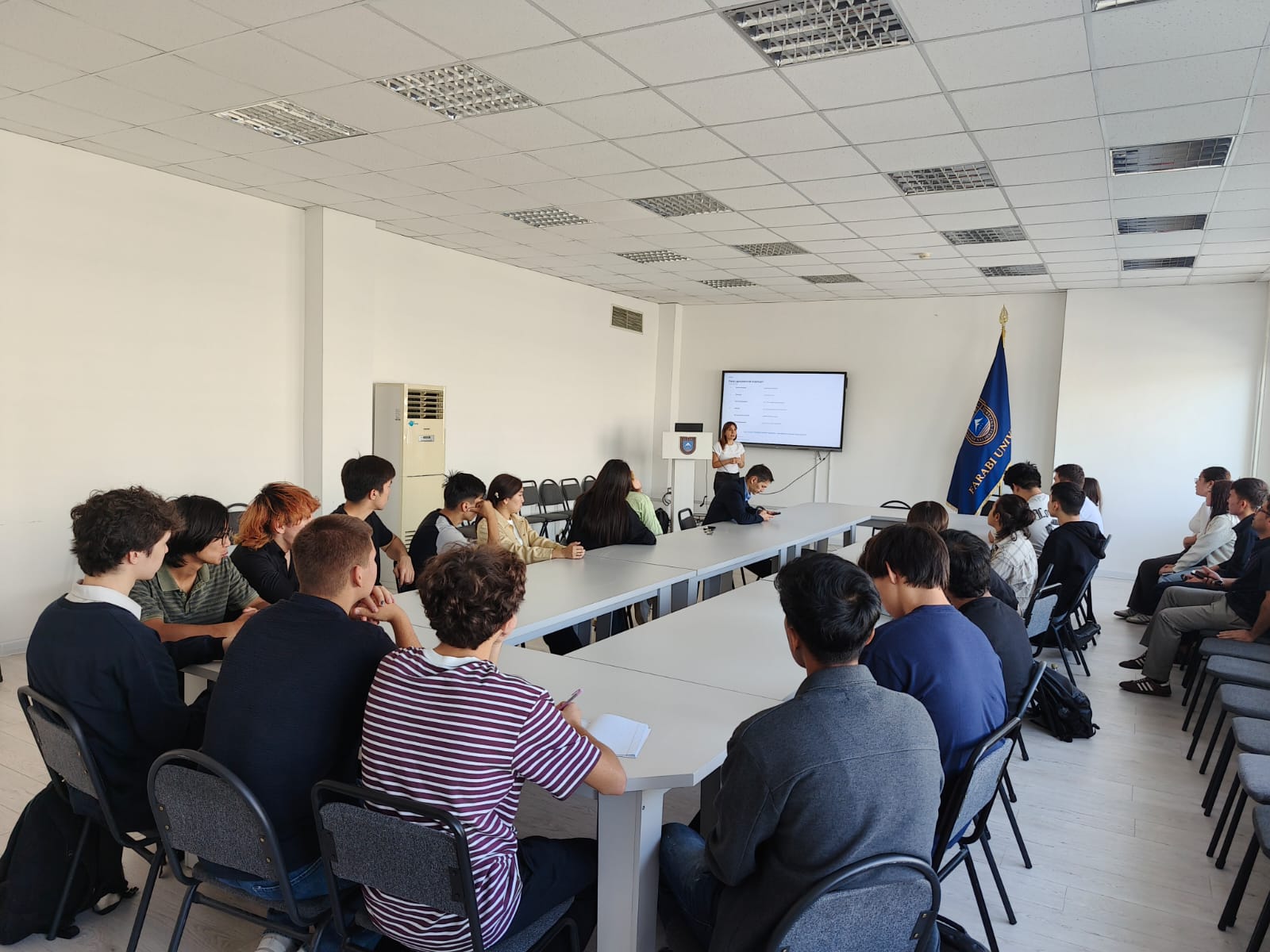
On 18 September 2026, the Faculty of Physics and Technology at Al-Farabi Kazakh National University (KazNU) held an information session for students on opportunities to participate in academic mobility programmes. The session brought together first-, second-, and third-year students interested in studying at KazNU’s international partner universities.
The meeting was organised with the participation of representatives of the KazNU Department of International Cooperation. Its primary purpose was to provide students with a clear understanding of the application process for academic mobility programmes, eligibility requirements, required documentation, principles for selecting a host university and courses, as well as application procedures and deadlines.
Particular emphasis was placed on the fact that academic mobility is not simply an opportunity to study abroad, but an important component of a student’s individual academic pathway. When courses are approved in advance, the courses completed and academic credits earned at a host university may be recognised by KazNU. International mobility also enables students to gain experience in a different academic environment, strengthen their language and professional competencies, build international networks, and develop greater independence in planning and managing their studies.
During the session, students were introduced to various international mobility opportunities, including the Erasmus+ and Orhun programmes. Participants were informed about the key differences between the programmes, their selection and funding arrangements, and the importance of checking whether active agreements and quotas are available for their particular field of study. Another essential requirement is the advance approval of courses to ensure the subsequent recognition and transfer of academic credits.
A separate part of the session focused on application documentation. Students were advised to prepare their academic transcripts well in advance, check the validity of their passports, obtain appropriate evidence of foreign-language proficiency, and carefully review the requirements of each individual call for applications. For Erasmus+, the materials presented during the meeting identified the main documents as an application form, an academic transcript in English, proof of language proficiency, a passport, a motivation letter, and a Learning Agreement.
Students were also encouraged to begin preparing before a specific call for applications is announced. They were advised to identify their preferred programme and semester in advance, check the compatibility of their field of study and the language of instruction, discuss potential course choices with their academic adviser and the Faculty, and begin preparing the required documentation. Before submitting an application, students should confirm the availability of a quota, the possibility of credit recognition for the selected courses, KazNU’s internal deadline, and the anticipated financial costs.
The meeting also provided information on international universities represented within academic mobility opportunities. The presentation materials highlighted universities in Sweden, Spain, Portugal, France, Norway, Latvia, Lithuania, and Croatia as Erasmus+ partners and potential mobility destinations. Students were reminded, however, that access to a particular university depends on the conditions of each individual call, the relevant field of study, the availability of a quota, and an active interinstitutional agreement.
Information sessions of this kind enable students to make informed decisions about the international dimension of their education from the early stages of their studies. For first-year students, such meetings provide an opportunity to become familiar with future mobility options and requirements and to begin preparing well in advance. For students in later years of study, they offer practical guidance on selecting an appropriate programme and preparing the necessary documentation in line with their academic performance and degree programme.
The development of academic mobility also contributes to the United Nations Sustainable Development Goals (SDGs). Expanding students’ access to international educational experiences supports SDG 4 – Quality Education by broadening opportunities for high-quality learning and international academic experience. KazNU’s cooperation with international universities and student participation in exchange programmes also contribute to SDG 17 – Partnerships for the Goals by strengthening institutional links, promoting academic exchange, and fostering sustainable long-term international cooperation.
The KazNU Faculty of Physics and Technology will continue to provide information and guidance to students interested in academic mobility and will keep them informed about new calls for applications, available quotas, and opportunities to study at international partner universities.
Other news