- Main
- News
- Projects “Kok-Zhailau” and “Almaty Mountain Cluster” Discussed at the Faculty of Geography and Environmental Sciences
Projects “Kok-Zhailau” and “Almaty Mountain Cluster” Discussed at the Faculty of Geography and Environmental Sciences
On September 25, 2026, the Faculty of Geography and Environmental Sciences of Al-Farabi Kazakh National University hosted a meeting with young people dedicated to the presentation and explanation of the “Kok-Zhailau” and “Almaty Mountain Cluster” projects.
During the meeting, the key directions and prospects for the implementation of the projects were presented. The participants discussed the development of mountain tourism and tourism infrastructure in Almaty, as well as the significance of these initiatives for the further development of the tourism industry.
E.M. Yerkinbayev, Chief Executive Officer of Kazakh Tourism Development, addressed the participants and presented the concept of the Almaty SuperSki mountain resort. According to the presentation, the project envisages the development of approximately 60 km of ski slopes, 17 ski lifts, and infrastructure designed to accommodate up to 10,000 skiers per day. Particular attention was paid to the accessibility of the resort for different categories of visitors, including people with reduced mobility, elderly people, and families with children. The concept also provides for the development of research activities at the resort, including the establishment of a weather station, a biodiversity museum, and a laboratory.
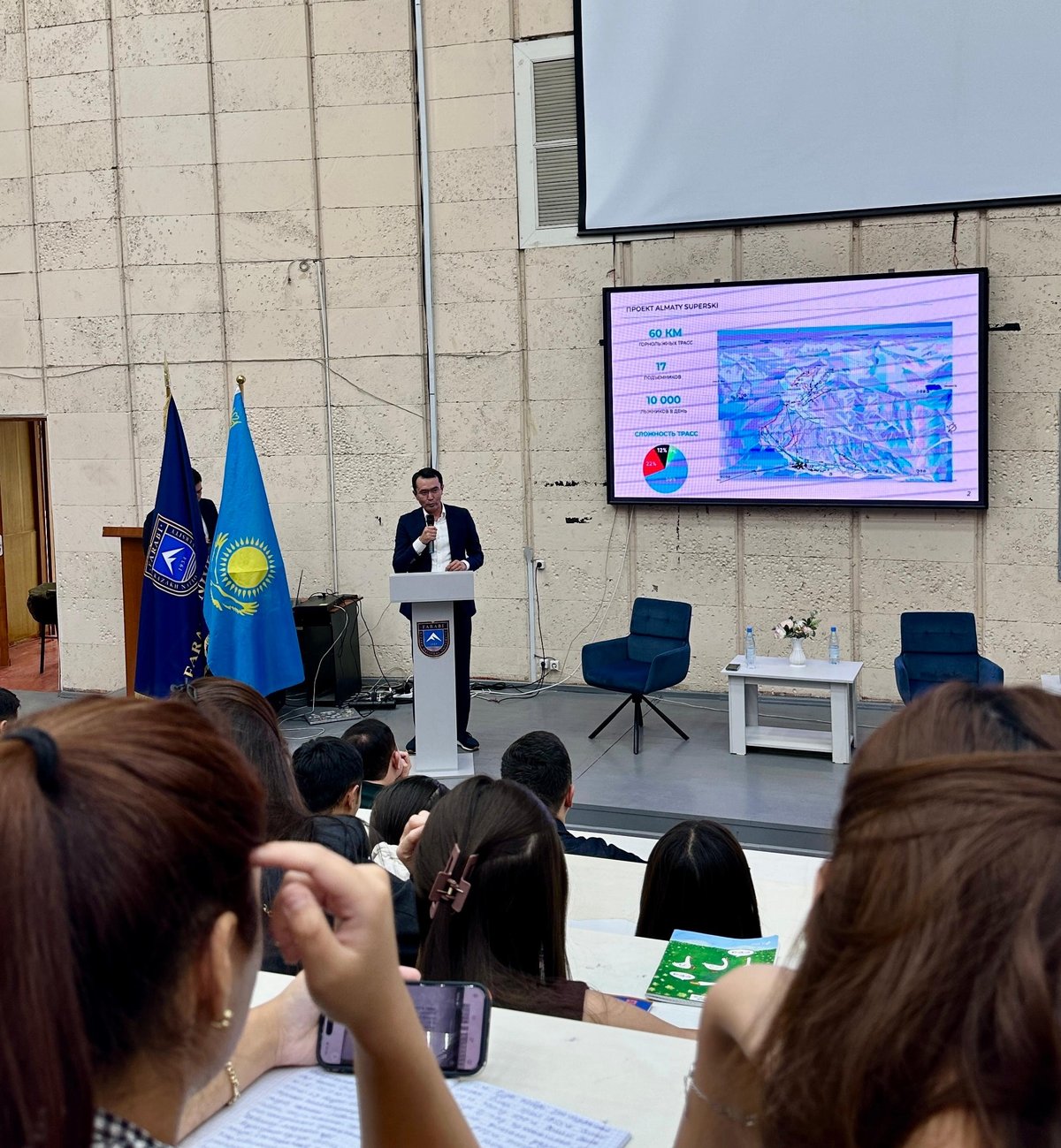
The event programme also included presentations by M.M. Mamadiyarov, Associate Professor of the Department of Electronics, Telecommunications and Space Technologies at Satbayev University, PhD; N.B. Zhakupov, Chairman of the Public Council of Almaty; and Sh.M. Mamanov, Director of the Almaty Chamber of Entrepreneurs.
The meeting also featured a presentation by Nursulu Ziyakhanovna Akhtayeva, Head of the Department of Botany and Agroecology at Al-Farabi KazNU. She noted that research institutes of Kazakhstan are involved in the development of the project, including scientific assessment of its potential impact on the natural environment. According to her, particular attention during project development is being paid to the preservation of natural ecosystems and the minimisation of possible negative environmental impacts.
The theme of the event is directly linked to the United Nations Sustainable Development Goals (SDGs). The development of tourism infrastructure and the creation of new opportunities in the tourism sector are aligned with SDG 8: Decent Work and Economic Growth. Issues related to the sustainable development of urban and suburban tourism areas correspond to SDG 11: Sustainable Cities and Communities, while the conservation of natural areas, biodiversity, and mountain ecosystems is linked to SDG 15: Life on Land. Cooperation between the university, the scientific community, businesses, industry organisations, and young people also reflects the principles of SDG 17: Partnerships for the Goals.
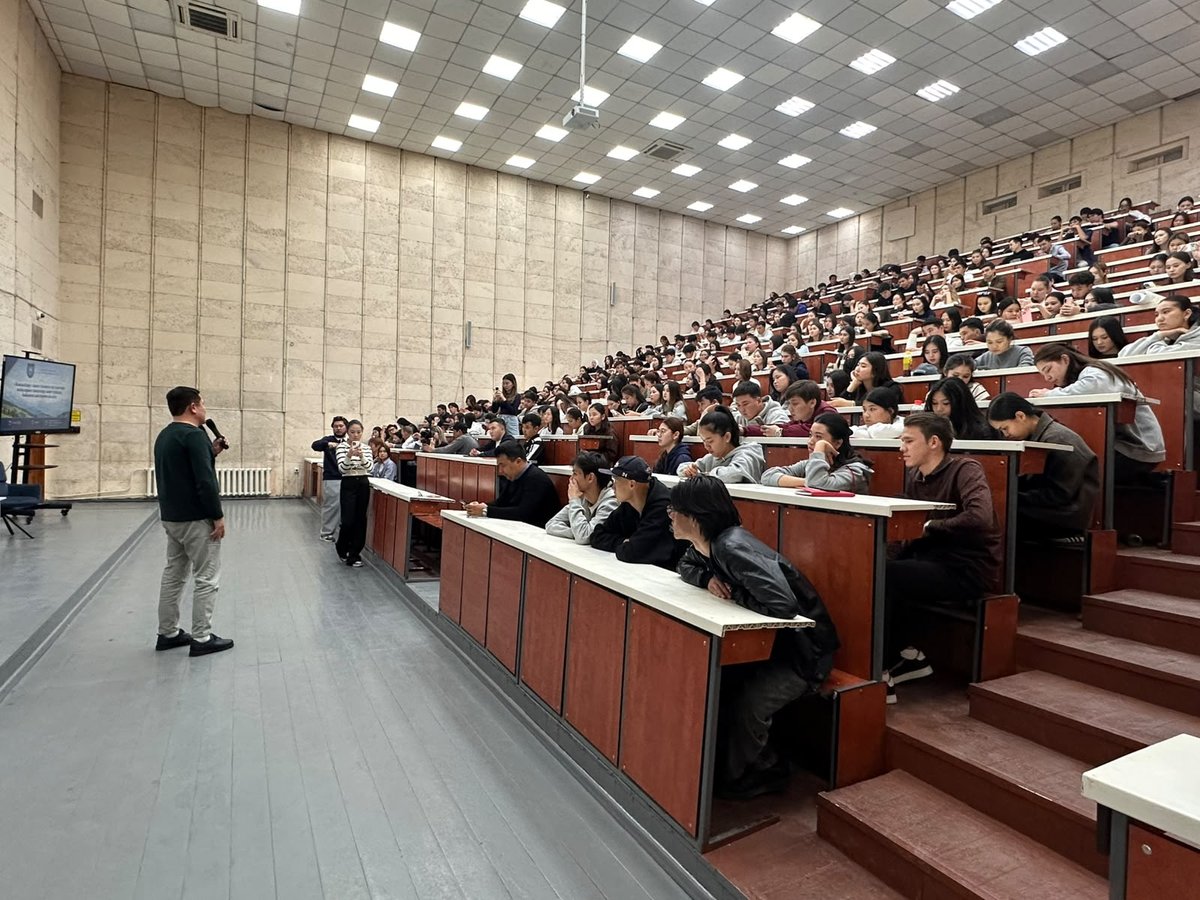
The discussion session generated particular interest. Students had the opportunity to ask questions, exchange views with the speakers, and discuss the prospects for implementing tourism projects in Almaty. A dedicated question-and-answer session was also included in the programme.
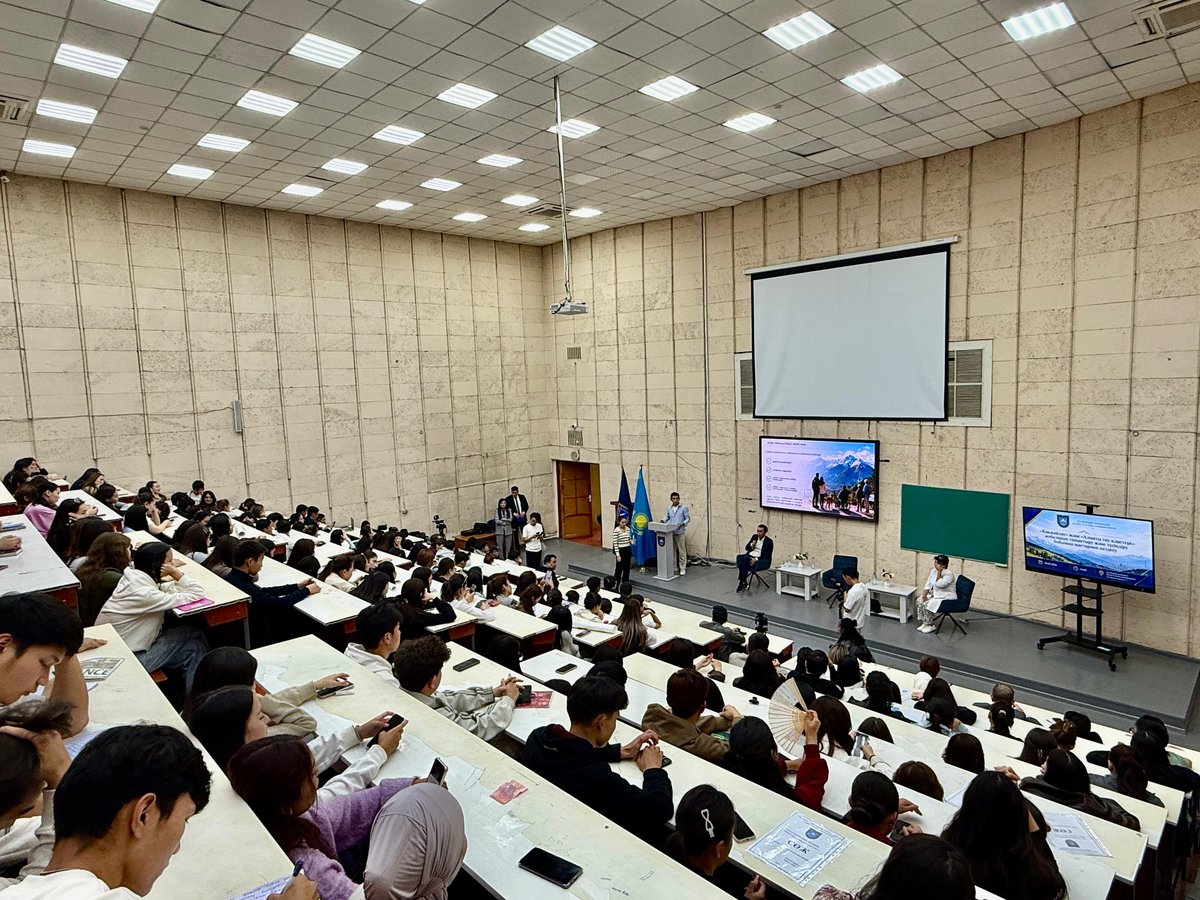
The event brought together representatives of the university and faculty administration, faculty members and students of the Tourism educational programme, as well as representatives of the Youth Affairs Committee and student organisations. A total of 200 participants attended the meeting, including 160 students of the Tourism educational programme.
The meeting became an important platform for professional dialogue between students, representatives of the tourism industry, the scientific community, and business. Such events contribute to broadening the professional outlook of future specialists, strengthening their understanding of sustainable tourism principles, and highlighting the importance of scientific support in the implementation of major tourism projects.
Other news