100 Years of Aksu-Zhabagly: Heritage for the Future
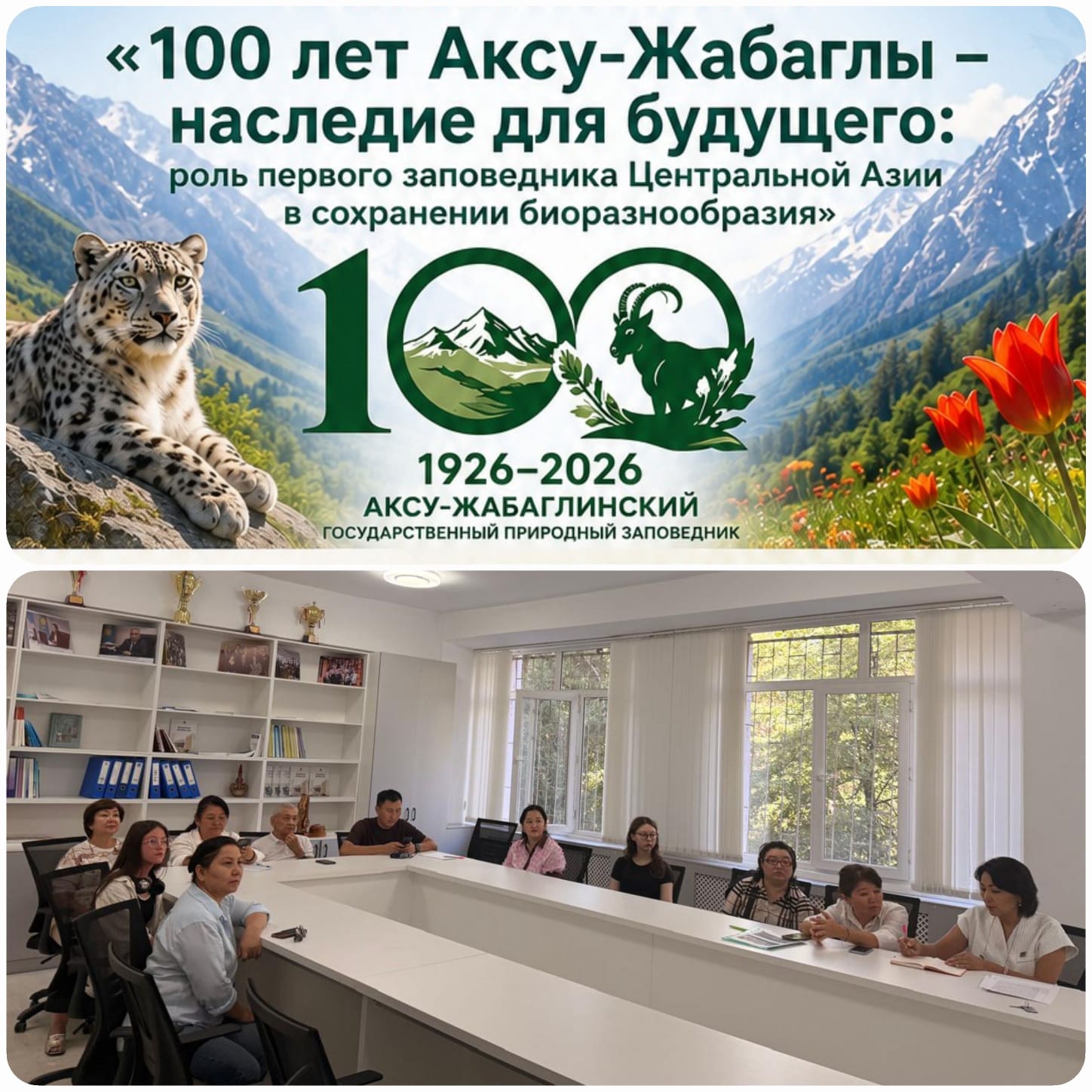
On August 27, 2026, the Faculty of Geography and Environmental Sciences of Al-Farabi Kazakh National University hosted a round table entitled “100 Years of Aksu-Zhabagly – Heritage for the Future: The Role of Central Asia’s First Nature Reserve in Biodiversity Conservation.” The event brought together faculty members and students of the UNESCO Chair for Sustainable Development, representatives of the Aksu-Zhabagly State Nature Reserve, the Institute of Zoology of the Republic of Kazakhstan, and the Central Asian-German Institute for the Protection of Ecosystem and Biodiversity.
The round table was dedicated to the 100th anniversary of the Aksu-Zhabagly State Nature Reserve, the first nature reserve in Central Asia, which plays an important role in conserving the unique biodiversity of the Western Tien-Shan. The participants discussed the history of the reserve, current conservation activities, environmental education, scientific research, and prospects for its further development.
A special part of the programme was an online presentation by Elmira Perdabayevna Dzhumanova, Head of the Environmental Education and Tourism Department of the Aksu-Zhabagly State Nature Reserve. She has devoted more than 20 years of her professional career to the reserve, focusing on environmental education, promoting natural heritage, and developing ecological routes.
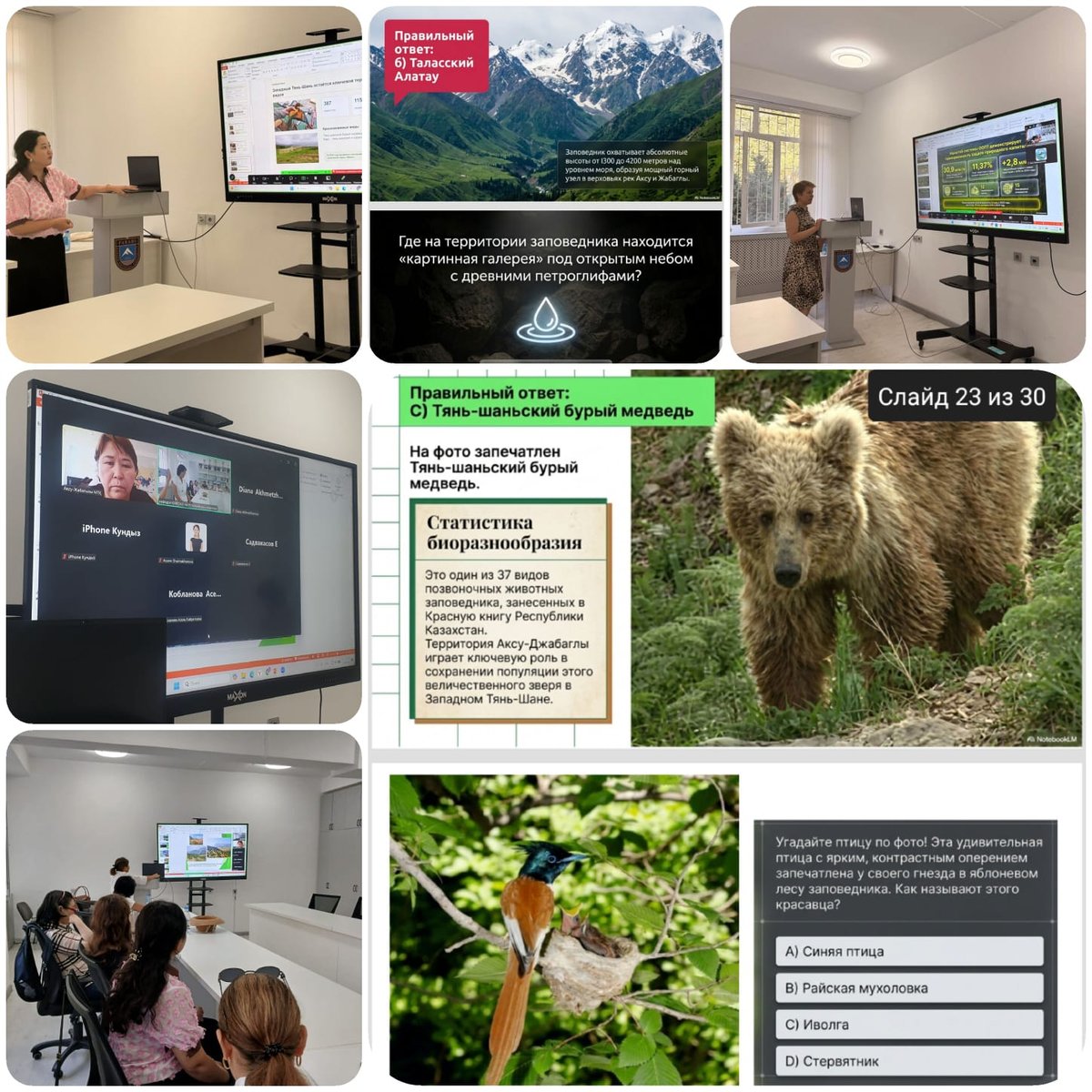
During her presentation, Elmira Dzhumanova introduced participants to the territory and natural diversity of Aksu-Zhabagly. The presentation highlighted its unique ecosystems, mountain ranges, natural landscapes, flora and fauna, as well as the reserve’s main areas of activity.
Particular attention was paid to the reserve’s work in protecting natural complexes, conserving biodiversity, promoting environmental education, and developing ecotourism. The visual materials helped participants better understand the distinctive features of the natural areas of Aksu-Zhabagly and the importance of the reserve for preserving the region’s natural heritage.
A scientific presentation entitled “The Role of Protected Natural Areas in Biodiversity Conservation and Achieving the Sustainable Development Goals” was delivered by O.A. Zubova, Assistant Professor of the UNESCO Chair for Sustainable Development. In her presentation, she emphasized the importance of protected natural areas as a key instrument for biodiversity conservation and sustainable development.
As part of the round table, G.B. Tanabekova, Scientific Secretary and Senior Researcher at the Institute of Zoology of the Republic of Kazakhstan, delivered a presentation entitled “Diversity of the Fauna of the Western Tien-Shan.” The research presented was conducted by specialists of the Institute of Zoology of the Republic of Kazakhstan within the framework of programme-targeted financing (PTF) under the project Development of an information system for maintaining the cadastre of wild animals of the Western Tien Shan to ensure their conservation and sustainable use.”
The presentation featured the results of a comprehensive assessment of the current fauna of the Western Tien-Shan, a unique transboundary natural region of international conservation importance that is included on the UNESCO World Heritage List.
In conclusion, G.B. Tanabekova emphasized the need for regular interdisciplinary monitoring, systematic updating of scientific databases, and consideration of research findings in the development of conservation measures and infrastructure planning. The research provides an important scientific foundation for conserving the unique fauna of the Western Tien-Shan.
The educational component of the event was complemented by the intellectual quiz “Do You Know Aksu-Zhabagly?”, prepared by K.K. Khamitova, a representative of the Central Asian-German Institute for the Protection of Ecosystem and Biodiversity. The quiz enabled participants to test their knowledge of the reserve’s history, nature, and biodiversity in an interactive format.
The round table brought together faculty members, researchers, representatives of conservation organizations, doctoral students, master’s students, and undergraduates. The event provided a platform for professional exchange and helped draw the younger generation’s attention to the conservation of biodiversity and Kazakhstan’s natural heritage.
The 100th anniversary of Aksu-Zhabagly is a significant milestone that reminds us of the importance of protecting our natural heritage and continuing efforts to preserve it for future generations.
Other news