The series of curator-adviser sessions organized by the UNESCO Department of Journalism and Communication continues.
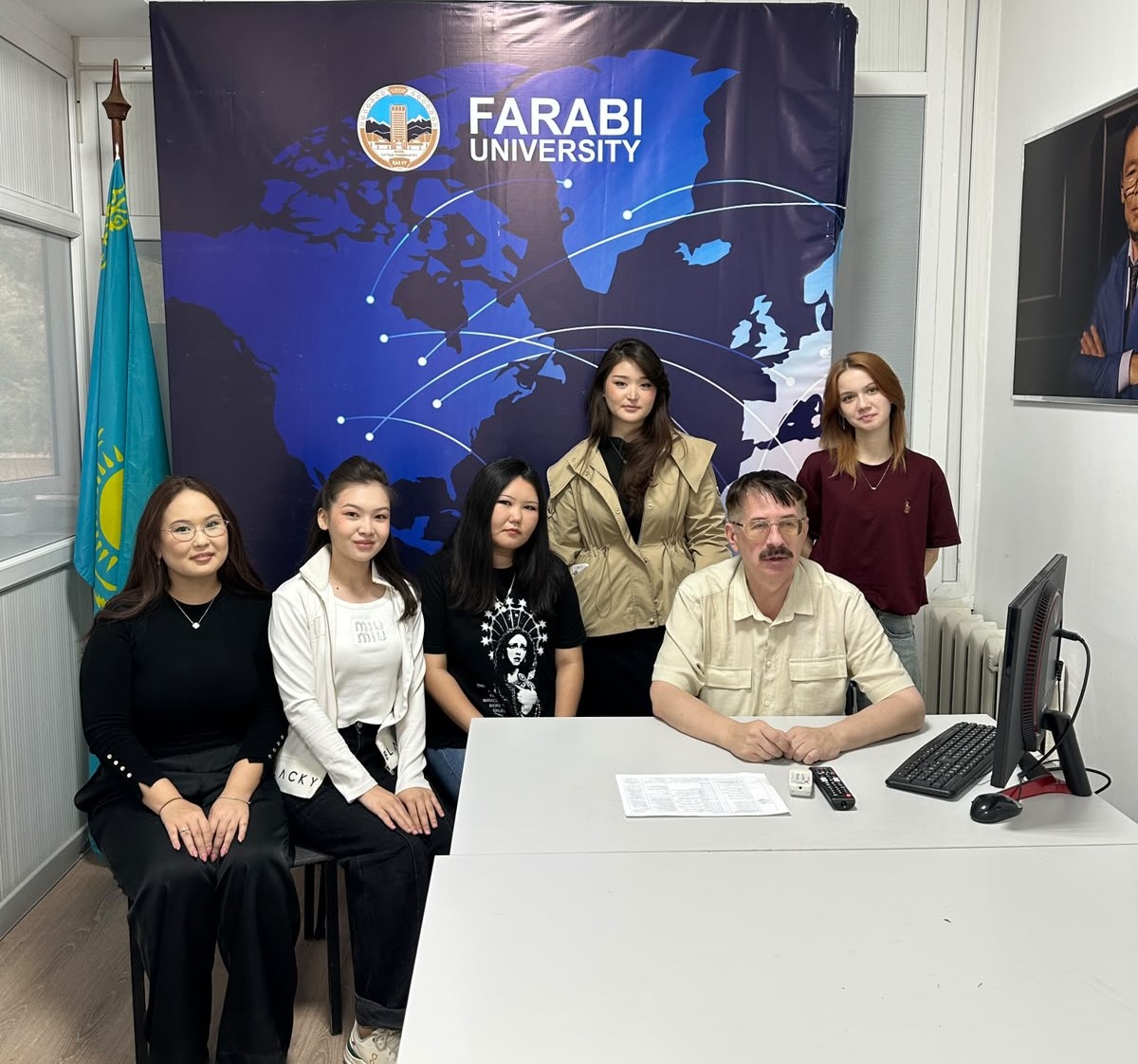
A curator session on the topic «Media Literacy and Critical Thinking» was held in the Russian-language group of 3rd-year students majoring in «Public Relations».
Everyone constantly uses the Internet, social networks, news websites, and messengers. However, not all information is reliable. Therefore, media literacy and critical thinking are of great importance. Most majors of the department and faculty study these issues professionally as part of their courses.
«Media literacy is the ability to perceive information correctly, verify its source, assess its reliability, and notice possible manipulation», explained the group curator, Alexander Rozhkov. Critical thinking is the ability to analyze information, verify evidence, compare different sources, and draw well-founded conclusions.
«The iPhone 18 can be ordered through a special link» – scammers use the pre-order of the new iPhone 18 as an opportunity to obtain banking and other confidential information from people in Kazakhstan. Factcheck.kz reported on this scheme on September 23, 2026», said Darya Makhorina, a 3rd-year student.
Also, in 2026, information about an allegedly existing one-time payment of 432,500 tenge for families with an income below a certain amount and people with certain illnesses was circulated on social networks and messengers. The Ministry of Labor of Kazakhstan officially denied this information: such a payment is not provided for by law. The ministry also warned that such messages may be used by scammers to obtain personal data. The students conducted a practical fact-check and determined that this fake news was yet another false claim that gave false hope to many families in Kazakhstan.
Media literacy helps people understand the influence of advertising and social networks. Bright advertising messages, emotional headlines, and social media algorithms can influence a person’s choices and views. Therefore, it is useful to compare different sources and approach information consciously.
The ability to work with information correctly is important both in education and in everyday life. Students have to search for a large amount of material on the Internet, so it is not enough simply to copy ready-made information – it is necessary to understand its content and assess the reliability of the source. It is also important to be careful with suspicious links, fake accounts, and messages that request personal data.
In conclusion, media literacy and critical thinking are important skills for a modern person, including students and graduates of our university.
Other news