Reading Culture as the Foundation of an Intellectually Developed Nation
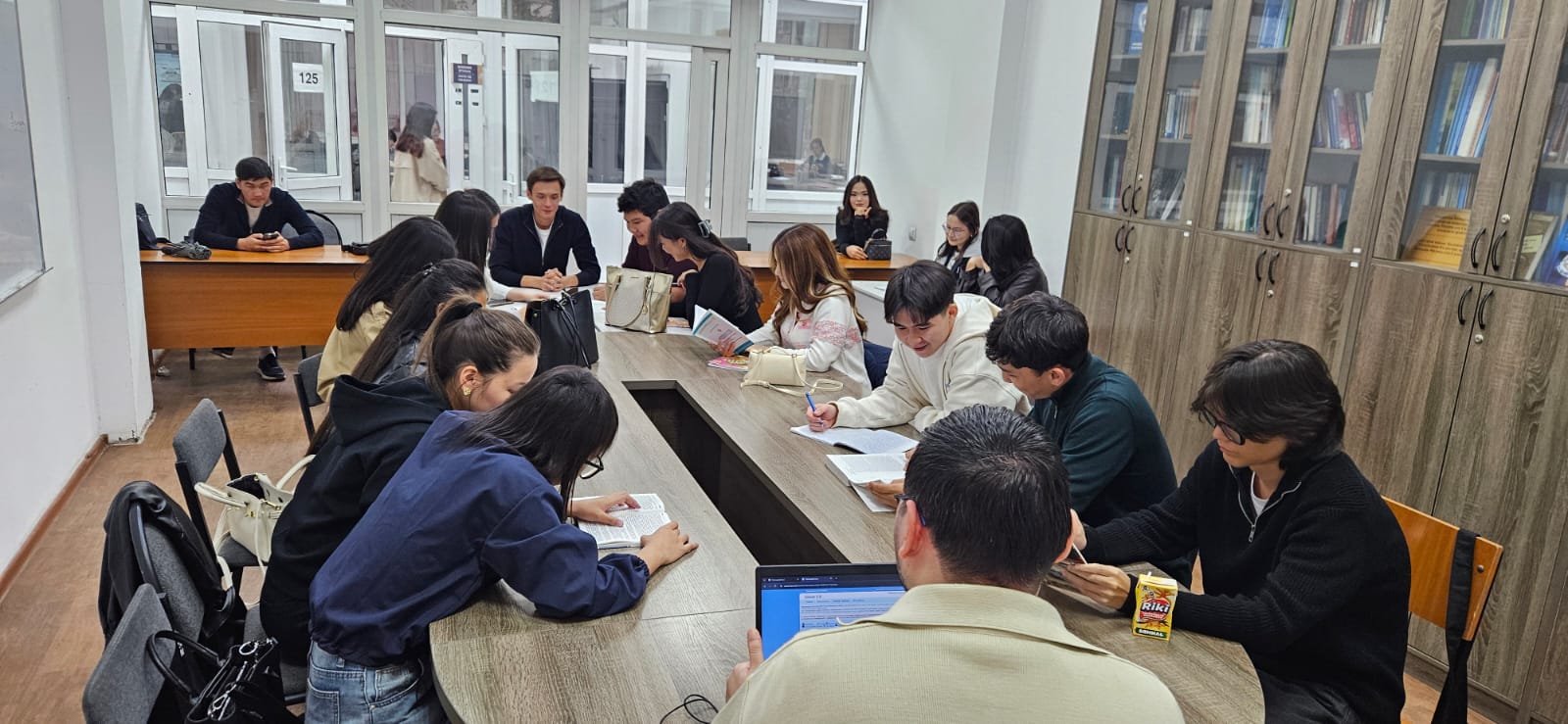
Today, as part of the event "Developing Reading Culture and Forming a Intellectual Nation," a meaningful and instructive meeting was held with 2nd-4th year students majoring in "Social Work." This gathering became a unique platform aimed not just at reading books, but at forming a culture of deep understanding and comprehension.
During the event, effective rules and innovative reading methods were reviewed together with future social work professionals. The participants got closely acquainted with fundamental works in the field of social sciences and profound literary pieces, evaluating their role in professional and personal development.
The main part of the meeting focused on the art of working with text, developing critical thinking, and enhancing memory. The students were not just passive listeners but active participants in the debate, openly sharing their views. During the discussion, it was established that merely reading through a text is not enough — conscious thinking is formed only when one delves into the deeper meaning and conducts a thorough analysis.
As a result of this work, the following important factors were identified and reinforced among the students:
1.Proficient reading skills: students mastered methods of effective text engagement (selective highlighting, note-taking, and identifying core ideas), which help save time and ensure a deeper understanding of the information.
2.Intellect and memory: it was demonstrated that analytical thinking directly improves memory, and specific cognitive retention techniques were identified.
3.Professional insight: a shared conclusion was reached that for future social workers, reading books is a primary tool that enables a deeper understanding of society and human psychology.
Thus, today's event enhanced the intellectual potential of the students and became an important step towards forming a "intellectual nation" for the future of the country.
Other news