- Main
- News
- SDG -15 Conservation of terrestrial ecosystems. Open Class Held as Part of the “Green Campus Week” Environmental Campaign under the “Taza Qazaqstan” Project.
SDG -15 Conservation of terrestrial ecosystems. Open Class Held as Part of the “Green Campus Week” Environmental Campaign under the “Taza Qazaqstan” Project.
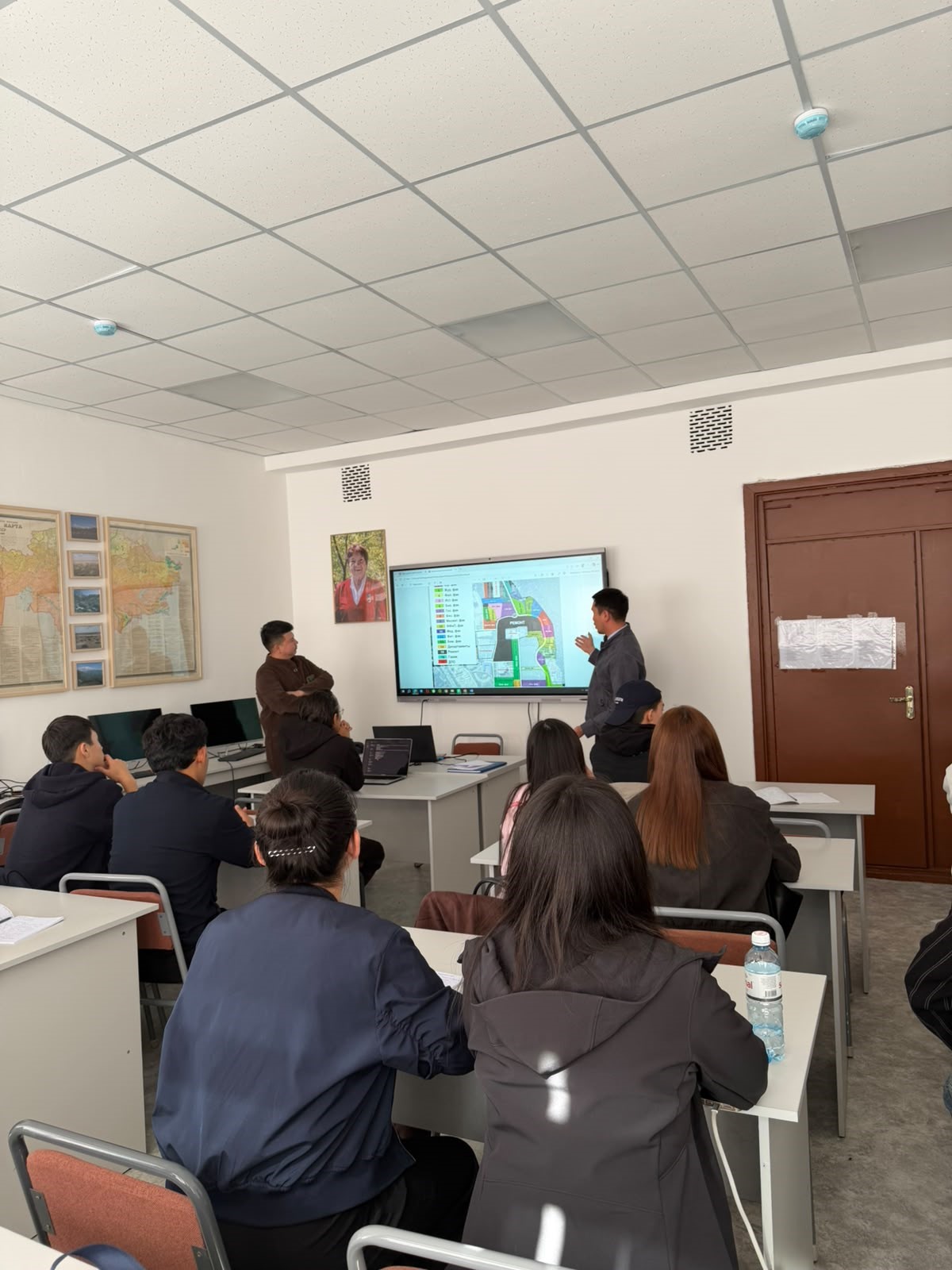
An open class dedicated to the “Green Campus Week” environmental campaign was organized by the Department of Cartography and Geoinformatics at the Faculty of Geography and Environmental Sciences of Al-Farabi Kazakh National University as part of the nationwide environmental initiative “Taza Qazaqstan” (Clean Kazakhstan). The event brought together second-year students of the Geoinformatics educational program.
The primary objective of the open class was to promote environmental awareness among students, strengthen their sense of responsibility for environmental protection, and introduce the opportunities offered by modern geoinformation technologies for studying and addressing environmental challenges.
During the session, participants discussed important issues related to environmental assessment, green space conservation, urban greening, and the sustainable use of natural resources. Particular attention was paid to the role of Geographic Information Systems (GIS) in environmental monitoring, spatial data analysis, and the assessment of environmental conditions.
One of the most engaging parts of the class was the practical demonstration and use of an interactive map. Through the interactive map, students explored the spatial structure of the area, examined the distribution of green spaces, discussed land-use characteristics, and learned about the possibilities of spatial analysis in environmental studies. The integration of modern digital mapping tools helped connect theoretical knowledge with practical applications and demonstrated the importance of geoinformatics in addressing environmental issues.
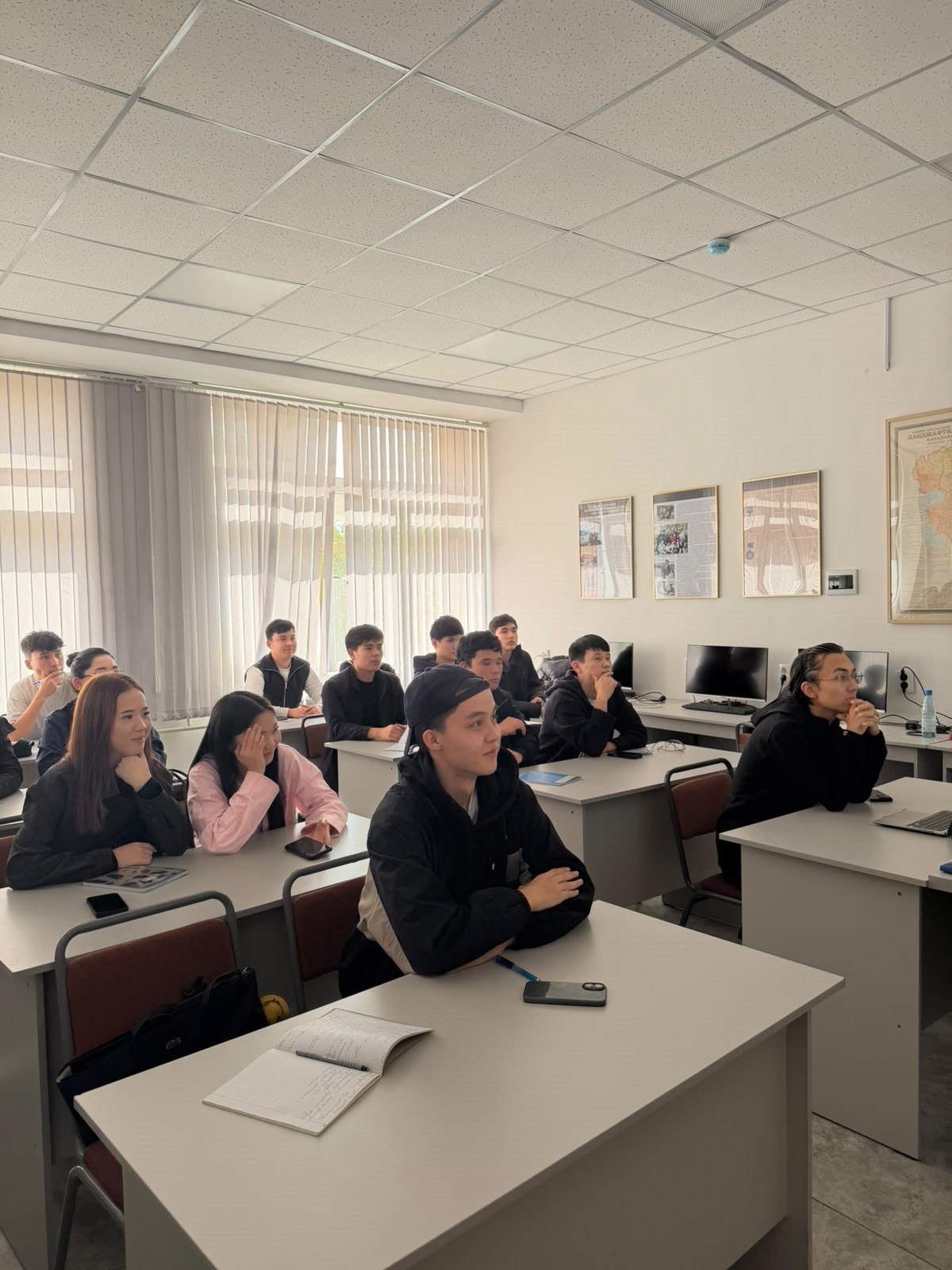
The open class was conducted in an engaging, informative, and interactive atmosphere. Students actively participated in discussions, asked questions, shared their opinions, and exchanged ideas on the application of digital cartography and geoinformation technologies to environmental challenges. Special emphasis was placed on the importance of scientific approaches to environmental research and the effective use of modern technologies.
Such educational activities contribute to the development of professional competencies among future geoinformatics specialists, increase environmental awareness, and encourage responsible attitudes toward nature. The open class, held as part of the “Taza Qazaqstan” initiative, highlighted the importance of individual responsibility and collective efforts in maintaining a clean environment and promoting ecological sustainability.
Other news