- Main
- News
- Psychology in the Digital Age: Al-Farabi Kazakh National University Discusses Addictive Behavior and Stress with Scholars from Germany
Psychology in the Digital Age: Al-Farabi Kazakh National University Discusses Addictive Behavior and Stress with Scholars from Germany
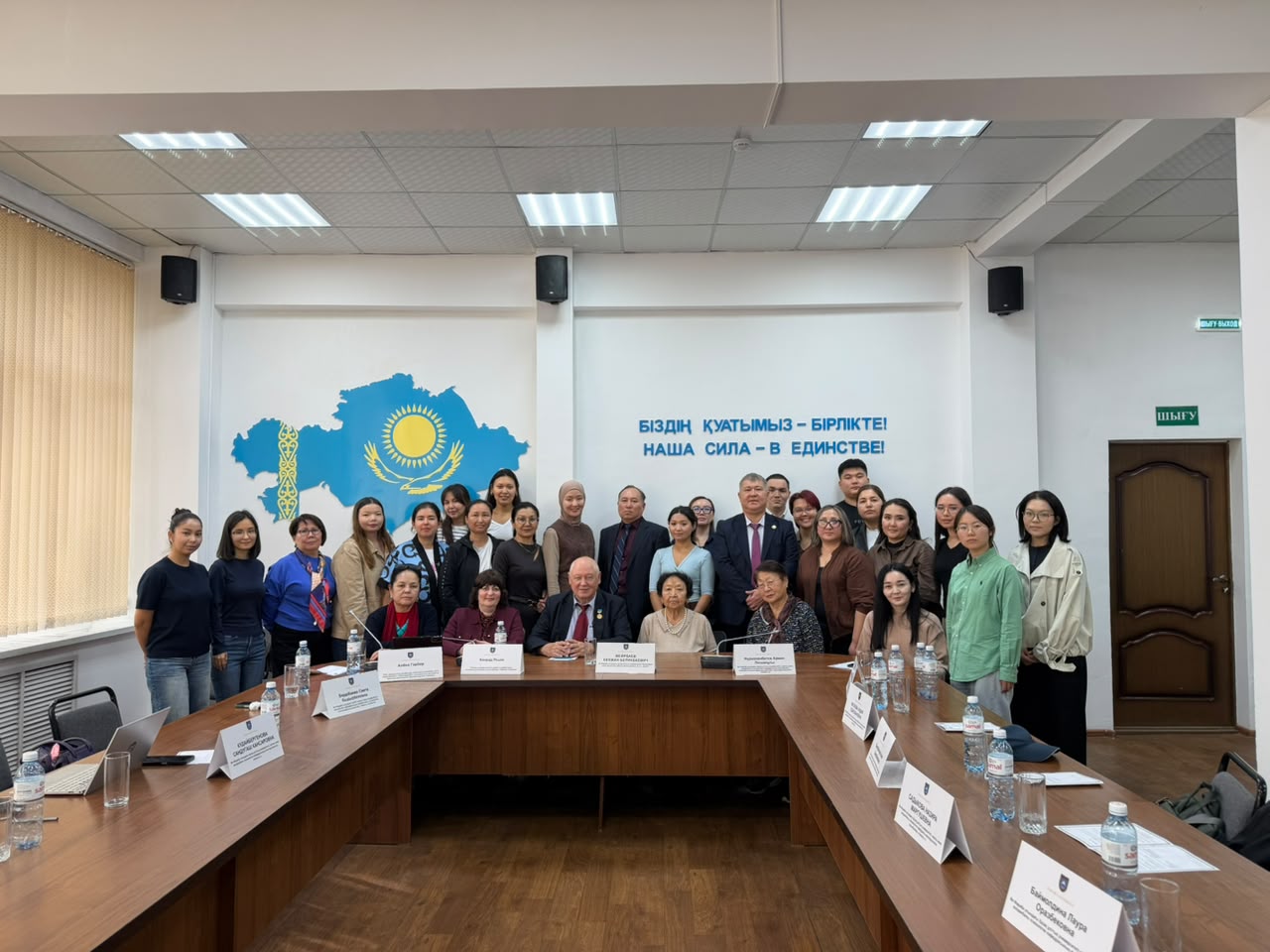
On 12 October 2026, the Department of General and Applied Psychology of the Faculty of Philosophy and Political Science, Al-Farabi Kazakh National University, held the international round table “What Contribution Can Psychology Make to Solving Problems Related to New Forms of Addictive Behavior in the Digital Space and Stress?”. The event was organized in line with the research agenda of the department’s scientific school “Contemporary Approaches to Behavioral Addictions and Stress Management in the Digital World: Methodology, Theory and Practice” and within the framework of the university’s commitment to the Sustainable Development Goals.
The organizers were Professor A.L. Nurmakhanbetov, Head of the Department; Professor S.K. Berdibayeva, Head of the Scientific School; and
PhD students R.M. Berkinbay, M.D. Kassymova and Dong Zihua. The round table was opened by its chair, Associate Professor B.B. Meirbayev, Dean of the Faculty of Philosophy and Political Science, and moderated by A.L. Nurmakhanbetov.
Professor Konrad Reschke, Honorary Professor at Leipzig University, clinical psychologist, psychotherapist, supervisor and expert in stress management, delivered the presentation “Digital Approaches to Health Promotion: The Case of Stress and Depression – Health Apps”. He traced the development of digital psychological prevention in Germany, from the first online forums to health apps that physicians and psychotherapists can now prescribe. He discussed online interventions for depression studied at Leipzig University, criteria for evaluating digital products – data protection, scientific validity and transparency – and the challenges of building a trusting relationship with clients online. His key conclusion was that digital prevention is not a panacea but a complex tool, and that the therapeutic relationship remains the central factor of effective help.
Alena Garber, PhD, Visiting Professor, clinical psychologist and psychotherapist, Head of the Psychology Department at Klinik Reinhardshöhe (Bad Wildungen, Germany), presented the paper “Impulsive Online Shopping as a Form of Stress Coping”. She described the vicious cycle of “stress – purchase – short-term relief – guilt” and showed how personalized algorithms, push notifications, one-click purchasing, and buy-now-pay-later services reinforce each stage. Participants were introduced to M. Griffiths’ components model of behavioral addiction, screening instruments and evidence-based interventions, including cognitive behavioral therapy, mindfulness practices and principles of digital hygiene.
Faculty members, PhD and master’s students, and undergraduates actively participated in the discussion, asking questions and sharing their own experiences during the open-floor session. The round table marked another step in strengthening the international cooperation of the Department of General and Applied Psychology of Al-Farabi Kazakh National University with German colleagues and in advancing the department’s scientific school on behavioral addictions and stress management.
Other news