- Main
- News
- Al-Farabi KazNU Department of Meteorology and Hydrology Co-Organizes an International Seminar in Uzbekistan
Al-Farabi KazNU Department of Meteorology and Hydrology Co-Organizes an International Seminar in Uzbekistan
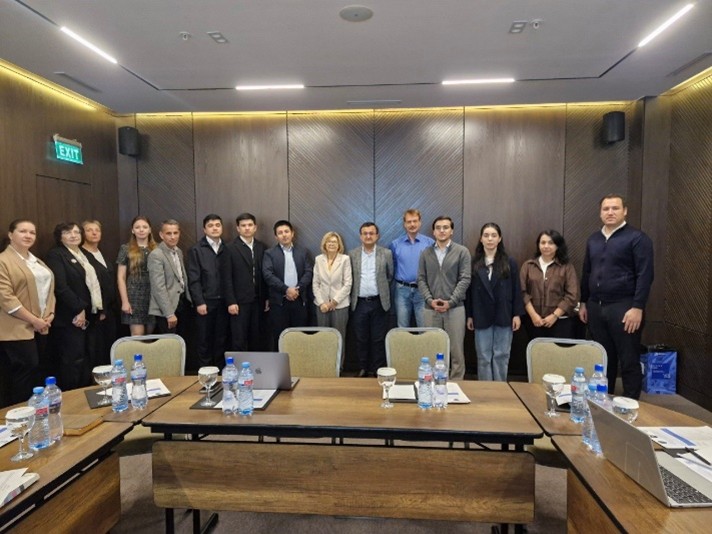
On 8–9 October 2026, a practical seminar was held in Tashkent, Republic of Uzbekistan, to strengthen the capacity of national experts in assessing greenhouse gas and air pollutant emissions from road transport using the COPERT model.
The Department of Meteorology and Hydrology of Al-Farabi Kazakh National University was one of the organizers of the event. Professor A. V. Cherednichenko represented the Department of Meteorology and Hydrology at the seminar.
The seminar was organized with the participation of the Department of Meteorology and Hydrology of Al-Farabi KazNU, the Department of Ecology and Public Administration of the Central Asian University of Environmental and Climate Change Studies (Green University), and the National Committee on Ecology and Climate Change of the Republic of Uzbekistan.
Over the two-day event, participants examined the practical and methodological aspects of using the COPERT software, as well as prospects for incorporating this tool into Uzbekistan’s national greenhouse gas inventory system and the preparation of the country’s National Greenhouse Gas Report.
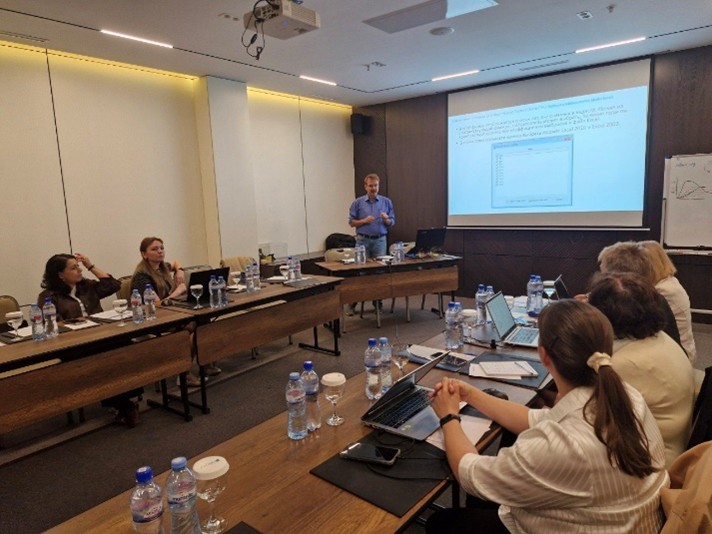
Representatives of government agencies, research institutions, and universities took part in the seminar. This interagency and interdisciplinary cooperation enabled participants to examine emission assessment from scientific, practical, and policy perspectives. On the first day, participants were introduced to the fundamentals of the EMEP/EEA methodology, which is used to estimate air pollutant and greenhouse gas emissions, as well as the principles of preparing input data for the COPERT software. The second day focused on hands-on training with the software’s quick interface and exploring its full interface, which offers more advanced options for configuring calculations. Particular attention was paid to accounting for national circumstances and the specific characteristics of the vehicle fleet when estimating emissions.
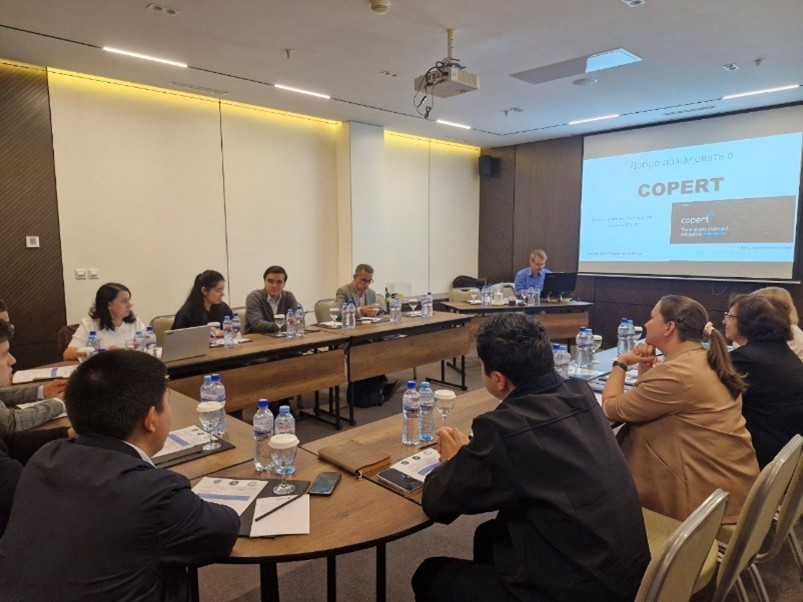
The seminar contributed to advancing the United Nations Sustainable Development Goals (SDGs). In particular, it supports SDG 13: Climate Action, as improved emission assessment methods help enhance climate reporting and inform effective measures to reduce greenhouse gas emissions. The event is also relevant to SDG 11: Sustainable Cities and Communities, by supporting the development of solutions to reduce the adverse effects of road transport on air quality, and SDG 17: Partnerships for the Goals, through international cooperation among universities, government agencies, and research organizations.
Al-Farabi KazNU’s involvement in organizing the seminar demonstrates the University’s commitment to strengthening international academic cooperation, facilitating professional knowledge exchange, and developing specialist expertise. Initiatives of this kind promote the application of scientifically grounded approaches to assessing human impacts on the atmosphere and support progress towards sustainable development across Central Asia.
Other news