- Main
- News
- Advancing Sustainable Development Goal 16: Peace, Justice and Strong Institutions Preventing Religious Extremism and Terrorism as a Key Component of Youth Safety
Advancing Sustainable Development Goal 16: Peace, Justice and Strong Institutions Preventing Religious Extremism and Terrorism as a Key Component of Youth Safety
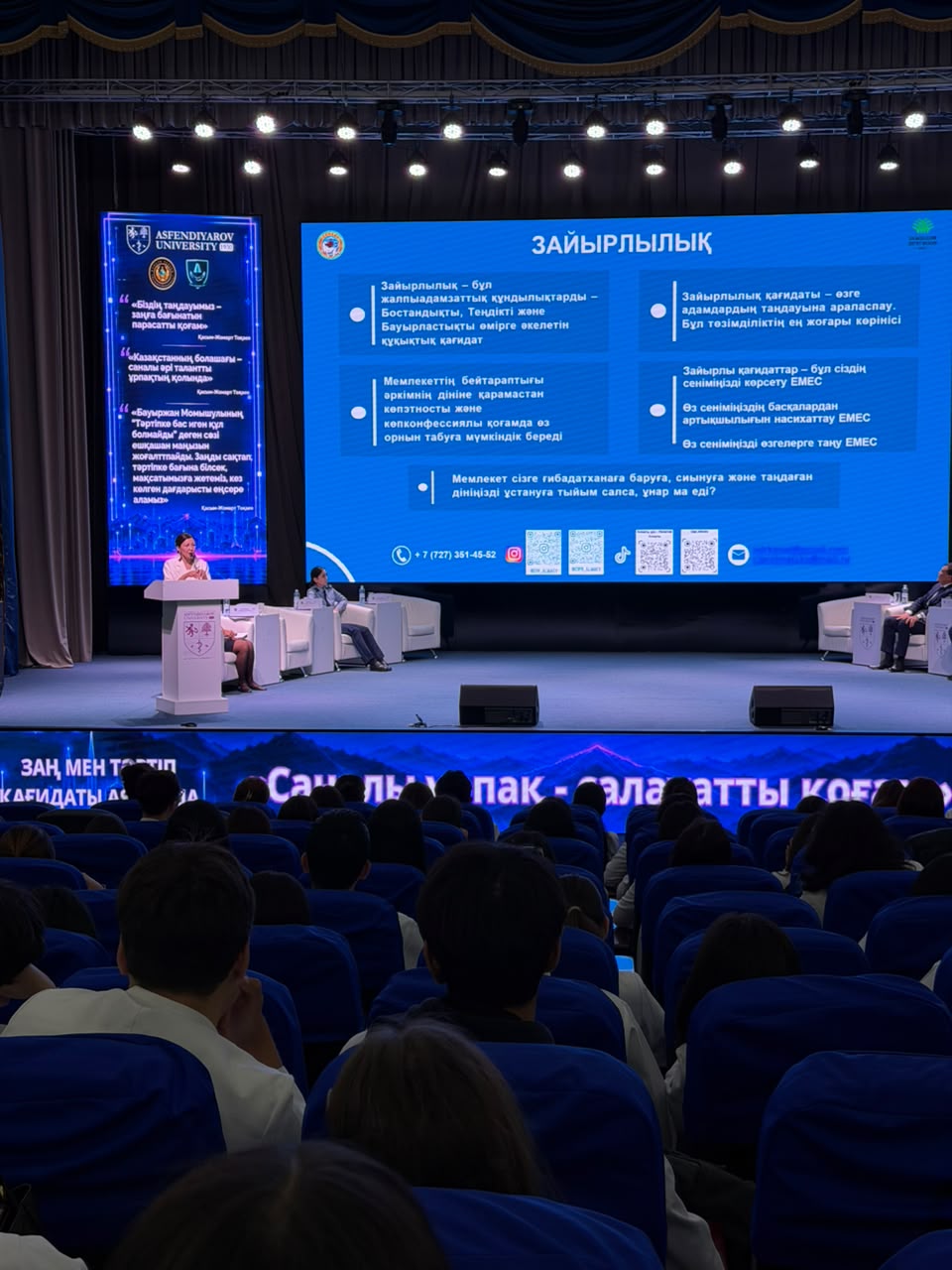
On 9 October 2026, a preventive forum entitled “Sanaly urpaq – salauatty kogam” (“A Conscious Generation – a Healthy Society”) was held for students of Asfendiyarov Kazakh National Medical University under the guiding principle of “Law and Order.”
The primary objectives of the event were to enhance young people’s legal literacy and legal awareness, prevent offences, drug-related unlawful activities, corruption, religious extremism and terrorism among students, and raise awareness of the risks associated with exposure to radical ideologies.
The forum was attended by Zhanna Urinbarasovna Kantarbayeva, Associate Professor at Al-Farabi Kazakh National University, who delivered an informative presentation entitled “Preventing Religious Extremism and Terrorism.” Her participation highlighted the importance of preventive initiatives aimed at improving young people’s religious literacy, promoting an academic understanding of religious processes in contemporary society, and preventing the spread of extremist ideologies.
In her presentation, Associate Professor Kantarbayeva examined the prevention of religious extremism and terrorism in the context of public security and the role of religion in contemporary society. Particular attention was given to the formation of religious beliefs, the ways in which religious information is perceived, and the influence of information disseminated through the online environment.
The speaker emphasised the importance of developing young people’s ability to critically evaluate religious content, verify the credibility of information sources, and approach questionable information with discernment. In today’s digital environment, social media and various online platforms have become major channels of information dissemination, making the development of students’ information literacy particularly important. When assessing religious content, it is essential to consider its substance, authorship, purpose and compliance with the principles of social harmony and the requirements of national legislation.
The event directly aligns with United Nations Sustainable Development Goal 16 (SDG 16): “Peace, Justice and Strong Institutions.” This goal seeks to promote peaceful and inclusive societies, ensure access to justice for all, and build effective, accountable and inclusive institutions at all levels.
The forum, featuring Associate Professor Kantarbayeva, provided an opportunity to address the prevention of religious extremism and terrorism from the perspectives of the rule of law, public security and social stability. Enhancing religious literacy, raising awareness of the risks associated with radical ideologies, and strengthening young people’s legal awareness are interconnected areas of activity that contribute to promoting peace and social cohesion.
Within the framework of SDG 16, the significance of such meetings extends beyond fostering respect for the law among young people. They also help students better understand the values of mutual respect, responsibility, tolerance and social cohesion. Respect for diverse worldviews, resolving disputes within the framework of the law, and fostering a culture of constructive dialogue are essential conditions for creating a safe and peaceful social environment.
The participation of Zhanna Urinbarasovna Kantarbayeva, Associate Professor at Al-Farabi Kazakh National University, in the forum highlighted the university’s academic and expert capacity and provided an opportunity to expand its educational and outreach activities on issues of public importance. The exchange of experience with Asfendiyarov Kazakh National Medical University strengthens cooperation between higher education institutions and supports the development of joint initiatives aimed at improving young people’s legal and religious literacy.
In conclusion, the participation of representatives of Al-Farabi Kazakh National University in such initiatives contributes to advancing the principles of sustainable development, strengthening inter-university cooperation, and fostering a responsible attitude among young people towards law, religion and public security.
Other news