Today’s student is tomorrow’s qualified specialist
The academic staff of the Department of Zoology, Histology and Cytology places particular emphasis not only on providing students with a strong foundation in scientific knowledge but also on fostering their pedagogical, professional, and personal development. One of the department’s key priorities is strengthening the continuity between science and education by passing on senior researchers' scientific legacy and experience to the next generation.
Students receive in-depth theoretical training in zoology and applied cell biology. The department organizes educational and field placements to help them develop essential professional competencies. Guided by the principle that “Today’s student is tomorrow’s qualified specialist,” the department consistently supports students in developing their research potential, strengthening their scientific skills, and preparing for their future careers.
Many graduates of the department currently work at the Institute of Zoology, under the Ministry of Science and Higher Education of the Republic of Kazakhstan, making significant contributions to the advancement of zoological research in the country. They include leading specialists recognized for their scientific achievements, as well as researchers conducting studies at the international level.
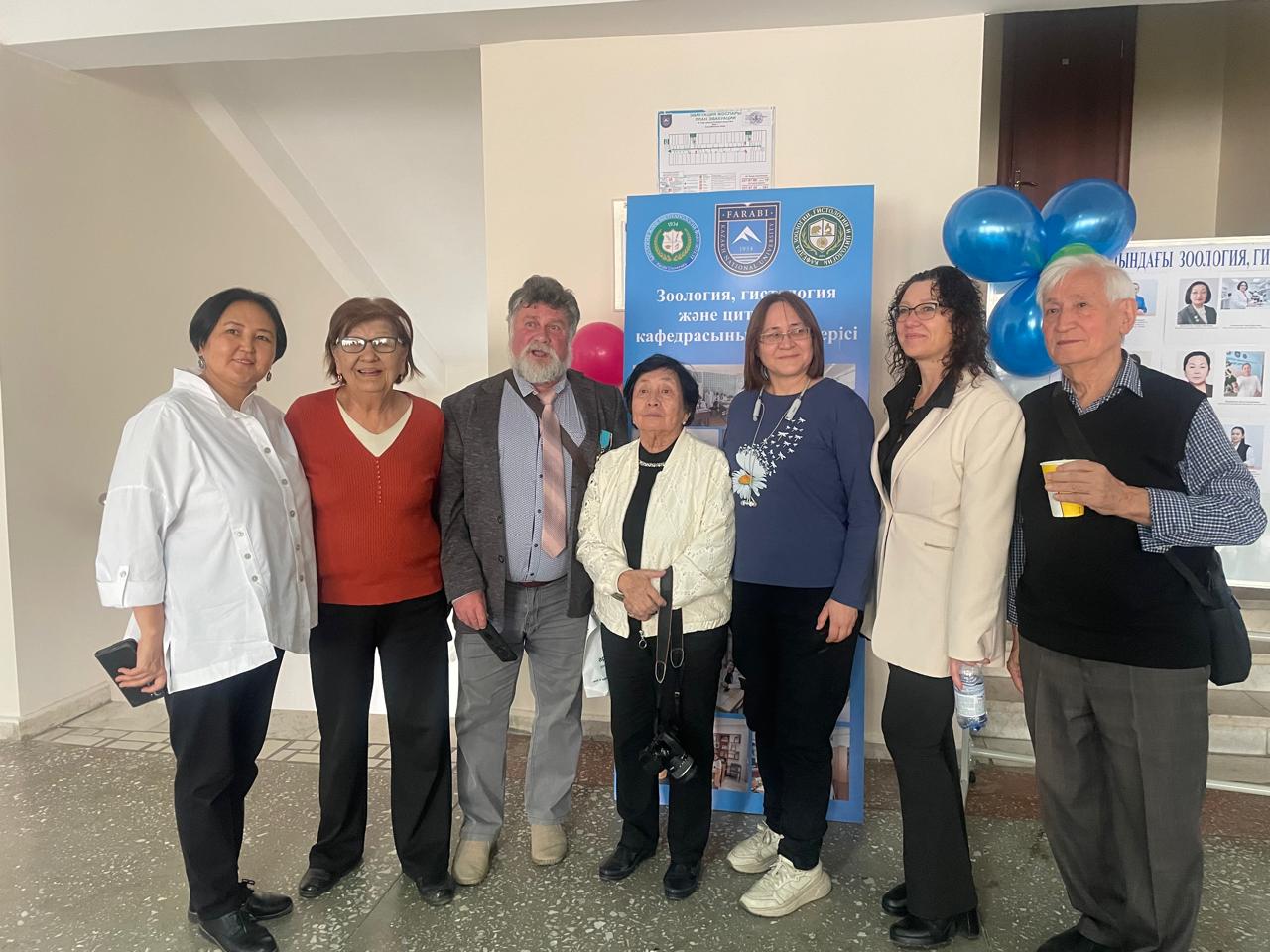
As part of its efforts to foster intergenerational continuity, specialists from the institute met with fourth-year students enrolled in the Zoology degree program and second-year master’s students from the department. During the meeting, they shared their professional experience and discussed the nature of zoological research, key research areas, opportunities for career development, and the factors that contribute to success in scientific work.
The researchers emphasized that professional achievements result from continuous inquiry, perseverance, and dedication to scientific goals. They also encouraged young researchers to contribute actively to the advancement of zoological science in Kazakhstan, strengthen their research capabilities, and participate in studies aimed at understanding and conserving biodiversity.
Such meetings strengthen the links between education and research, help future specialists establish clear professional goals, and ensure the continuity of scientific knowledge and experience across generations.
Acting Associate Professor, PhD Sharakhmetov S.E.
Other news