- Main
- News
- Building a Culture of Safety in the Digital Environment: How to Protect Personal Data and Avoid Fraud
Building a Culture of Safety in the Digital Environment: How to Protect Personal Data and Avoid Fraud
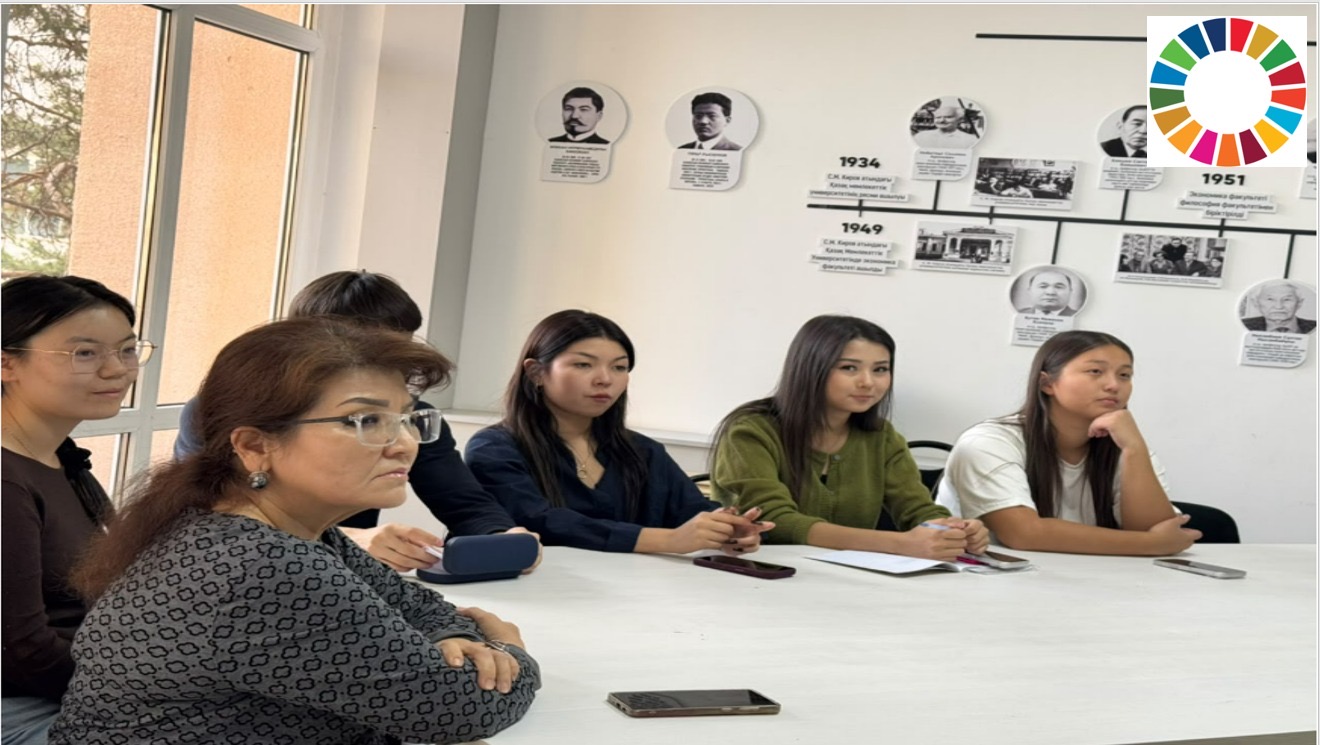
As part of the “Law and Order” project, lecturers Z. B. Akhmetova, A. K. Bekmetova, N. Kh. Maulina and Sh. N. Abdikul from the Department of Business Technologies at the Higher School of Economics and Business, together with second-year Logistics students, organized and held a lecture entitled “A Culture of Safety in the Digital Environment.”
Faculty Dean Zh. Zh. Yermekova emphasized the relevance of the topic, noting that some students had already fallen victim to fraud. She therefore urged students to remain vigilant and carefully verify information received on their phones.
The development of digital technologies creates new opportunities for communication, education and financial transactions, while also requiring greater attention to information security. Lecture participants discussed the rules for protecting personal data, the main threats posed by online fraud, and users’ responsibility for their actions on the internet.
Particular attention was paid to the legal foundations of digital security in Kazakhstan. Speakers highlighted the importance of constitutional guarantees of privacy and compliance with legal requirements. A culture of safety involves not only knowing the rules but also respecting other people’s data: personal information, photographs and videos must not be shared without permission, and false information must not be published.
Telephone scams and phishing remain among the most common threats. Fraudsters send suspicious links, impersonate employees of various organizations and use artificial intelligence to imitate the voices and images of people known to their targets. Anyone receiving an urgent request to transfer money should contact the supposed sender using a verified phone number to confirm that the request is genuine.
The lecture also addressed the dangers of money mule activity, which involves handing over bank cards or accounts to third parties for suspicious transactions. Students noted that such actions can result in criminal liability. Figures presented during the lecture included 1,018 recorded cases, 364 people held accountable and KZT 1.7 billion frozen in money mule accounts.
Among the available safeguards, students mentioned the Stopcredit service, the Anti-Fraud Center, tools for checking personal data leaks and educational resources on cyber hygiene. Participants were advised never to share SMS verification codes or passwords, to check website addresses, to use strongpasswords and to enable two-factor authentication.
The lecture’s key message was that safety in the digital environment depends not only on government mechanisms and technical solutions but also on everyone’s everyday vigilance. Respecting the law, practicing digital etiquette and routinely verifying information—especially unexpected messages—help reduce risks and foster a more responsible online community.
Department of Teaching Staff and students of «BusinessTechnology»
Other news