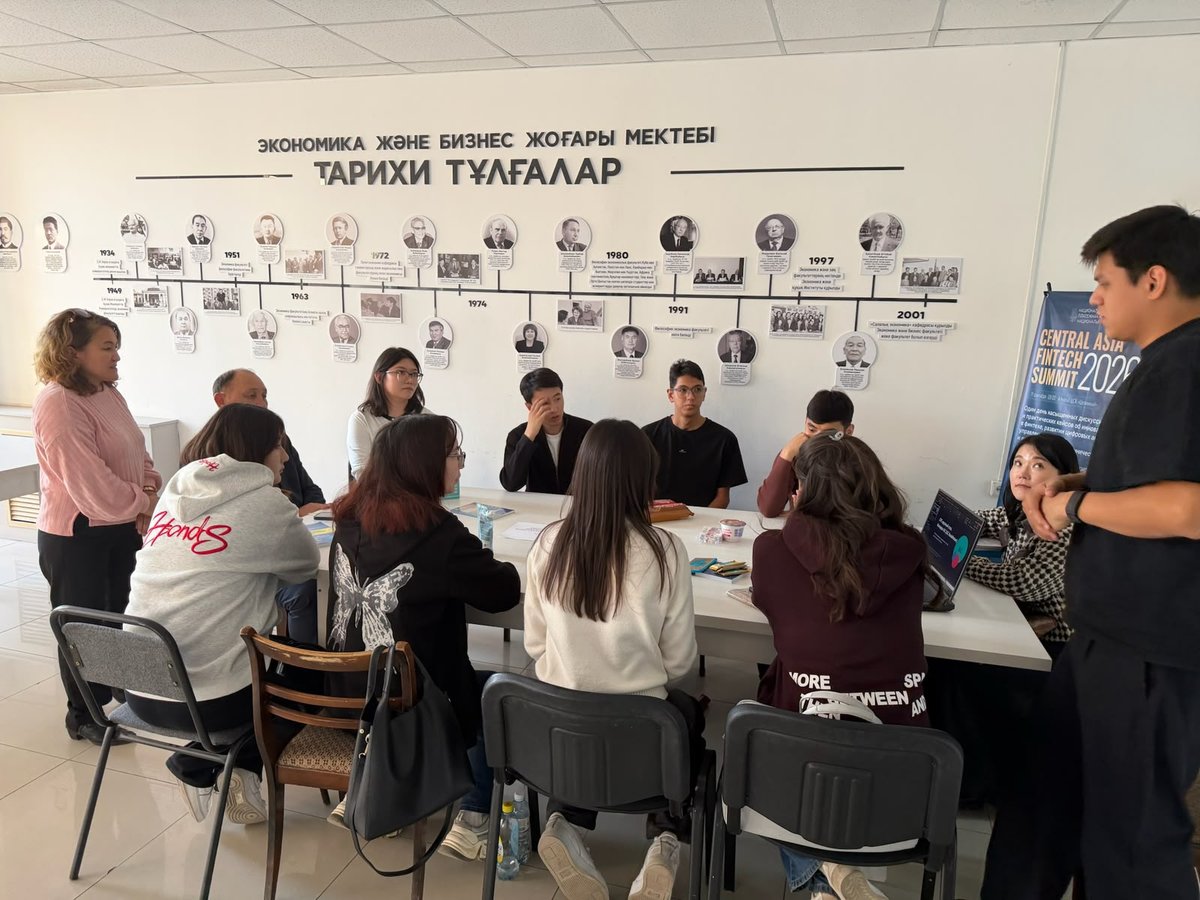
On October 20, 2026, the Department of Economics held a roundtable discussion with fourth-year students of the “6B04103 – Economics” educational program as part of the course “Current Issues of the National Economy.” The event was organized in line with the United Nations Sustainable Development Goals (SDGs), specifically SDG 4 “Quality Education,” SDG 8 “Decent Work and Economic Growth,” and SDG 11 “Sustainable Cities and Communities.”
The Sustainable Development Goals (SDGs) comprise 17 global goals adopted by the United Nations to address social, economic, and environmental challenges worldwide by 2030.
The importance of initiatives implemented within the framework of the SDGs lies in promoting sustainable societal development, improving people's quality of life, and protecting the environment.
The key areas of importance include:
Social development: reducing poverty, improving access to quality education and healthcare, and promoting gender equality.
Economic development: supporting sustainable economic growth, fostering entrepreneurship, and creating new jobs.
Environmental protection: ensuring the efficient use of natural resources, reducing waste, and combating climate change.
Community development: strengthening civic responsibility, social equality, and cooperation.
Thus, initiatives implemented within the framework of the SDGs contribute to Kazakhstan’s sustainable development, improve public well-being, and help create a favorable environment for future generations. Their effective implementation depends on the joint efforts of the government, businesses, and society.
In line with these objectives, the roundtable was held under the theme “Entrepreneurship: Characteristics of Sectoral Structure and Entrepreneurial Capital.”
Domestic entrepreneurial capital refers to the combination of financial, material, and intellectual resources used to develop businesses, produce goods, provide services, and generate profits in Kazakhstan.
Its primary purpose is to promote national economic development, create new jobs, improve public welfare, and strengthen the competitiveness of domestic products.
The main types of domestic entrepreneurial capital include:
Financial capital – monetary resources, investments, and loans.
Physical capital – buildings, equipment, and production machinery.
Human capital – the knowledge, experience, and skills of entrepreneurs and employees.
Therefore, domestic entrepreneurial capital is an important factor in Kazakhstan’s economic growth, the development of entrepreneurship, and the strengthening of the country’s economic independence.
The roundtable provided a valuable platform for discussing the development of entrepreneurship in modern society, its role in strengthening the national economy, and the importance of domestic producers. During the discussion, participants examined the concept of entrepreneurial capital, its impact on economic growth, and the specific characteristics of the sectoral structure of the economy.
Students presented their research findings and highlighted the main development trends and current challenges facing entrepreneurship in Kazakhstan. Particular attention was given to the role of small and medium-sized enterprises (SMEs) in the national economy, the development of innovative entrepreneurship, and regional economic development.

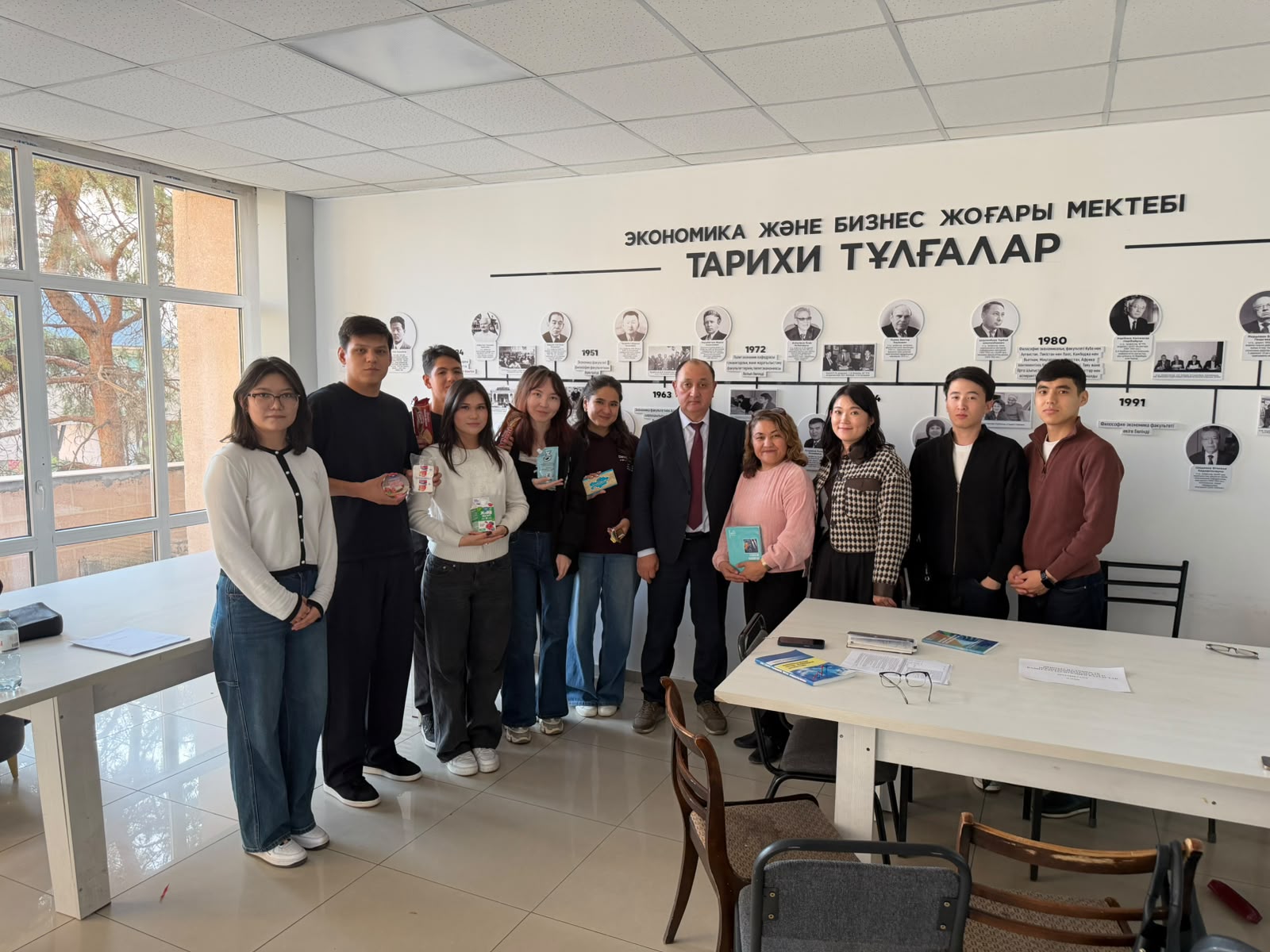
One of the highlights of the event was the presentation of products manufactured by domestic producers. Participants showcased products from Kazakhstani companies such as “Bayan Sulu,” “FoodMaster,” “JLC,” “Khamle,” “3 Zhelaniya,” and other domestic brands. They also discussed these companies’ market positions and development strategies.
This exhibition and discussion enabled students to gain a deeper understanding of the sectoral structure of entrepreneurship and the development of brand capital through practical examples. Participants also emphasized that the growth of domestic companies contributes to strengthening the country's production capacity and enhancing the competitiveness of the national economy.
The roundtable also addressed issues related to government support for entrepreneurship, investment opportunities, improving competitiveness, and promoting domestic products. Participants emphasized the need to encourage entrepreneurial activity among young people and foster innovative thinking.
At the conclusion of the event, students agreed that entrepreneurship is one of the key drivers of economic growth, while the development of domestic producers is an important component of national economic security.
Participants and guests of the roundtable: I.U. Kuliev, R. Murabildayeva -Senior Lecturer at the Department of Economics; a doctoral student of the faculty; and students enrolled in the “Economics” and “Finance” educational programs.
Organizer and moderator of the roundtable: G.K. Ilyashova, PhD, Acting Associate Professor at the Department of Economics.
Other news