- Main
- News
- SDG 11. Sustainable Cities and Communities in Kazakhstan: Toponymy of the Native Region and the History of Renaming
SDG 11. Sustainable Cities and Communities in Kazakhstan: Toponymy of the Native Region and the History of Renaming
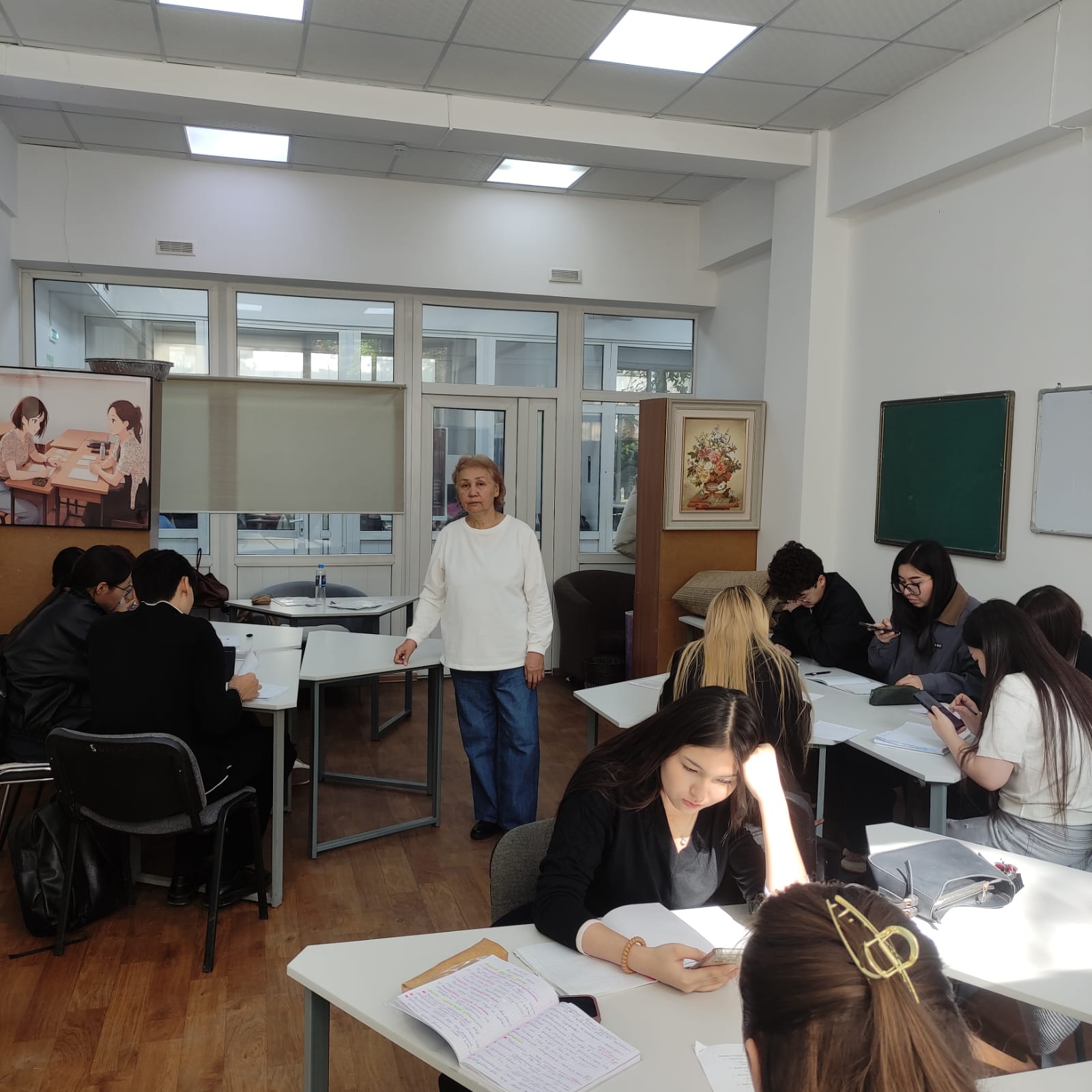
On October 15, 2026, A. S. Bazarbayeva, an assistant professor in the Department of Russian Philology and World Literature at the Faculty of Philosophy and Political Science, held an event focused on SDG 11, titled "Toponymy of Cities in Kazakhstan," together with first-year students majoring in Sociology.
A recurring theme throughout the event was the idea that, in order to learn how to live in the present and build for the future, one must come to understand the past—to explore it and uncover what has remained hidden deep within the centuries. The study of place names (toponymy) in one’s home region has always been a highly enlightening subject; by discovering the history and origins of the names of our own towns or villages, we gain insight into our own history. As a field of study, toponymy a focal point for several disciplines—linguistics, history, geography, ethnography, sociology, and literature. It has been noted that toponyms constitute a concise verbal geography of a region; the name of a single river or lake can encapsulate the history of many centuries—the history of the peoples who, at various times, inhabited that territory. Toponyms are perceived as concentrated forms of ethnic consciousness, embodied within a linguistic shell of meaning.
The topics of the presentations delivered at the event included:
- The formation of toponyms (place names)
- The history of toponymic research
- The creation of a toponymic map
The presentations given by individual students regarding the history of place names in their own home villages or regions generated great interest. As they recounted the origins of these names, the students spoke with genuine passion, demonstrating their deep love and attachment to their native lands. Of particular note were the accounts concerning places that had undergone multiple name changes—from ancient times, through the Soviet era, and into present-day Kazakhstan.
Particular attention was paid to the current legal framework for the renaming of cities and villages. It was noted that all such renamings in the republic are intended to restore original, historically established Kazakh names that had been changed for political or other reasons. It was also pointed out that a unified approach needs to be developed for handling toponyms of unclear origin.
The event was very lively and engaging; the student not only gained a general understanding of the toponymy of towns and villages but also had the opportunity to share information about the naming of his own home region. There was a wealth of information regarding the laws governing the renaming of places, as well as the histories of towns that have since vanished from the face of the earth yet left their names behind.
Other news