New Opportunities for Digital Education: Online Meeting with a JoVE Representative
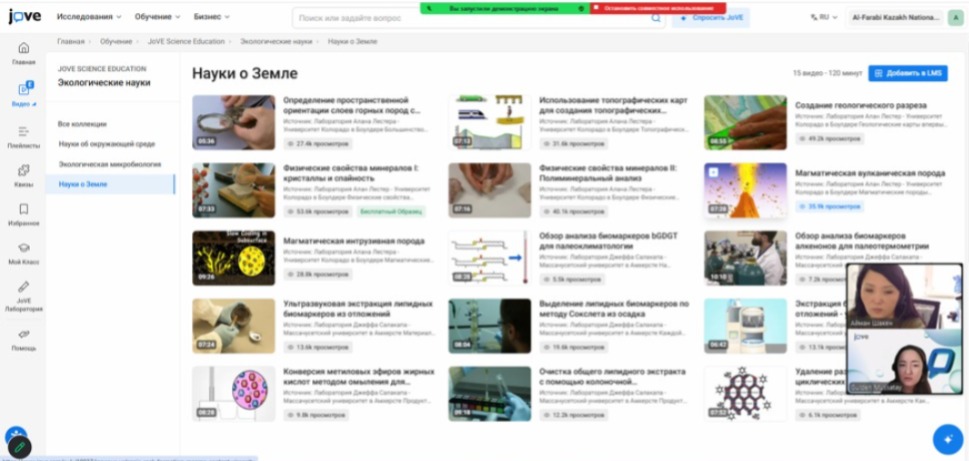
An online meeting was held at the Faculty of Geography and Environmental Sciences of Al-Farabi Kazakh National University between A. Shaken, Deputy Dean for Academic and Methodological Affairs, and Gulden Musatay, Coordinator of the international scientific and educational platform JoVE (Journal of Visualized Experiments).
The meeting focused on exploring opportunities to introduce modern digital educational resources into the teaching and learning process, integrate JoVE video materials into university courses, and enhance practice-oriented education.

JoVE (Journal of Visualized Experiments) is an international scientific and educational video platform providing access to more than 30,000 scientific and educational videos covering research methods, laboratory experiments, and fundamental scientific concepts. JoVE resources are used by more than 1,800 universities and organizations worldwide. The platform's distinctive feature is its ability to visualize complex scientific processes, experimental procedures, and research methodologies, making learning more accessible, engaging, and effective.
During the meeting, particular attention was given to educational resources relevant to the Faculty of Geography and Environmental Sciences, especially in the fields of Environmental Sciences and Earth Sciences, as well as opportunities to apply selected platform materials to business and marketing-related topics.
The participants discussed various approaches to incorporating JoVE resources into academic courses, including the use of thematic videos in lectures and practical classes, scientific demonstrations for students' independent learning, blended learning strategies, and the implementation of the Flipped Classroom approach.
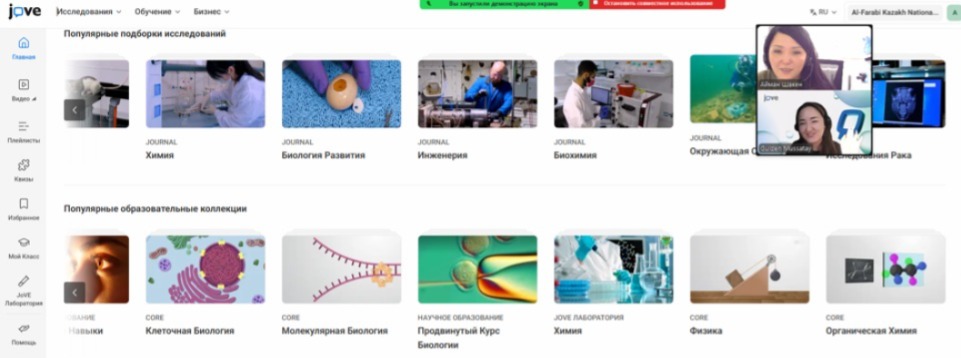
A key topic of discussion was the potential integration of JoVE educational resources into the Moodle Learning Management System (LMS). The participants explored options for embedding video materials into online courses, organizing thematic collections of educational content, and combining these resources with learning activities and assessment tools.
The meeting also addressed the importance of aligning JoVE educational materials with course syllabi, intended learning outcomes, and specific teaching objectives to ensure their effective integration into the curriculum.
As a result of the meeting, potential areas for further cooperation were identified, including reviewing JoVE resources relevant to the faculty's educational programs, exploring the organizational and technical requirements for Moodle integration, and evaluating opportunities for their practical use by academic staff.
Such initiatives contribute to strengthening international academic cooperation, promoting innovative teaching approaches, and improving the quality of higher education.
Other news