- Main
- News
- A Leadership Lecture on the Prospects for the Development of Islamic Theological Thought Held at Al-Farabi KazNU
A Leadership Lecture on the Prospects for the Development of Islamic Theological Thought Held at Al-Farabi KazNU
Sustainable Development Goals (SDGs): Goal 4 — “Quality Education”.
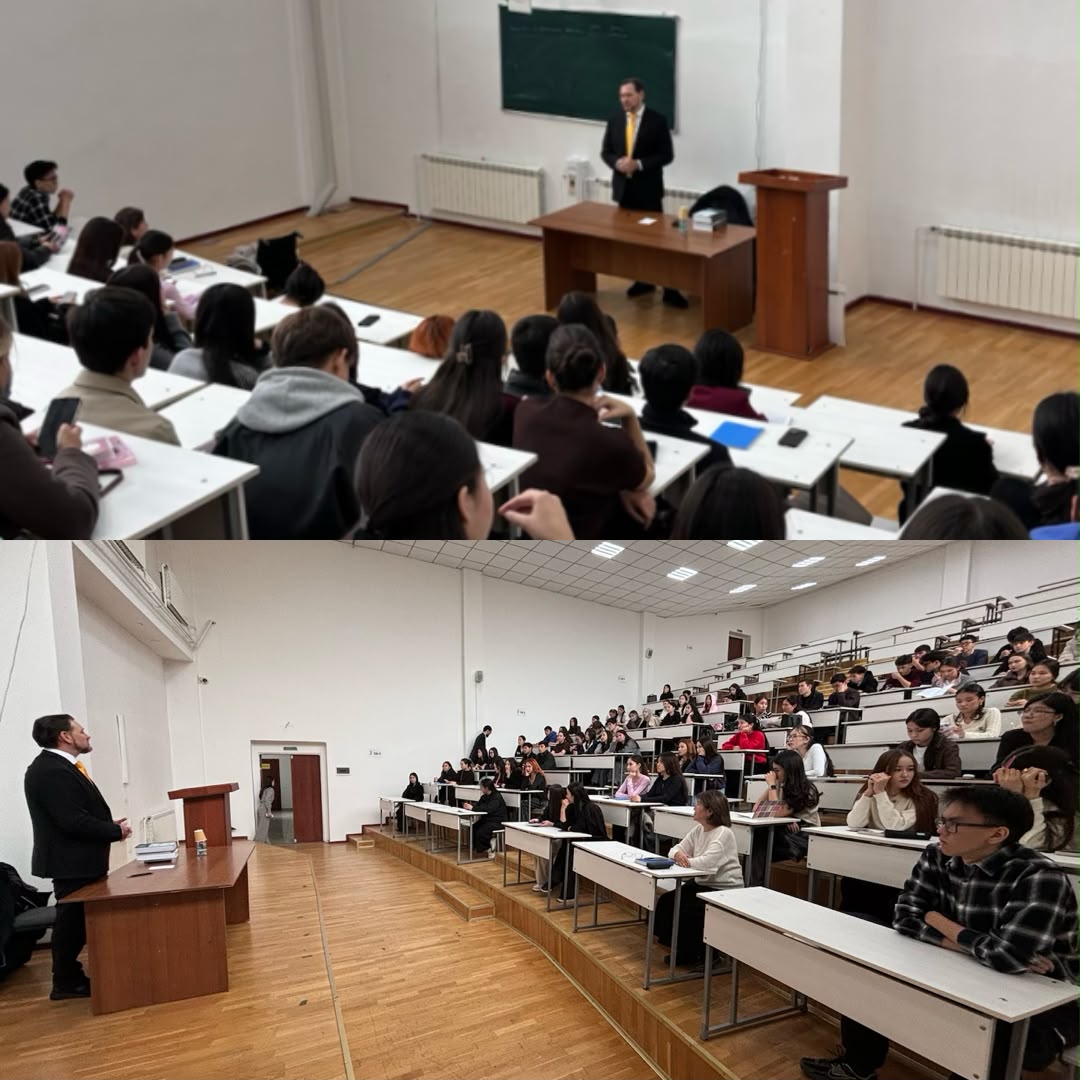
On November 5, 2026, Al-Farabi Kazakh National University’s Faculty of Philosophy and Political Science, organized by the Department of Religious Studies and Cultural Studies, held a leadership lecture entitled “Prospects for the Development of Islamic Theological Thought”.
The event featured a specially invited guest, Damir Vaisovich Mukhetdinov, First Deputy Chairman of the Spiritual Administration of Muslims of the Russian Federation, Rector of the Moscow Islamic Institute, Director of the Centre for Islamic Studies at Saint Petersburg State University, Doctor of Theology, and Professor. He met with first-year students majoring in Religious Studies, Islamic Studies, and Cultural Studies.
During the lecture, the formation and historical development of Islamic theology, the main trends in contemporary theological thought, and its future prospects were discussed in detail. The participants also explored the role of Islamic theology in modern society, the importance of religious education, and current issues in theological research.
As part of the event, students gained valuable insights into the academic foundations of Islamic theology, its development trends in the contemporary world, the Islamic education system, and the significance of theological research. Professor Damir Mukhetdinov shared his academic and professional experience, emphasizing the importance of studying Islamic theology within the academic field.
The meeting was held in an open-discussion format, allowing students to ask questions of interest and exchange views directly with the distinguished scholar. The lecture contributed to deepening the theoretical knowledge of future religious and Islamic studies specialists, broadening their academic perspectives, and strengthening their professional interests.
This event aligns with the principles of the United Nations Sustainable Development Goal 4 — “Quality Education” — and aims to improve the quality of higher education, promote research activities, and strengthen academic cooperation in the field of religious and theological education.
Organizers: Faculty of Philosophy and Political Science, Department of Religious Studies and Cultural Studies.
Other news