- Main
- News
- Researchers from KazNU’s Faculty of Physics and Technology Present Their Work at an International Materials Science Forum in China
Researchers from KazNU’s Faculty of Physics and Technology Present Their Work at an International Materials Science Forum in China
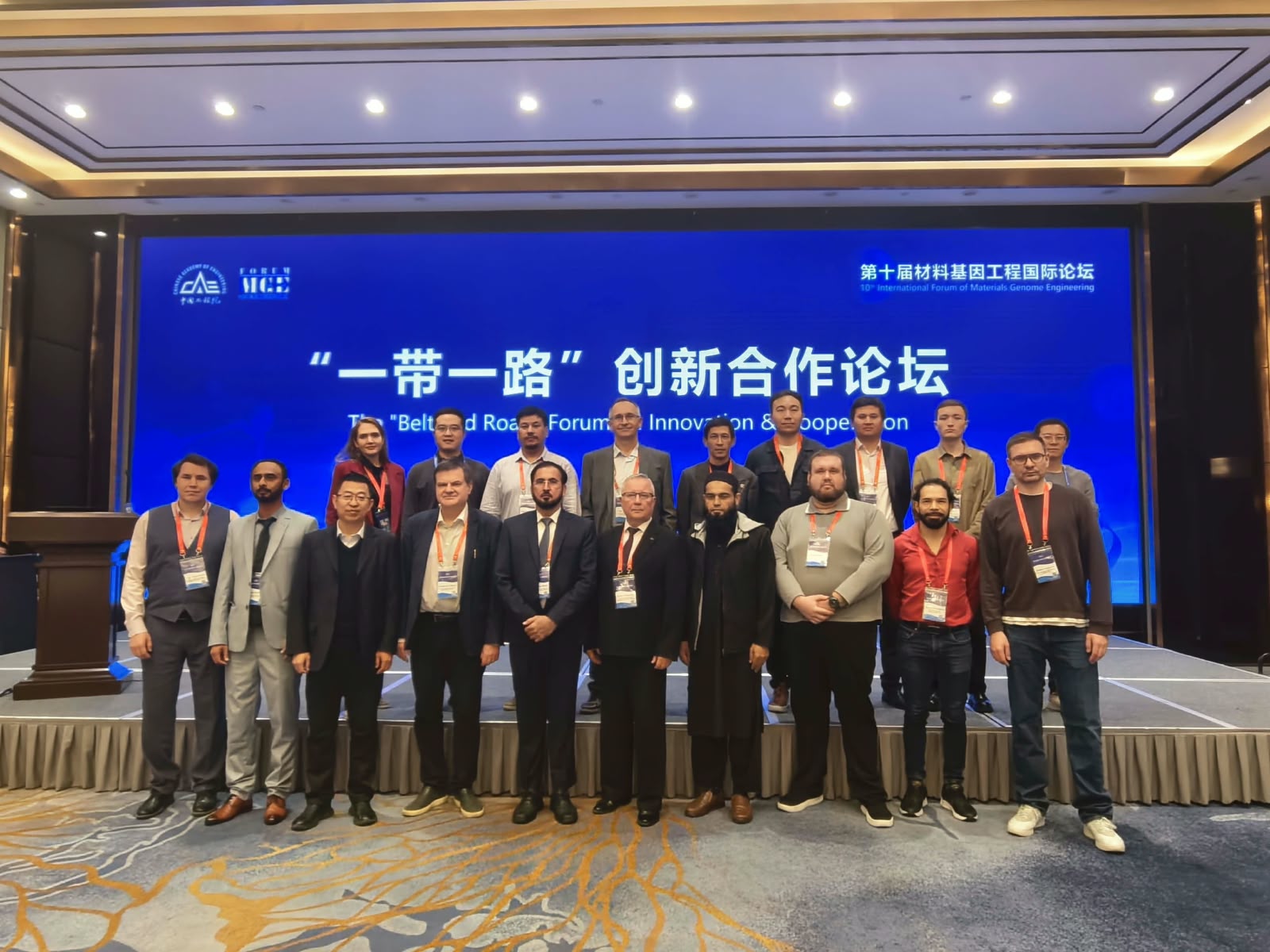
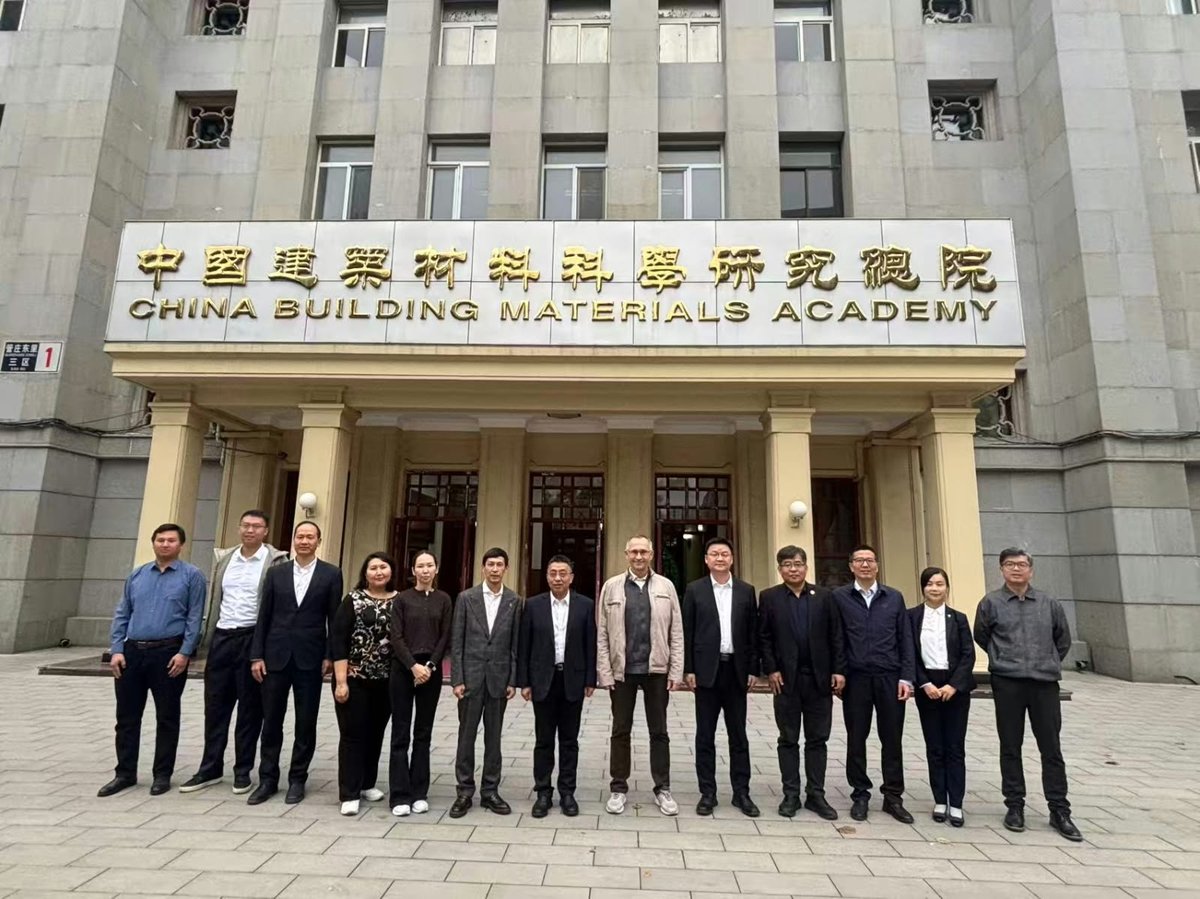
Representatives of the Department of Solid-State Physics and Technology of New Materials at Al-Farabi Kazakh National University’s Faculty of Physics and Technology took part in the 10th International Forum of Materials Genome Engineering. The delegation was led by Yerzhan Mukhametkarimov, Head of Department, and included Aiymkul Markhabayeva, Bauyrzhan Bazarbay and Gauhar Mussabek. The researchers presented their work in materials science, met with Chinese colleagues and visited the China Building Materials Academy.
The forum took place from 2 to 6 November 2026 in Jinan, the capital of Shandong Province. The opening ceremony and plenary talks took place on 3 November, followed by parallel sessions and technical meetings on 4 and 5 November. According to the organising committee, the forum brought together specialists from 18 countries and regions and featured 16 sessions. The organisers included the Chinese Academy of Engineering’s Division of Chemical Engineering, Metallurgy and Materials Engineering, the Chinese Materials Research Society and the National Innovation Alliance for Big Data on New Materials.
Participants discussed how computer modelling, experiments and data analysis can be combined to accelerate the search for materials with specific properties. Calculations can help identify promising compositions, while laboratory measurements can test predictions and reveal how processing methods affect material properties. The KazNU delegation also took part in the Belt and Road Forum on Innovation & Cooperation, a session dedicated to international collaboration in materials science. One of the topics discussed was the use of artificial intelligence in developing new materials.
The delegation members’ published work spans several areas of materials science. Yerzhan Mukhametkarimov has co-authored studies on zinc oxide thin films containing noble metal nanoparticles and on electron-beam lithography. The former examines the optical properties of thin-film structures, while the latter investigates how the distribution of energy deposited by an electron beam affects the resist layer used to pattern microstructures.
Aiymkul Markhabayeva works on carbon nanomaterials. In one of her studies, the research team used Raman spectroscopy to monitor carbon nanowalls during electrochemical measurements. Gauhar Mussabek studies silicon nanostructures, including their potential use in hydrogen production and storage. These studies connect the characterisation of nanomaterials with applications in electrochemistry and energy.
Bauyrzhan Bazarbay works on applied materials science and casting technology. One of his publications compares refractory coatings for 3D-printed polymer patterns used in aluminium alloy casting. The coatings were evaluated for properties including thermal stability, adhesion to the pattern surface and gas permeability. The study illustrates how the choice of materials and processing conditions can address practical manufacturing challenges.
The delegation also visited the China Building Materials Academy (CBMA) in Beijing. Its research covers cement-based materials, quartz glass, high-performance ceramics and environmentally friendly building materials. The meeting gave the delegation an opportunity to learn how the academy applies research on material composition and structure to industrial production. The contacts established during the visit could support further discussions on joint research, the exchange of experimental methods and opportunities for early-career researchers to take part in international projects.
Other news