«Sustainable Development: Heritage and the Future»
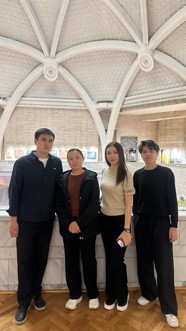
Kairanbay T.Zh., Zholdubaeva A.K., Baltymova M.R.
Al-Farabi Kazakh National University
Department of Religious and Cultural Studies
An event in the format of an interactive research project was held at the National Museum
On November 5, 2026, the National Museum of the Republic of Kazakhstan hosted an educational event in the format of an interactive research project, themed "Sustainable Development: Heritage and the Future," in line with the Sustainable Development Goals. Students of Al-Farabi Kazakh National University were among the project organizers.
The main goal of the event was to help students master the principles of sustainable development in practice, within the context of traditional cultural heritage. Unlike a traditional lecture format, this event was based on students working directly with exhibits in the museum space, independently searching for and comparing data and drawing conclusions.
Directions and content of the research work
The students moved through the museum halls along a specially prepared route, completing specific research tasks at each station. The research directions covered:
Heritage and its future – using traditional objects in the museum (felt, textiles, tableware) to reveal the importance of preserving national cultural heritage and connecting it with contemporary sustainable development issues;
Models of sustainable consumption – a comparative analysis of the long-term use practices of ancient craft items and the modern culture of "economical" consumption;
Ecological awareness and natural materials – identifying the ecological advantages of natural raw materials in the exhibits and explaining their relevance today;
Orientation toward a responsible future – practical analysis of quality education, sustainable cities, and nature conservation issues using examples of exhibits, within the framework of the Sustainable Development Goals (SDGs).
Participants' work outcomes and impact
Three students took part in the research session. They noted that this format makes it possible to absorb knowledge more deeply and to see more clearly the connection between the historical and cultural context and contemporary issues.
"During this work, we didn't just look at an exhibit – we studied its technology, meaning, and use, comparing it with concrete examples of sustainable development. This kind of practice makes subject knowledge deeper and easier to remember," shared one of the participants.
Sustainable development and cultural heritage: the scientific and practical connection
The event organizers emphasized one key idea: cultural heritage is an integral part of sustainable development. Several SDGs from the UN 2030 Agenda are directly based on this principle:
Goal 4 (Quality Education) – promoting knowledge about heritage and effectively communicating it to young people;
Goal 11 (Sustainable Cities and Communities) – preserving and developing the cultural environment and integrating it into modern society;
Goal 12 (Responsible Consumption and Production) – bringing the experience of natural materials and economical production from traditional crafts into modern life.
In the Kazakhstani context, this connection is especially significant: the main treasures of our national culture — the yurt, felt items, and handicrafts – preserve centuries-old experience of living in harmony with nature. Therefore, studying and promoting traditional culture is a concrete way of supporting the ideas of sustainable development.
Conclusion
At the end of the event, the students wrote their reflections and proposed concrete steps for bringing sustainable development into everyday practice: conserving resources, recycling, supporting local crafts, and documenting cultural heritage.
Al-Farabi Kazakh National University will continue to develop such interactive formats in the future: cooperation between the university and the National Museum will keep growing in the direction of deepening students' scientific research work in the museum space.
Other news