- Main
- AL-FARABI NEWS LETTERS
- KazNU Scientists Build Modern Neuroscience Center to Study Brain Mechanisms
KazNU Scientists Build Modern Neuroscience Center to Study Brain Mechanisms
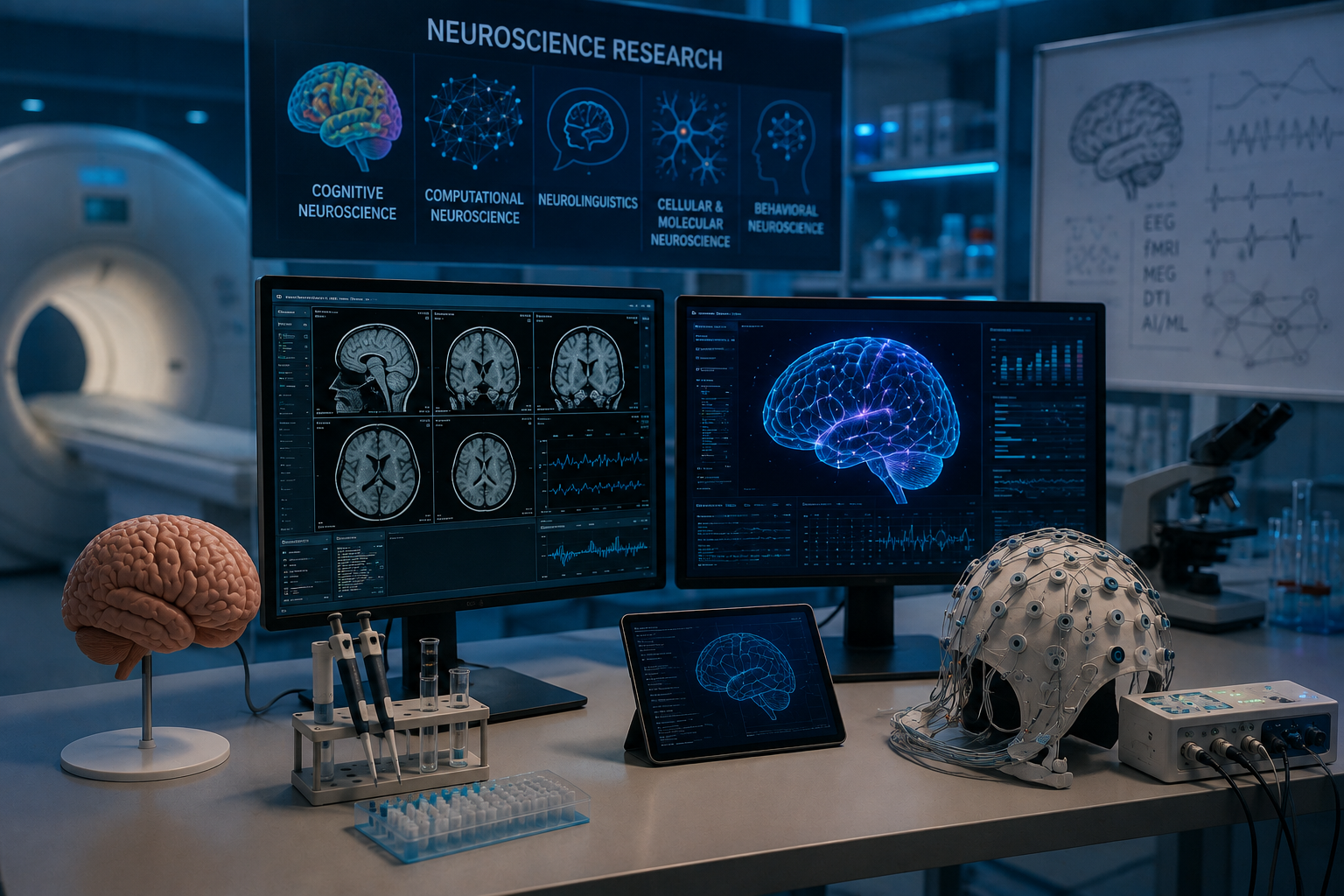
The inevitable rise in information and cognitive load, along with the steady increase in neurodegenerative and emotional-cognitive disorders, underscores the urgent need to develop neuroscience in Kazakhstan. Neuroscience integrates the capabilities of various scientific disciplines to understand brain mechanisms in order to support effective human functioning. Yet neuroscience remains a relatively new integrative field for Kazakhstan — the specialized scientific direction "Neuroscience" within the "Life Sciences and Health" priority was introduced for the first time only in 2023.
The program's goal is to create and modernize a neuroscience research infrastructure that integrates neurobiological, computational, cognitive, and behavioral sciences to implement high-precision methodologies for studying the brain from the molecular to the systemic level of behavior and consciousness organization. The program envisions establishing five laboratories — cognitive neuroscience, computational neuroscience, neurolinguistics, cellular and molecular neuroscience, and behavioral neuroscience — along with the material and technical base needed to collect data through local potential recording, electroencephalography (EEG), and magnetic resonance imaging (MRI).
The project covers several priority directions: for the first time in Kazakhstan, a methodology for longitudinal studies of the brain's structural and functional development from childhood through aging will be developed; the effectiveness of an innovative botulinum toxin in relieving chronic pain will be studied in animal models; a neurolinguistics direction examining the relationship between brain mechanisms and language in the context of Kazakhstani trilingualism will be advanced; biomarkers of depressive states will be identified; neurofeedback training protocols for self-regulating the brain's functional state will be developed; cognitive functions will be mapped, learning mechanisms studied, and multi-level research initiated to search for early biomarkers of neurodegenerative diseases, including Parkinson's syndrome and Alzheimer's disease.
The research will employ structural and functional MRI, diffusion tensor tractography, functional near-infrared spectroscopy, EEG, the patch-clamp method, electrocorticography (ECoG), as well as an EEG neurofeedback hardware complex and diagnostic tasks developed in the E-Prime application. Applying machine learning and artificial intelligence to analyze brain signals will make it possible to forecast age-related brain changes and emotional-cognitive functions during development, as well as identify parameters of brain function disorders.
The program is implemented jointly by Al-Farabi Kazakh National University, Astana IT University LLP, and the National Center for Neurosurgery JSC. Research is conducted under approval from the Local Ethics Committee of KazNU's Faculty of Medicine (protocol No. IRB-A843). The program is intended to contribute to the strategically important state objective of enhancing the global competitiveness of Kazakhstani neuroscience and developing the country's own scientific, technological, and innovative base.
Spanning 27 months (October 2024 - December 2026), the program will lay a solid methodological foundation for the systematic development of neuroscience in Kazakhstan, contributing to efforts to improve the quality of life of the country's population.
Other news