- Main
- AL-FARABI NEWS LETTERS
- KazNU Scientists Propose Using Microorganisms to Remove Sulfur from High Sulfur Coal
KazNU Scientists Propose Using Microorganisms to Remove Sulfur from High Sulfur Coal
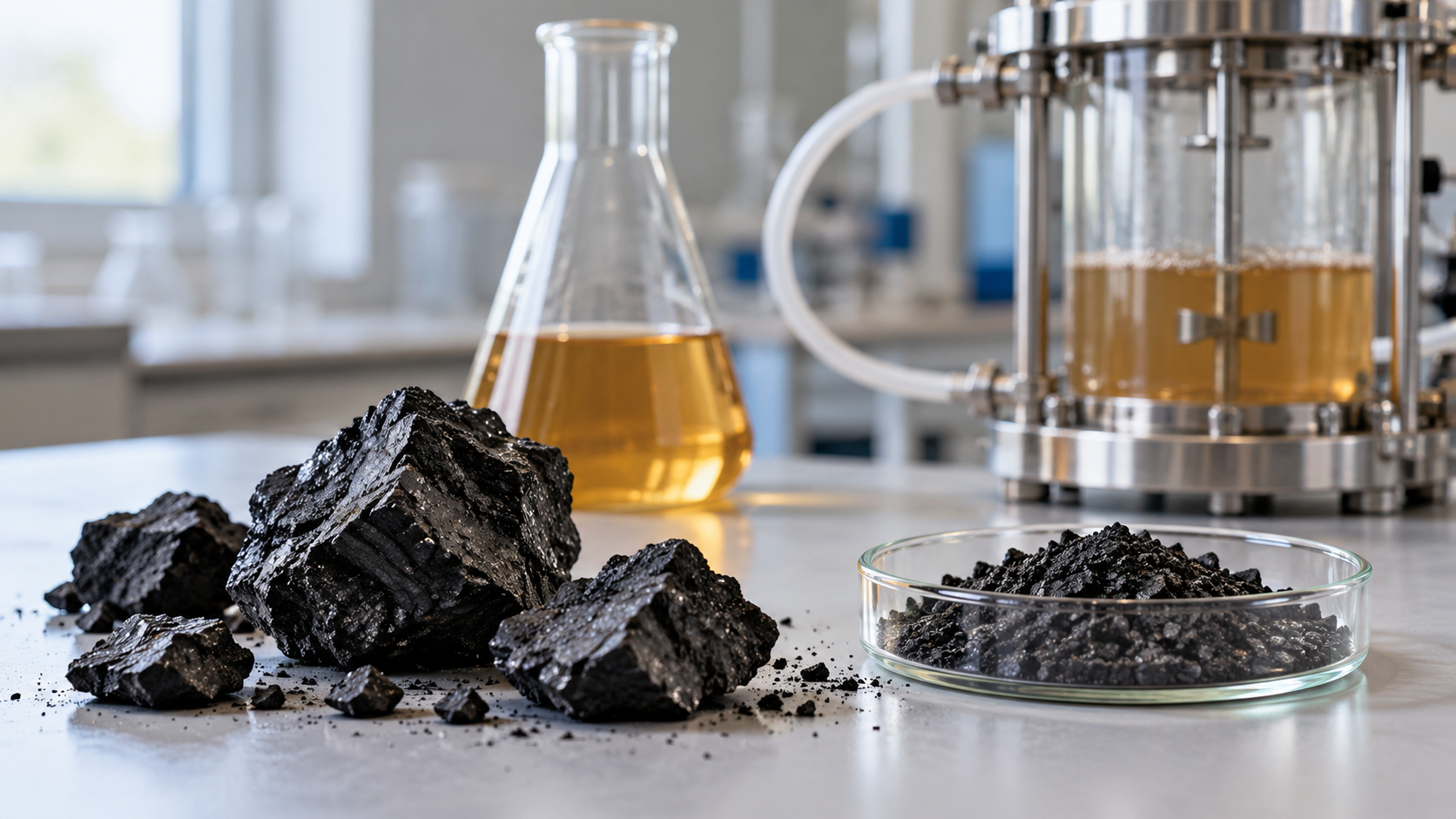
Scientists at Al-Farabi Kazakh National University have proposed using native microorganisms to remove sulfur from coal mined in Kazakhstan. The approach is described in an application for an applied research project on designing and optimizing a microbial consortium. The research aims to investigate the production of fuel with a lower sulfur content and assess opportunities to reduce sulfur emissions during coal combustion.
The project is entitled “Design and Optimization of a Microbial Consortium for Efficient Biodesulfurization of Kazakhstan’s High Sulfur Coals.” The application sets out a 36-month implementation period from January 2024 to December 2026. It falls within ecology, environmental protection and the rational use of natural resources, with microbiology providing the scientific basis for the proposed work.
The research addresses the environmental consequences of using high sulfur fuel. When coal burns, its sulfur compounds form sulfur oxides, including sulfur dioxide. These emissions pollute the atmosphere and contribute to acid rain. The authors consider removing sulfur before combustion as a way to reduce this environmental burden. Sulfur content and the forms in which it occurs vary with the origin and properties of the coal.
The research programme includes Karaganda, Kiyakty, Eginsay, Kushmurun, Priozernov and Shoptykol coal samples from the Karaganda, Ulytau, Kostanay and Pavlodar regions. Comparing these samples is intended to establish how differences in composition and structure affect biological treatment. The proposed analysis will determine total sulfur content and the relative amounts of its different forms in each coal sample.
Sulfur occurs in coal within organic compounds, sulfides and sulfates. The application also gives attention to pyrite, a sulfur-bearing mineral. Removing different sulfur forms requires an understanding of the relevant mechanisms. The project therefore combines geochemical characterization of coal with the study of microorganisms capable of transforming its sulfur compounds. This work is intended to guide the selection of cultures and treatment conditions.
The central idea is to use microorganisms isolated directly from coal-bearing environments. The authors suggest that native strains, already adapted to these conditions, may offer advantages for biodesulfurization, or biological sulfur removal. The programme provides for isolating cultures and examining their morphological, physiological and functional properties. Identification of bacterial isolates will involve sequencing the 16S rRNA gene.
During screening, the researchers plan to evaluate strain activity in media containing different sulfur sources. Selected cultures would then be tested with coal samples in laboratory experiments. Following treatment, the coal would be separated from the culture medium, washed and analysed again. Comparison with untreated material would establish changes in sulfur content, chemical composition and coal structure.
The proposed characterization includes moisture, ash, volatile matter and calorific value. Infrared and Raman spectroscopy, X-ray methods and microscopy are planned to examine structure and chemical bonds. The programme also includes analysis of treatment by-products and biosurfactants. These surface-active substances can be produced by bacteria and may contribute to interactions with coal particles during biological processing.
Process optimization will examine temperature, acidity, treatment duration, the amount of bacterial culture and coal particle size. The application also considers pretreatment and methods of stimulating biochemical processes. This stage is intended to identify conditions that provide the most effective microbial treatment for the coal samples under investigation.
Following laboratory experiments, the programme provides for trials in a five-litre stirred bioreactor. The described setup uses one kilogram of coal and 2.5 litres of bacterial solution. These trials are intended to assess system performance as the amount of material increases. Investigating the biological and engineering requirements for scaling up the process is a separate project objective.
The resulting fuel would be assessed through combustion characteristics, ash content and sulfur dioxide emissions. Thermogravimetric analysis, including its combination with mass spectrometry, is planned for this purpose. The economic assessment includes investment and operating costs and comparison with other technologies. These analyses are intended to determine whether the proposed approach could be practical to implement.
The application identifies the international applied microbiology laboratory “ҚАЗАҚ-НЕМІС-ҚЫТАЙ” at KazNU’s Institute of Ecology Problems as the main laboratory site. It also provides for coal analysis and characterization at the Institute of Coal Chemistry and Technology in Astana. The international programme includes cooperation with FH Aachen University of Applied Sciences in Germany and Shaanxi University of Science and Technology in China.
Expected outputs include laboratory and technological procedures for biological sulfur removal, process documentation and recommendations for producing coal with a lower sulfur content. The project envisages progression from selecting a technological concept to experimental development. Its proposed work is intended to establish the capabilities of native microorganisms and the conditions for their application. Environmental effects and economic feasibility remain subjects for experimental assessment.
Other news