FOR THE FUTURE TEACHER – FROM THEORY TO PRACTICE
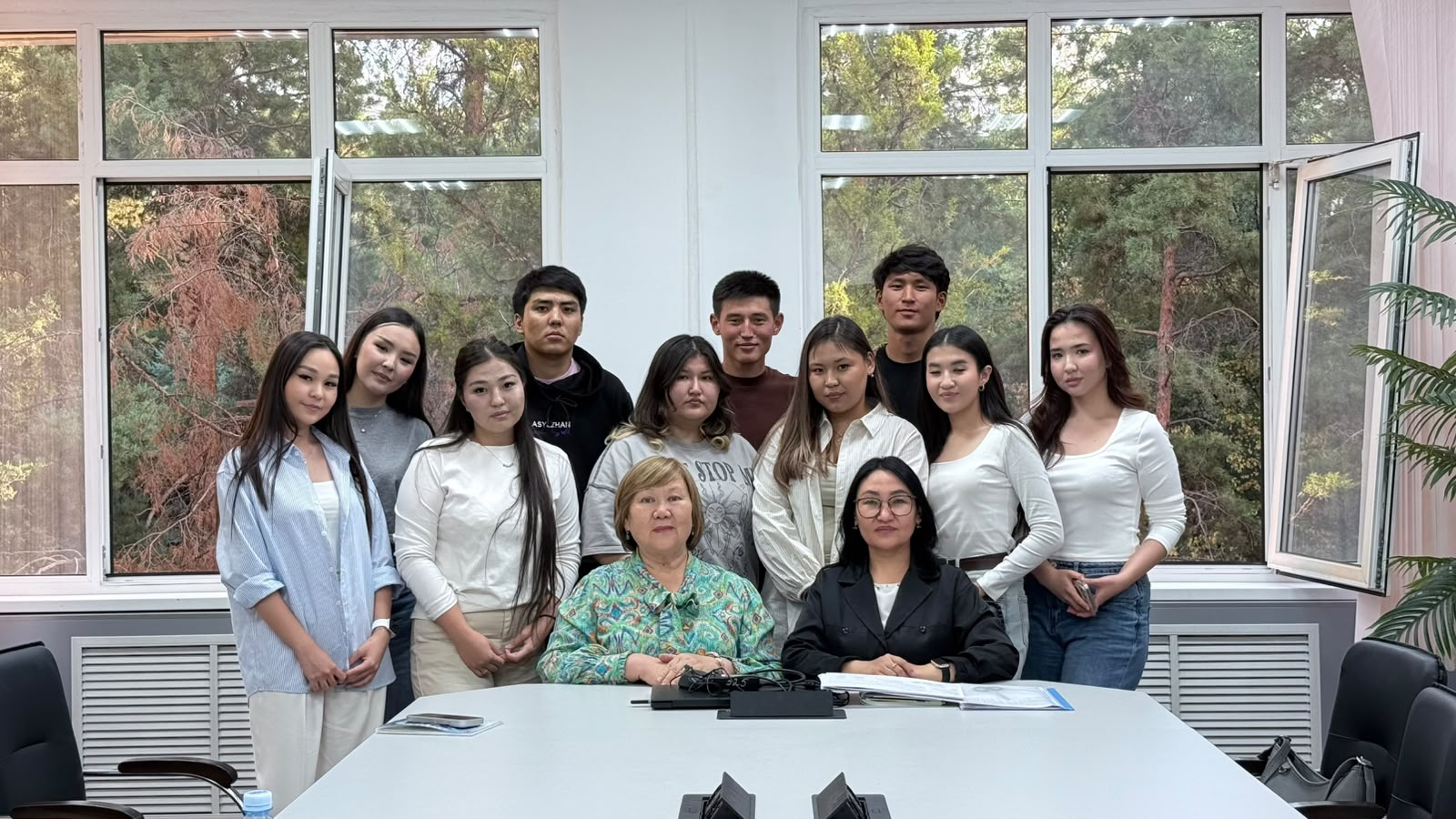
On September 16, 2026, a practice-oriented seminar session for future teachers of the Kazakh language and literature was held at Al-Farabi Kazakh National University within the framework of Sustainable Development Goal No. 4. The seminar focused on the topics “The Spiral Structure of Educational Content and Short-Term Planning” and “Specific Features of Planning a Kazakh Literature Lesson.”
The seminar was jointly conducted by Gulmariya Turysbekovna Ospanova, PhD, Acting Associate Professor of the Department of Kazakh Literature and Literary Theory at Al-Farabi Kazakh National University, and Aizhan Idrisovna Esentayeva, Senior Lecturer at the Department of Social and Humanities at the Institute of Professional Development of the Almaty branch of JSC “National Center for Professional Development ‘Orleu’,” Master of Humanities and doctoral student.
The seminar was attended by third-year students majoring in “Kazakh Language and Literature.”
The main objective of the meeting was to provide future teachers with an opportunity to understand the essence of the spiral structure of educational content and its continuity with learning objectives, as well as to explore in practice how to develop a short-term lesson plan in accordance with the specific features of teaching the subject.
The seminar covered such issues as the role of lesson planning in the educational process, why teachers plan lessons, the relationship between learning objectives and lesson objectives, the selection of appropriate pedagogical approaches, and the integration of assessment and feedback into the lesson plan.
Opening the seminar, Gulmariya Turysbekovna Ospanova introduced the students to the objectives of the session and presented the invited practitioner, Aizhan Idrisovna Esentayeva.
During the practical part, Aizhan Idrisovna identified the students’ initial understanding of lesson planning and organized a discussion around key professional questions: “Why does a teacher plan a lesson?”, “Where does effective planning begin?”, “How can a learning objective be transformed into a lesson objective?”, and “How is an assessment task connected with the learning objective?”
Each stage of lesson planning was demonstrated through a specific practical example. In particular, the participants jointly analyzed an author-developed short-term lesson plan for Grade 10 Kazakh Literature on the topic “Abai Kunanbaiuly’s Poem ‘Eskendir’: The Main Theme and Idea of the Work.”
The main learning objective of the lesson plan was: 10.1.1.1 – to develop a deeper understanding of the ideological content of a literary work through the analysis of its plot and compositional structure.
While analyzing the short-term plan, the students explored, through concrete examples, the coherence among the following components: “learning objective – lesson objective – assessment criterion – learning task – student activity – assessment – feedback.”
Particular attention was paid to accurately defining objectives, systematically planning activities at the beginning, middle, and end of the lesson, effectively allocating time, and organizing students’ active participation.
In accordance with the specific features of teaching Kazakh literature, the interrelationship between pre-reading, while-reading, and post-reading tasks was demonstrated. Through questions designed to analyze the plot and compositional structure of the poem “Eskendir” from exposition to resolution, the students recognized the importance of developing tasks aimed not merely at retelling the literary text, but at analyzing and interpreting it, providing evidence, and identifying the author’s position.
The seminar also emphasized one of the key principles of a modern lesson: the focus of the lesson should be not on the teacher’s speech, but on the learner’s activity. In this context, the participants discussed ways of organizing group, pair, and individual work, selecting active learning methods, aligning assessment criteria and descriptors with learning tasks, and planning effective feedback.
The theoretical concepts were linked to the ideas of effective lesson organization presented in David Kluster’s article “Six Signs of an Excellent Lesson.” Future teachers were shown the importance of thinking through a lesson in advance as an essential element in developing professional teaching competence.
At the end of the seminar, the students actively participated in the feedback session and noted that they had gained a deeper understanding of the responsibility and creative dimension of lesson planning in the teaching profession. They received answers to their questions and expressed their appreciation for the joint session, which provided an opportunity to connect theoretical knowledge with actual school practice.
Such practical cooperation between the university and the Institute of Professional Development of Teachers provides an effective platform for connecting the theoretical knowledge acquired by future teachers at university with real-world school practice.
Today’s student is tomorrow’s teacher. And a quality lesson begins with quality planning.
Gulmariya Turysbekovna Ospanova,
PhD, Acting Associate Professor, Department of Kazakh Literature and Literary Theory
Other news