- Main
- News
- Faculty of Physics and Technology Discusses New Approaches to Education Quality and Digitalisation of the Academic Process
Faculty of Physics and Technology Discusses New Approaches to Education Quality and Digitalisation of the Academic Process
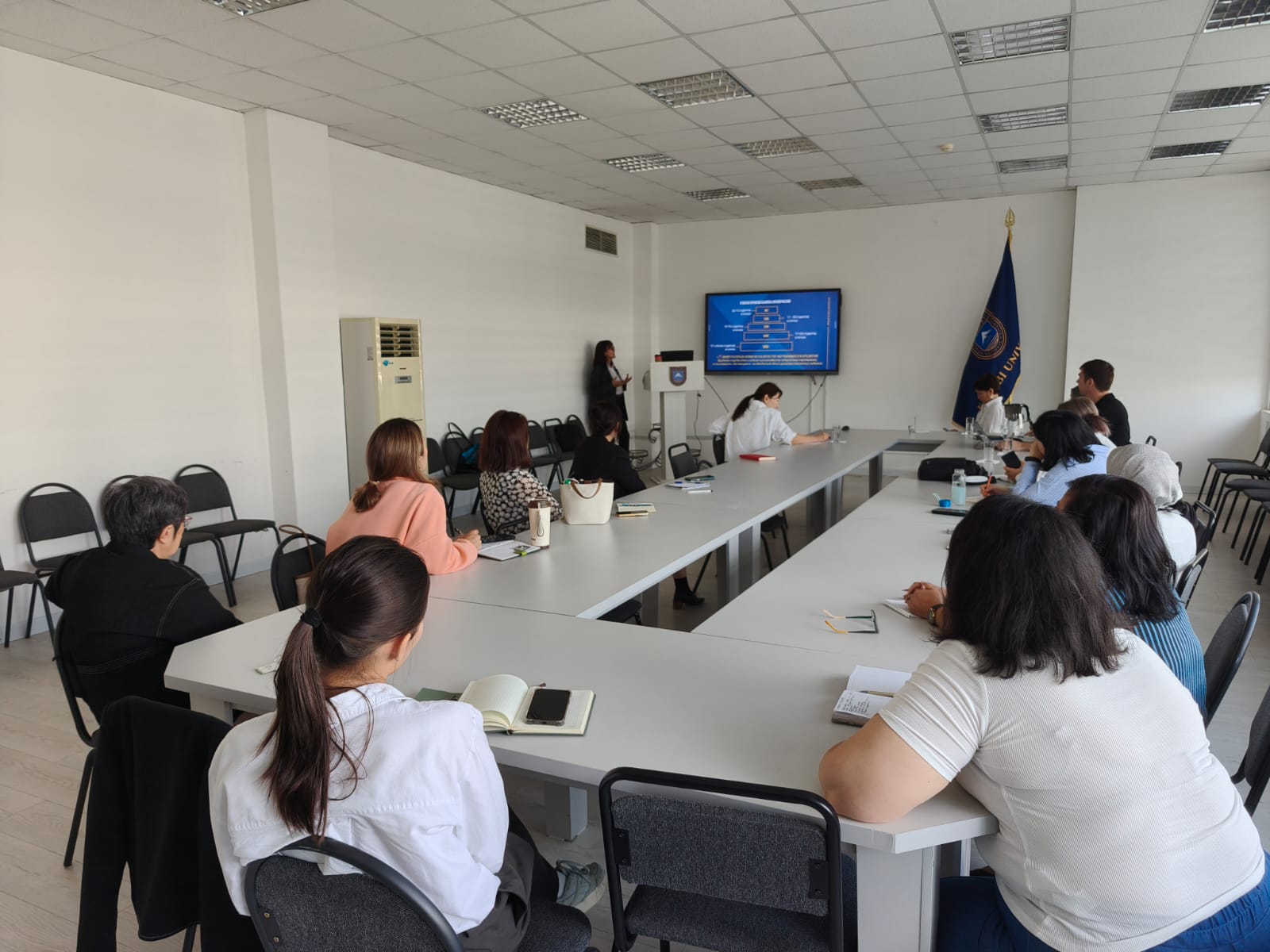
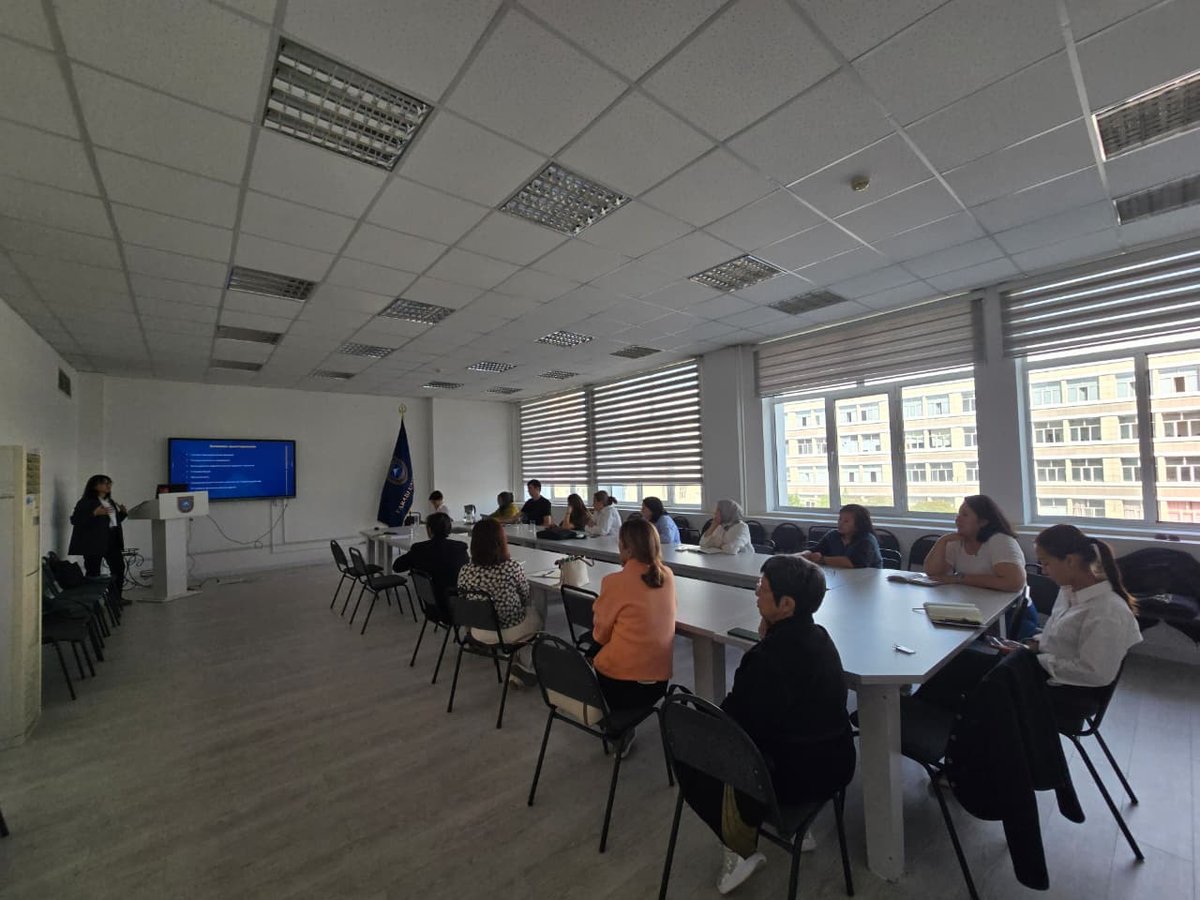
An extended working meeting dedicated to key developments in the academic process for the 2026–2027 academic year was held at the Faculty of Physics and Technology of Al-Farabi Kazakh National University. The meeting brought together representatives of the University’s relevant administrative units, Professor N.A. Beisen, Dean of the Faculty of Physics and Technology, members of the Faculty Academic Committee for Teaching and Learning Quality, and faculty members.
The meeting provided a platform for a comprehensive discussion of updated academic regulations, new approaches to assessing learning outcomes, and the practical application of digital educational tools. Particular attention was paid to the effective implementation of university-wide quality assurance principles at the level of individual courses, syllabi, examination tasks, and interaction with students.
The first session was delivered by Assel Musinova, Head of the Office for Quality Assurance of the Educational Process, who presented the internal regulatory framework governing the academic process in the 2026–2027 academic year. The session covered the Academic Policy, Quality Assurance Policy, Academic Integrity Policy, and Learning Outcomes Assessment Policy. Newly introduced documents, including the Rules for Handling Student Appeals and the Academic Guide for Teaching Staff, were also presented.
Special attention was given to the role of faculty academic committees within the University’s quality assurance system. The institutional model provides for the participation of not only academic staff but also employers and students, enabling the University to incorporate the perspectives and needs of key stakeholders into the continuous enhancement of its educational programmes.
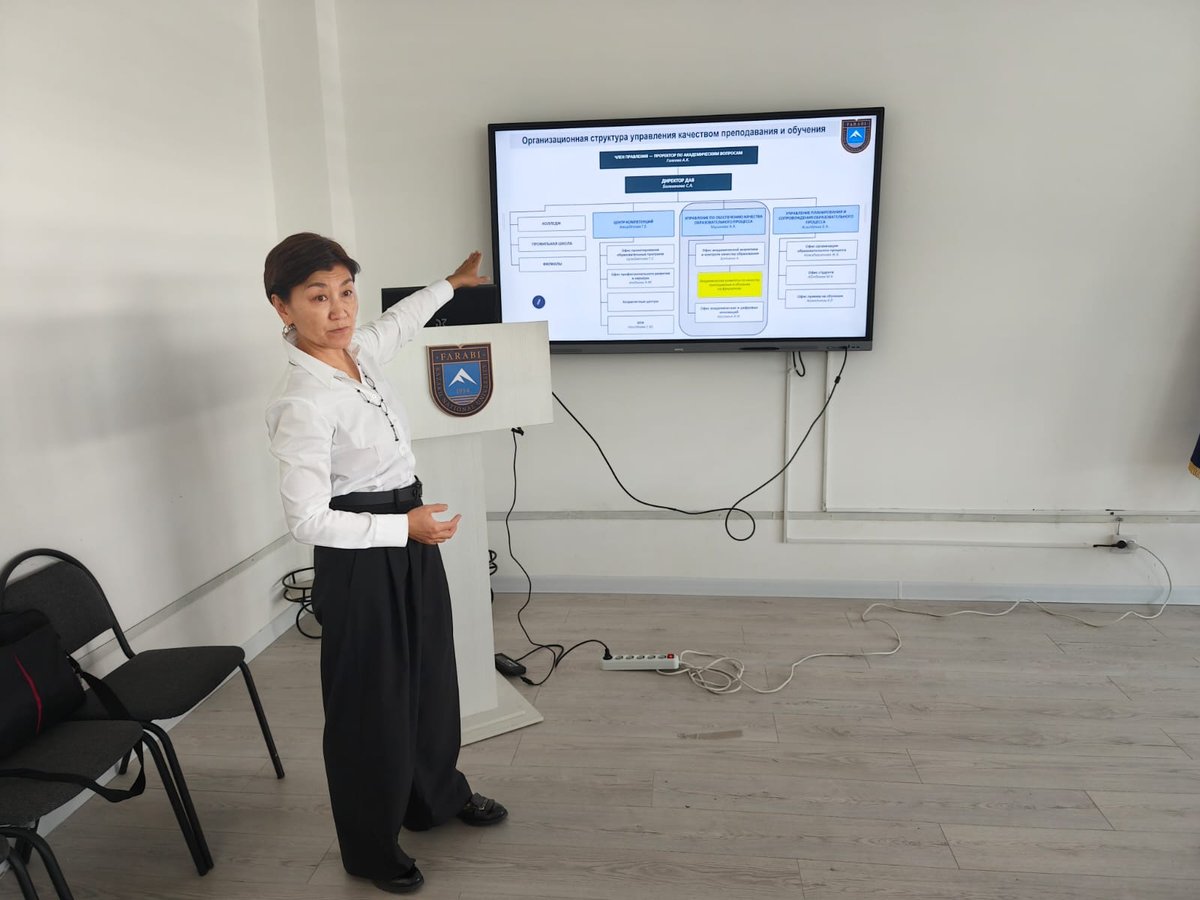
One of the central topics of the meeting was the updated framework for assessing student learning outcomes. Under the revised policy, a maximum of 100 points may be awarded for each midterm assessment period. At least 70 points must be accumulated through continuous assessment before the start of the midterm assessment week, while assessment activities conducted during that week may account for no more than 30 points. As a general rule, a single assessment activity should not exceed 25 points. All assessment activities, criteria, and their alignment with learning outcomes must be specified in the course syllabus in advance.
The programme continued with a presentation by Assem Botayeva, Head of the Office of Academic Analytics and Education Quality Control, who introduced new approaches to designing computer-based examinations in the Univer Information System. The updated model is based on the alignment of assessment tasks with learning outcomes, content representativeness, standardisation, objectivity, differentiation by levels of complexity, psychometric quality analysis, and the systematic updating of question banks.
A significant development is the shift from assessments focused predominantly on knowledge recall towards evaluating different levels of cognitive skills. In accordance with Bloom’s taxonomy, assessment tasks are distributed across four levels: 40% for remembering and understanding, 30% for application, 20% for analysis, and 10% for evaluation and creation. This approach is particularly relevant to the Faculty’s science and engineering disciplines, where students are expected not only to demonstrate knowledge of concepts and formulae, but also to apply them to problem-solving, analyse data, graphs and experimental results, and provide well-reasoned justification for their solutions.
Aisulu Alkozhaeva presented templates for test items in the Univer Information System and practical approaches to their development. Faculty members received guidance on preparing questions at different levels of complexity and structuring question banks in accordance with the updated examination framework.
The final practical session was delivered by Ilya Krugovykh, Head of the Office of Academic and Digital Innovation. The presentation addressed the organisation and administration of testing in the Moodle learning management system, from developing and structuring question banks to configuring final examinations. Under the updated specification, a Moodle examination consists of 25 questions worth a total of 100 points, incorporating tasks of different types and levels of complexity. Participants were also introduced to the use of single-choice, True/False, matching, and short-answer question formats.
The meeting formed part of the University’s systematic efforts to enhance the quality of education and develop a modern digital learning environment. The updated approaches are aimed at ensuring transparent and objective assessment, strengthening academic integrity, advancing student-centred learning, and promoting the effective use of educational analytics and digital technologies. These principles are also embedded in the University’s Quality Assurance Policy.
The initiative also contributes to the United Nations Sustainable Development Goals (SDGs), particularly SDG 4 – Quality Education, which promotes inclusive and equitable quality education and lifelong learning opportunities. The development of digital learning tools, enhancement of educational quality, and strengthening of contemporary engineering and scientific competencies are also closely aligned with SDG 9 – Industry, Innovation and Infrastructure, as high-quality science and engineering education provides an essential foundation for research, technological advancement, and innovation.
The meeting not only introduced the key academic updates for the 2026–2027 academic year but also provided an opportunity to discuss their practical implementation within the Faculty of Physics and Technology. Continued cooperation between the Faculty leadership, the Academic Committee, academic staff, and relevant University units is aimed at fostering a modern academic environment in which educational quality, objective assessment, digitalisation, and academic integrity are integrated into a coherent framework for preparing highly qualified and competitive graduates.
Other news