OVERVIEW OF A PRACTICAL SESSION ON CRITERION-BASED ASSESSMENT TECHNOLOGIES

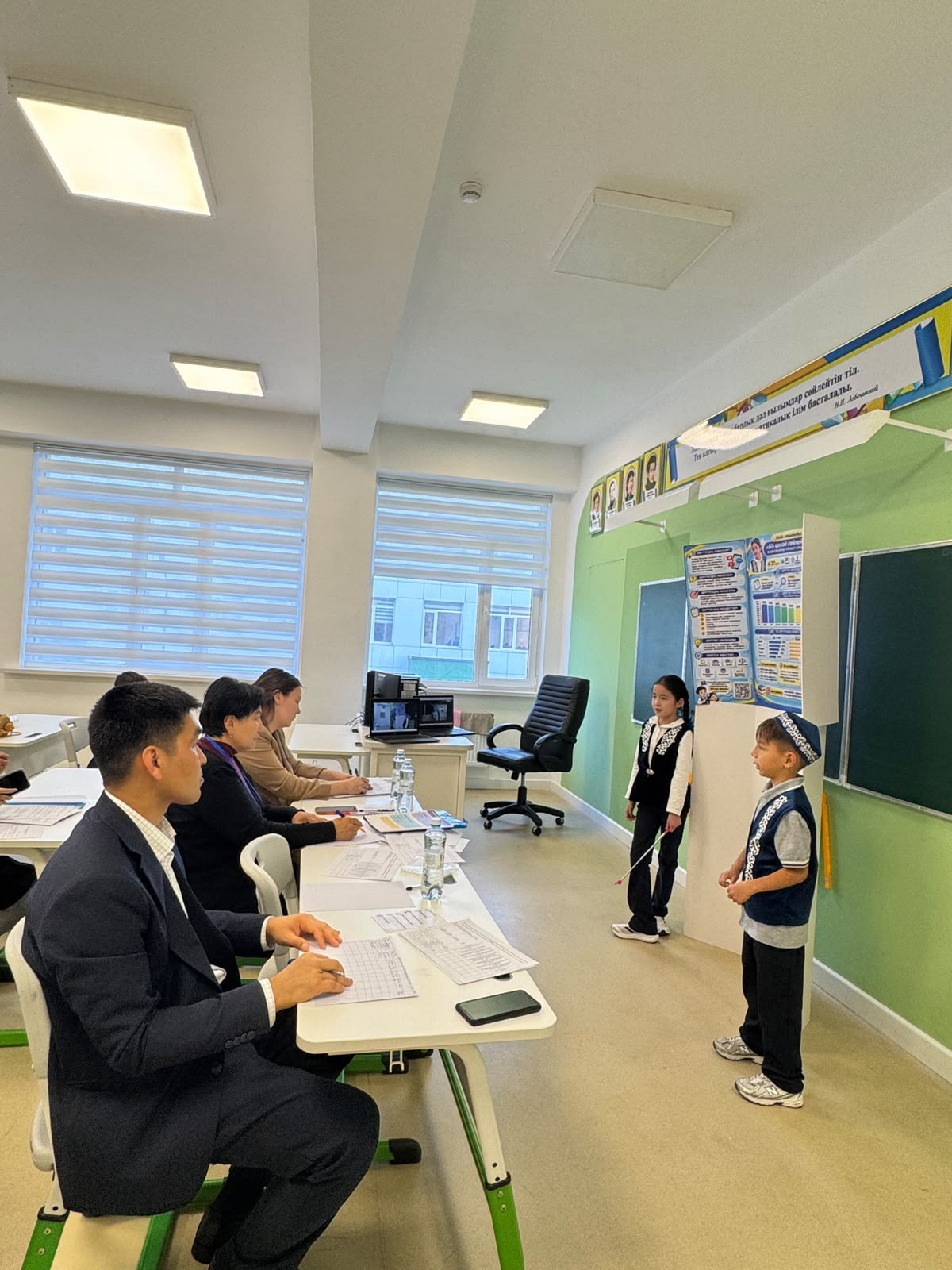
On October 6, 2026, A. Alchimbayeva, Senior Lecturer at the Department of Pedagogy and Educational Management (Candidate of Pedagogical Sciences), conducted a seminar for fourth-year students enrolled in the "6B01701 – Kazakh Language and Literature" program as part of the "Criterion-Based Assessment Technology" course. The session was organized around teamwork. The seminar tasks were directly linked to the students' professional field, and the class was divided into two subgroups. Methodological tools such as the "Smartphone" method and the "Group Expert" technique were successfully employed during the session. The lesson aimed to develop students' skills in self-assessment and the evaluation of group work, teach them to independently formulate assessment criteria, and foster the ability to justify their opinions and analyze decisions made during the assessment process. Furthermore, the session sought to enhance students' sense of personal responsibility when completing creative tasks and to improve their collaboration skills.
During the session, students were divided into two groups and tasked with developing criteria for evaluating literary works: one group worked on M. Auezov’s novella *Kokserek*, while the other focused on B. Mailin’s work *Shughanyn Belgisi*. The instructor emphasized the importance of formulating assessment criteria based on modern educational technologies. While working, the students took into account requirements such as content comprehension, identification of the main theme, characterization, and analysis of the text's literary features. Subsequently, the participants discussed the proposed options and selected the most effective and precise criteria, consolidating individual views into a unified assessment system. The students justified their choice of criteria and analyzed their effectiveness in evaluating the content of the literary works. This task enabled each student to defend their point of view and actively participate in the focus group.
The task for the first group focused on developing self-assessment skills; students employed the so-called "smartphone method." By presenting their work as if it were displayed on a smartphone screen, they analyzed their personal achievements and shortcomings. Each student evaluated their own work based on self-formulated criteria, identifying which requirements had been met and which aspects needed further refinement. Through the "smartphone method," students sought to view their work from an external perspective and objectively assess the results.
The second group's task was to develop group assessment skills. Students created a poster reflecting the key ideas, characters, plot, and artistic features of the literary work. Upon completion, group members evaluated the collective result based on jointly established criteria. The assessment took into account each student's contribution, level of engagement, proposed ideas, and degree of participation in the task.
In the final part of the seminar, Aigul Bakytzhanovna Alchimbaeva analyzed the students' work and commended their active participation in developing the assessment criteria. The instructor explained that self-assessment fosters a sense of responsibility among students, whereas group assessment cultivates a culture of collaboration. Furthermore, special emphasis was placed on the necessity of adhering to specific, pre-determined criteria during the assessment process, rather than relying solely on personal opinion.
Overall, the seminar on "Self-Assessment and Group Assessment Skills" served as a substantive practical session aimed at enhancing the professional competence of future teachers of Kazakh language and literature. Through activities such as developing individual criteria, establishing common assessment standards, evaluating their own work, and analyzing the results of group activities, students gained a practical understanding of the importance of the assessment process.
Other news