- Main
- News
- Digital Innovations at KazNU: How the JoVE Platform Supports Physics Students in Mechanics
Digital Innovations at KazNU: How the JoVE Platform Supports Physics Students in Mechanics
Modern higher education is constantly evolving, requiring innovative approaches to bridge the gap between abstract theoretical knowledge and practical application. At Al-Farabi Kazakh National University, faculty members are actively implementing cutting-edge digital educational tools to enhance the learning experience for students, particularly in foundational disciplines such as physics.
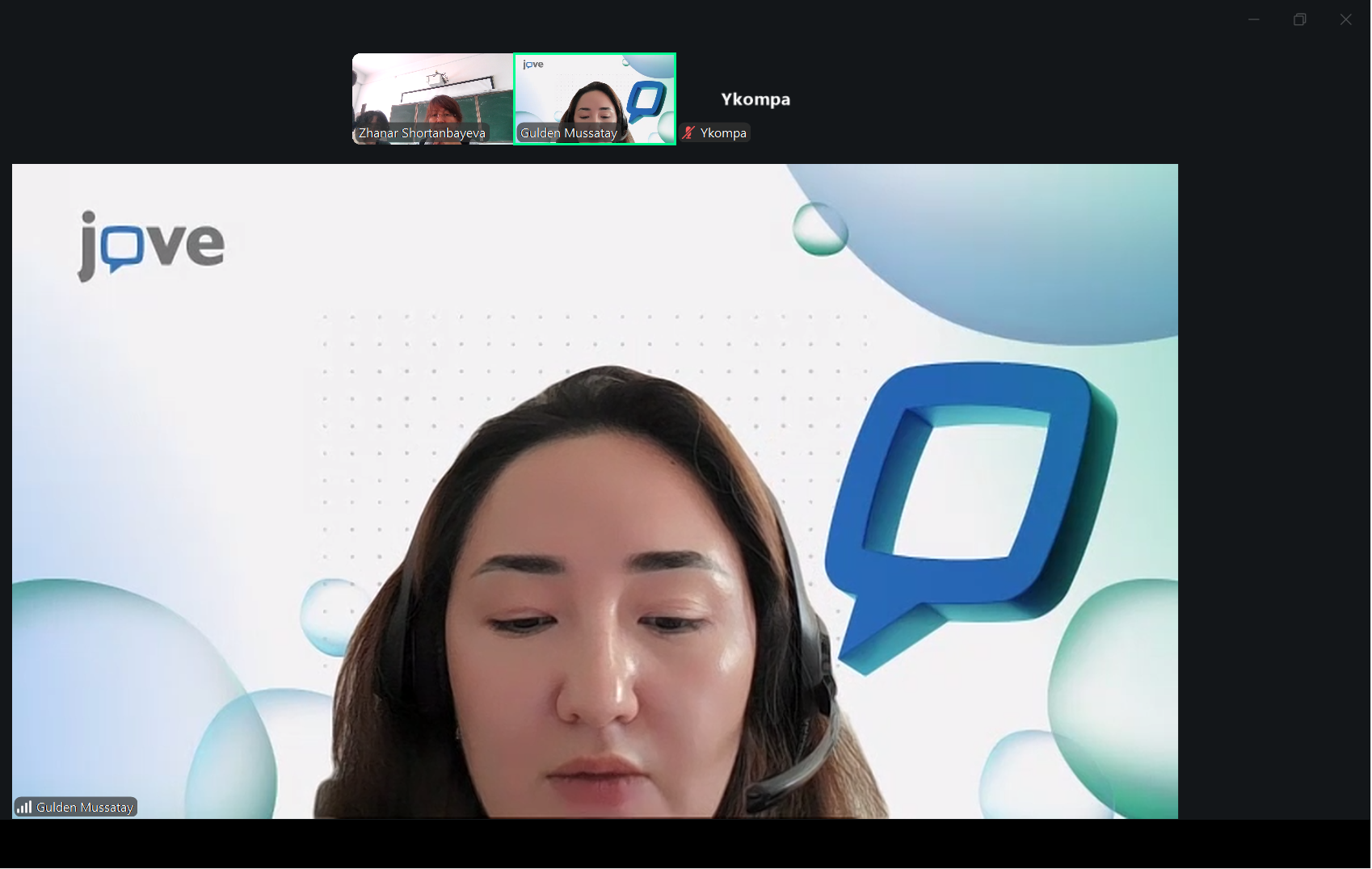
Today, first-year students enrolled in the Nuclear Physics educational program participated in a productive, hands-on session dedicated to utilizing modern scientific digital resources. The event featured Gulden Mussatay, Customer Success Specialist at JoVE in Kazakhstan, who guided students through effective strategies for leveraging the platform's extensive capabilities.
JoVE is a leading global video platform for scientific research and education, designed to help educators boost teaching efficiency and improve student academic outcomes. The platform offers a vast repository of over 30,000 peer-reviewed video articles and educational materials. These resources include animations that clearly explain complex scientific concepts, alongside precise demonstrations of experimental methods and laboratory protocols. Covering a wide range of STEM disciplines—such as biology, chemistry, physics, medicine, and engineering—as well as business fields, JoVE truly brings theory to life and makes practice accessible. By integrating these video materials into the curriculum, students are able to prepare thoroughly for classes in advance, better visualize complex scientific concepts, build confidence in their knowledge, and actively engage in the educational process.
At KazNU, advanced digital tools are being successfully embedded into daily academic routines through the dedication of experienced faculty. For instance, in laboratory classes for the discipline "Mechanics," Senior Lecturer Zh.K. Shortanbayeva carefully selects short, targeted videos from the JoVE library that correspond directly to specific syllabus sections. Students watch these curated materials beforehand to familiarize themselves with upcoming experiments. Furthermore, the platform assists in generating tests to verify students' understanding of the material. To ensure seamless accessibility, both the selected video materials and the accompanying tests are integrated directly into the university’s Moodle distance learning system, creating a unified, interactive digital environment where students can study at their own pace and reinforce their practical skills.
During the consultative session, Gulden Mussatay provided a clear and accessible walkthrough on how students can independently discover and utilize these resources through the institutional subscription of Al-Farabi Kazakh National University. The meeting highlighted the importance of digital literacy and proactive learning, leaving students well-equipped to maximize the platform's potential throughout their academic journey.
The implementation of innovative digital platforms like JoVE at KazNU directly aligns with global sustainability priorities. By modernizing educational infrastructure and leveraging digital technologies, the university contributes significantly to SDG 4: Quality Education, which aims to ensure inclusive and equitable quality education and promote lifelong learning opportunities for all. Additionally, enhancing STEM education and research methodologies supports SDG 9: Industry, Innovation, and Infrastructure, fostering scientific innovation and technological advancement within the academic community. Initiatives like this underscore Al-Farabi Kazakh National University’s ongoing commitment to academic excellence, innovative teaching methodologies, and the continuous improvement of student outcomes in the digital era.
Other news