- Main
- News
- Quality Education. Educational Models of Kazakhstan and Countries of the World: Comparative Analysis"
Quality Education. Educational Models of Kazakhstan and Countries of the World: Comparative Analysis"
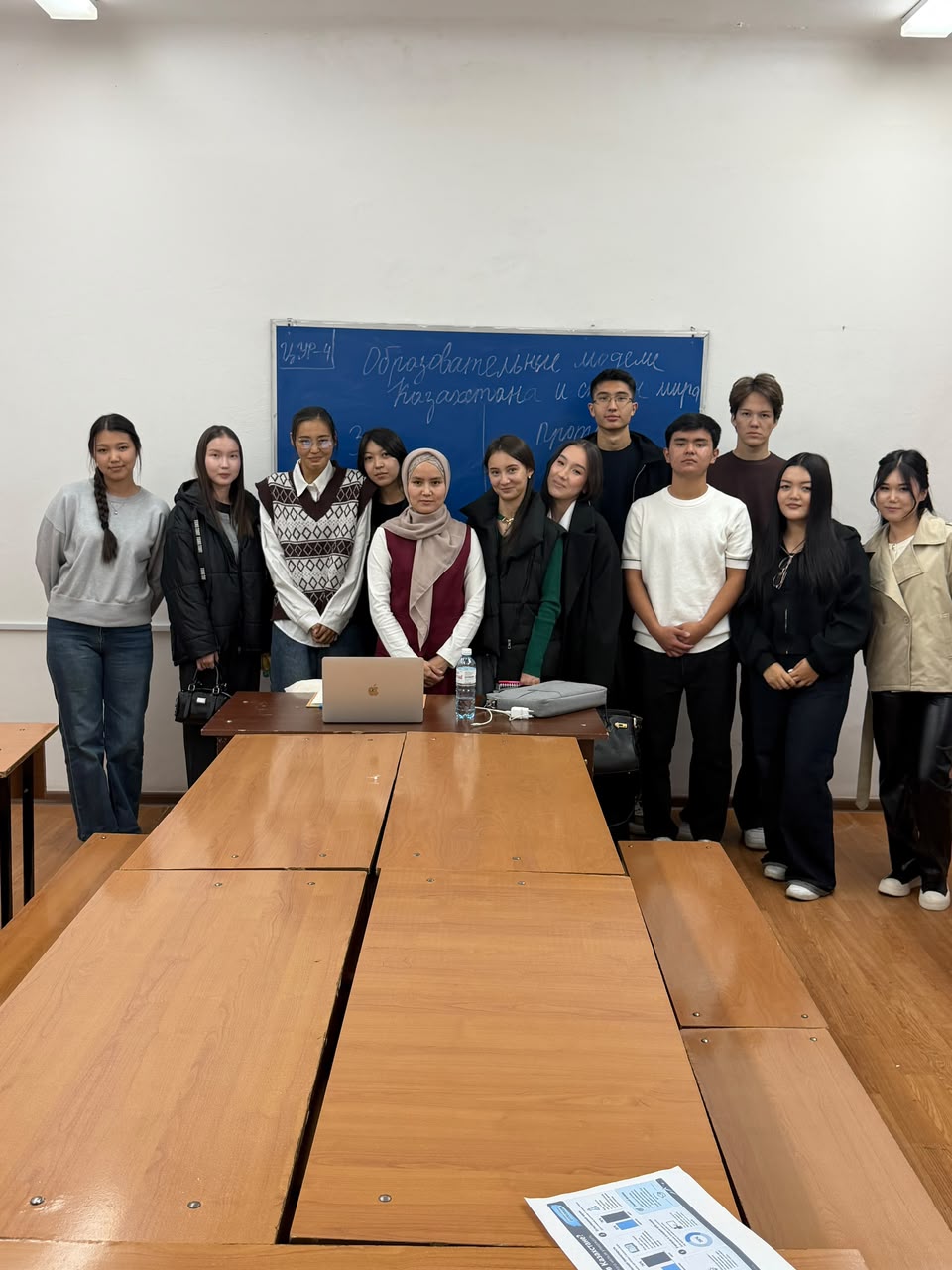
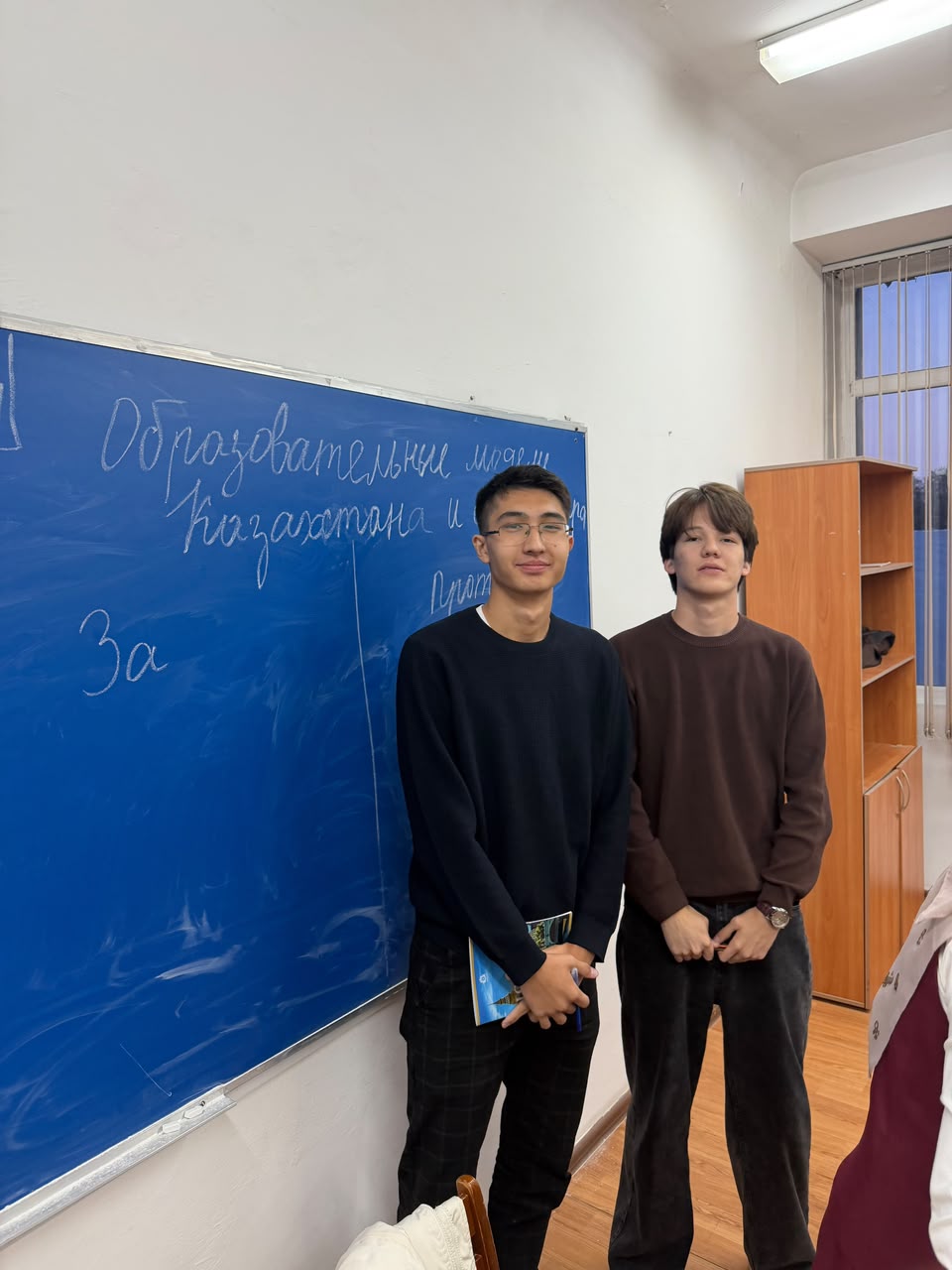
As part of the implementation of SDG-4 "Quality Education", a thematic event in the format of debates on the topic "Quality Education. Educational Models of Kazakhstan and Countries of the World: Comparative Analysis" was organized for 1st year students.
The purpose of the event is to develop students' critical thinking skills, analysis of educational systems, development of communicative competence, the ability to defend their position with arguments, as well as to raise awareness of global problems and prospects of education.
The group was divided into two teams. One team supported the educational model of Kazakhstan, noting positive changes and reforms. The second team took the position of the opposition, analyzing current problems.
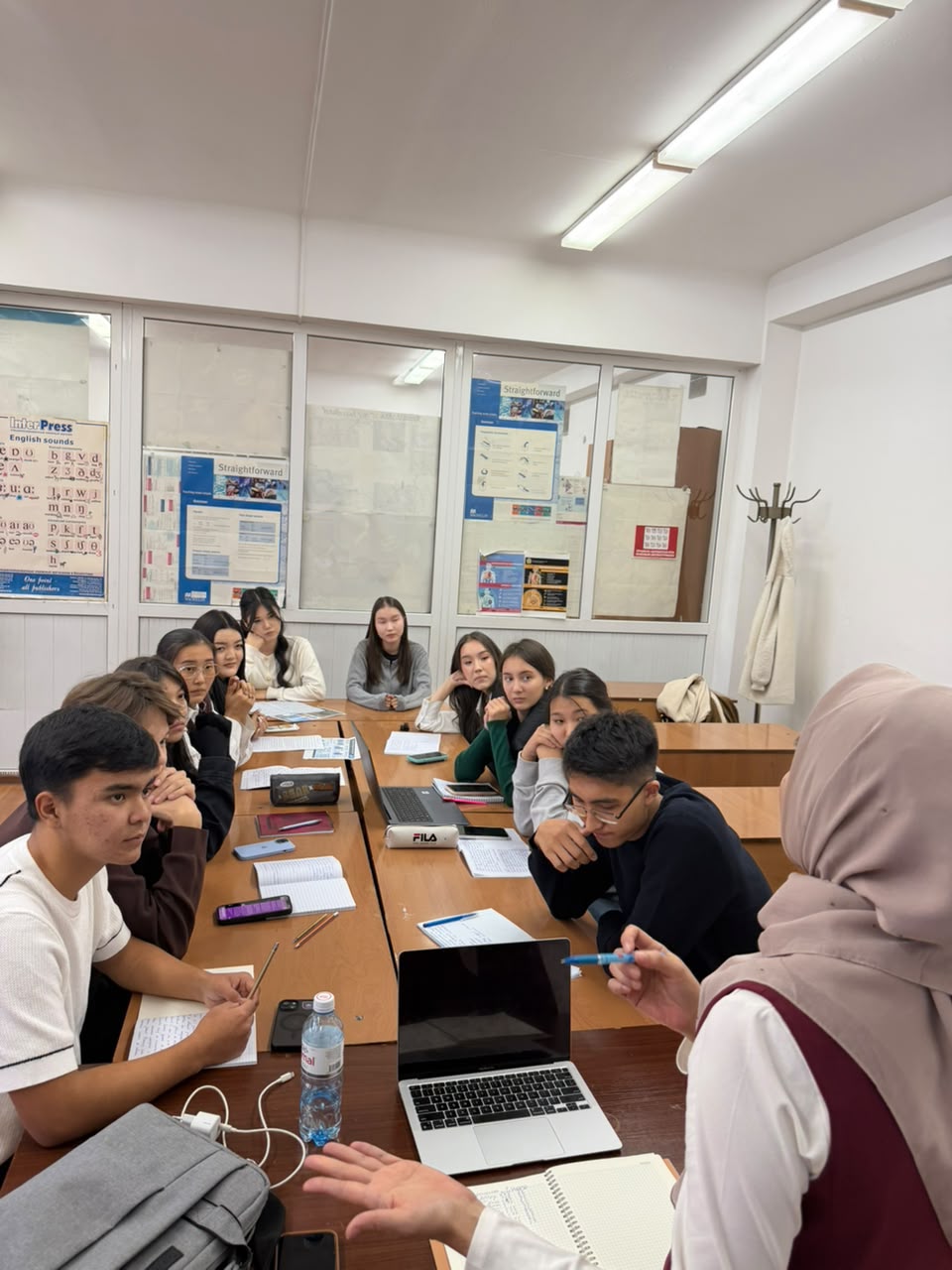
The Opposition team (speakers: Tazhen Aiaru, Timur Asem, Toktagulova Ayana, Uteshev Zhasulan, Tuymebay Nurassyl, Mautanova Umaiya) put forward 5 main problems hindering quality education: lagging behind in PISA, low level of reading literacy and creative thinking, shortage of teachers and inequality of educational opportunities. Also presented arguments:
1. PISA-2022: Kazakhstan — 425 math, 386 reading, 423 science. OECD average — 472, 476, 485. Only 36% reached the basic level in reading vs. 74% in OECD.
2. Creative Thinking: PISA Creative Thinking — 24 out of 60 (OECD — 33). Basic level — 47% vs. 78% in OECD.
3. Staff shortage: 36% of students study in schools where there is a shortage of teachers.
4. Inequality: access to education depends on region, social status, access to the Internet.
The Proposition team (speakers: Tolykkankyzy Zarina, Turganbek Bekassyl, Ualiakhmet Nursaule, Ubaidulla Bilal, Shalkarkyzy Bayan, Shakirt Aisha) put forward 5 main arguments confirming the existence of quality education in Kazakhstan: positive PISA dynamics, systemic reforms, attention to teachers, accessibility of education and the system's ability to solve problems. Also presented arguments:
1. PISA dynamics: PISA-2022 — 425 math, 386 reading, 423 science. Growth in science from 397 points in 2018 (+26 points) against the background of a decrease in the OECD average. In math, Kazakhstan is ahead of Brazil, Mexico, Colombia, Argentina.
2. Systemic reforms: since 2016, updated educational content, transition from "memorize and repeat" to functional literacy and critical thinking. Experience of Nazarbayev Intellectual Schools, digitalization — e-journals, online platforms.
3. Teacher support: Law "On the Status of the Teacher", salary increase, professional development system and protection from bureaucracy. Staff shortage is a global problem that is being systematically solved in the RK.
4. Accessibility: literacy rate of almost 100%, free and compulsory school education, national project "Comfortable School", growth in coverage of preschool and inclusive education, Bolashak program, Nazarbayev University.
5. Response to the opposition: comparison with the OECD — a club of rich countries — is incorrect, dynamics is important. The creative thinking test was conducted for the first time and does not show dynamics. The presence of problems does not mean the absence of quality, quality is the ability of the system to develop and solve them.
The event was held in the format of an open discussion. Students actively participated, citing OECD and UNICEF data. The discussion contributed to the development of reasoning-proof skills: thesis — argument — conclusion.
Other news